
★★★☆☆
Fantastically Great Women Who Changed the World is a fun but flawed feminist pop musical highlighting the achievements of women throughout history. It is based on the book of the same name by Kate Pankhurst, who later discovered that she is distantly related to leading suffragette Emmeline Pankhurst, who she featured in the book.
The show focuses on Jade (Georgia Grant-Anderson) as she navigates a mysterious museum after being left behind on a school trip. She struggles with the idea of standing out and making a difference with her friends, at home as her parents go through a divorce, and in society as she wants to become like the famous women seen in the hall.
Soon, the place comes to life in a Night in the Museum-esque twist, and the women start telling their stories and advising Jade how to find what she enjoys and make a difference, not realising until the finale that every woman has made a difference big or small, even if they have not been made famous for their contributions – a nice, inspiring message for kids trying to find their place to shine.
Sadly, the show did start with a technical issue where the music hadn’t started correctly. After a short break to fix the issue, the show continued without too many issues aside from the odd mic cut out or the music being a little louder than the singers at times.
Despite its positivity, the show often feels lost in tone, genre and message. It starts with a pantomime like walk-in from the slightly rickety floor of the stalls area before the cast introduce themselves as the frustrated teachers of annoying and ignorant children. These elements are also evident in the acting which appears to be a mixture of panto and CBeebies in its exaggerative tone that feels a little out of place in a show aimed at older children (since they would be the ones that would understand the stories and exposition-heavy plot).
The show did acknowledge the ways that many of these women were ignored for years, not awarded prizes for their achievements, or judged for being “inferior women”, which was refreshing. However, the stories of these exceptional women felt a little sanitised or blurred at times, whether it was dismissing the more traumatic or ignored parts of their lives or their their lives before or after their main achievements took place – which all constitute important parts of their stories. Of course, the show must be child-friendly but the sanitisation is problematic if we are to understand the complexities of these women as the show constantly encourages us to do.
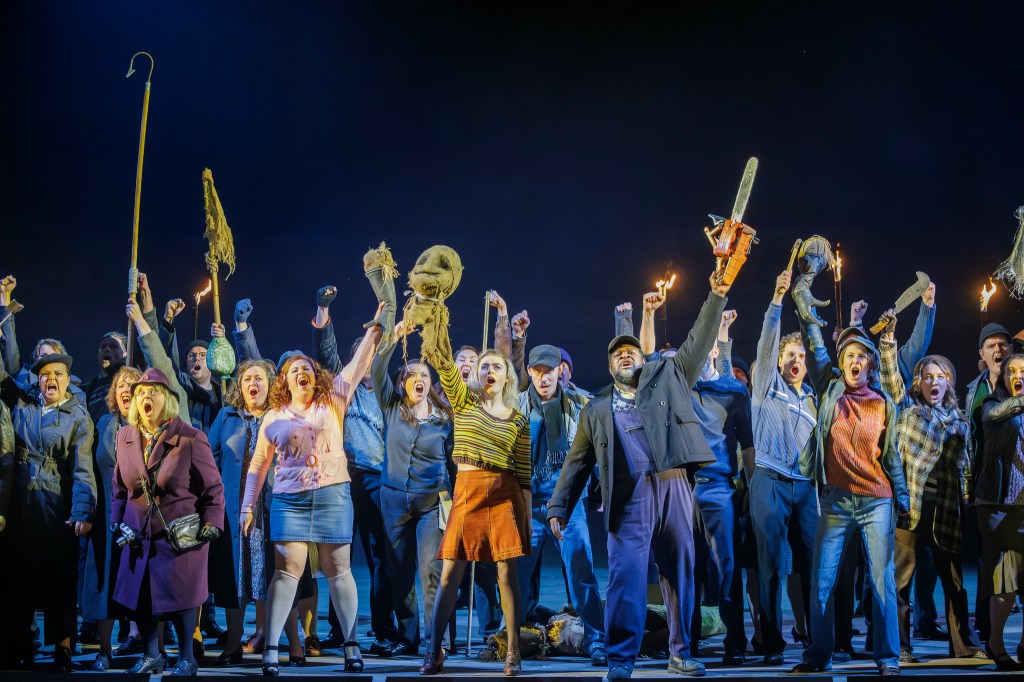
I was also taken aback by the strange choice to stylise the suffragettes as purple military troopers donning the symbol of the female sex, rather than keeping true to their genuine attire as ordinary women – again, a strange choice since the show actively encourages ordinary women to make a stand yet idolises the suffragettes as a group decorated in a style completely alien to what they would be familiar with and transforming them into militaristically determined women.
One way this could have worked better would have been to use the template of the later “Mary, Mary and Marie” segment, which presented these women as superheroes since Jade uses her presumptions about them to make them seem like inhuman idols, before they show her their real stories. If this had been used for the suffragettes, the costume choice would have made more sense, presenting them as an Avengers0like group of women but showing the time and hardship that came with the changes they tried to implement.
Despite this, I loved the idealised costumes for the Marys’/Maries’ and the little glow-in-the-dark elements in some of their designs that linked back to the idea of Marie Curie’s radioactive experiments.
Each segment had its own theme:
1. Travel – finding your own way despite prejudices against your gender (Amelia earhart, Gertrude Ederle, and Sacagawea);
2. Creativity – finding your passion and using it to express how you see the world (Frida Kahlo and Jane Austen);
3. The Ignored – women who followed their passions despite their achievements being ignored by the patriarchy and glorified many years later (Mary Seacole, Mary Anning, Marie Curie and Agent Fifi).
4. The “Everyday” people – women that saw the best in humanity despite adversity or stood up for change (Rosa Parks and Anne Frank).
As the show develops, you sense that despite the many messages it alludes to, the plot is slowly pulling you towards realising that all of these women were ordinary people, like us, who can also stand and make a difference, even if we don’t know how to yet.
The show’s saving grace is a talented cast, a few brilliant musical numbers and an interesting set design which included a live band in the heights of the set. By far my favourite number was ‘A World in Colour’ and its reprise in ‘Rosa’s Lullaby’.
The original was filled with catchy rhythms, bursts of excitement and colour, and a gorgeous wing effect within Frida’s skirt that enchantingly floated through the air as they danced together. Its reprise, sung outstandingly by Leah Vassell, was truly heart-warming. I think the reason that these songs were so successful was that they broke free of trying to give too much exposition and information about each character and simply focused on the messages or emotions of the characters.
The show is entertaining and filled with girl-power and fun pop numbers but feels as lost as Jade in its tone and deliverance. Despite a handful of catchy songs and an amazing line-up of historical women, there was just something that failed to keep me as emotionally engaged as I constantly tried to be.
Fantastically Great Women Who Changed the World runs at the Lowry (Quays Theatre) until January 7 and tours the UK until March 16.
Photo: Pamela Raith Photography
 JADAR
JADAR 