★★★☆☆
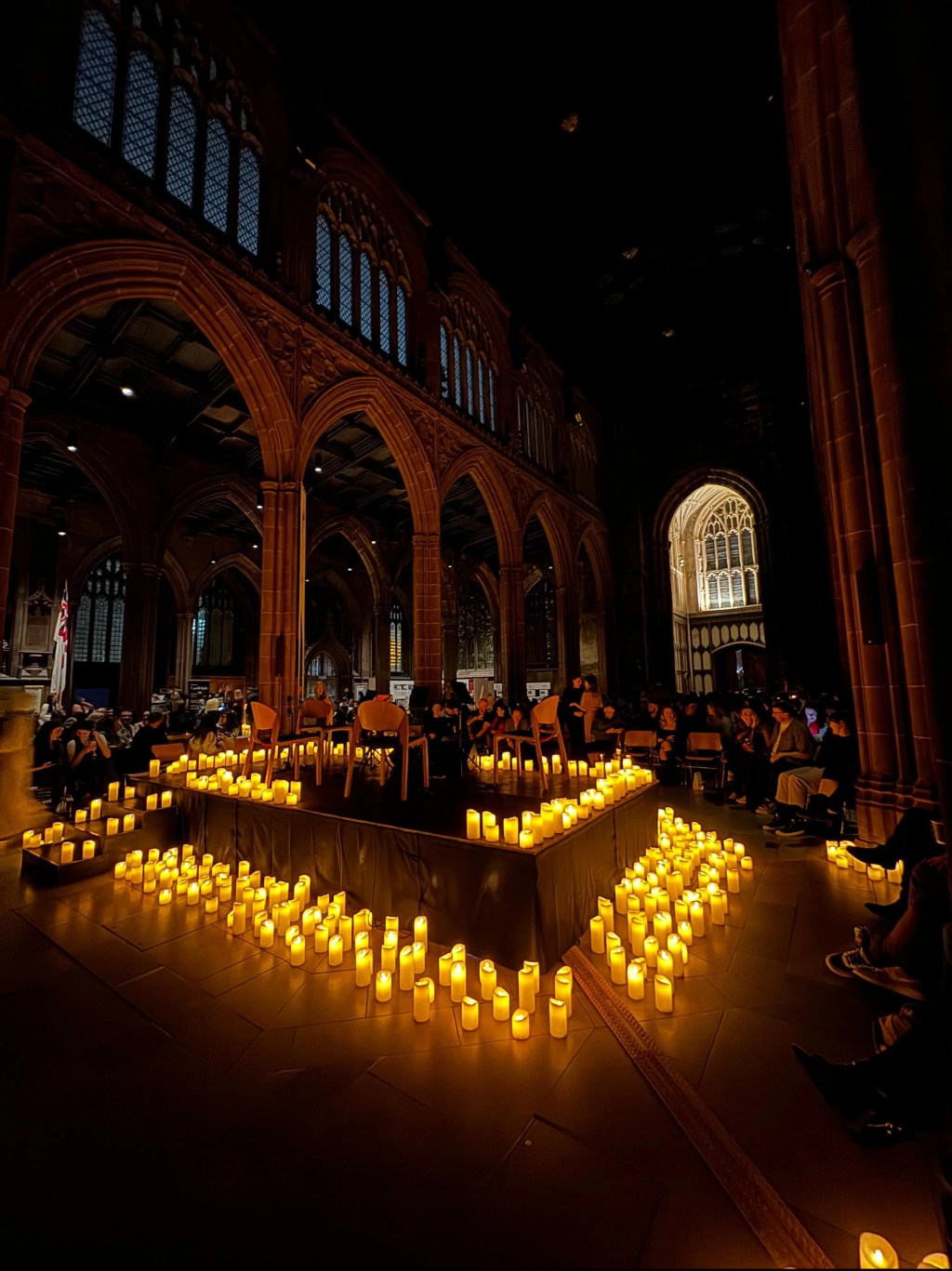
A tribute to Taylor Swift, organised by Fever, set against the enchanting backdrop of Manchester Cathedral.
The event is part of the Candlelight Concerts series, which has garnered attention for its visually stunning setup, illuminated by numerous (electronic) candles that cast a warm glow over the venue, enhancing its already magical atmosphere. The Candlelight series is designed with the amateur music lover in mind, offering something for everyone. For those deeply enamoured with pop icons, it provides a novel way to experience one’s favourite tracks.
This concert featured a string quartet rendition of Taylor Swift’s most beloved songs, aiming to appeal to a broad audience, from avid Swifties to those new to the classical music scene.
The Candlelight concerts are undeniably a sensory delight, particularly in settings as majestic as the cathedral. The visual component of the concert contributes significantly to the overall experience, creating an ambiance that is both intimate and grandiose. This setting, coupled with the familiar melodies of pop icons, has the potential to introduce the uninitiated to the joys of live classical music, serving as a gentle ‘intro to classical music’ course.
However, for the more discerning music aficionados, the concert might fall short of expectations. The arrangements, while faithful to the original compositions, often lack the excitement, originality, and creativity one might hope for in such a fusion of genres.
In this case, the string quartet’s interpretations of Swift’s hits were reminiscent of Bridgerton-style arrangements, which, albeit appealing in concept, failed to translate effectively to this new medium. What might sound compelling on a synthesiser or electric bass loses its charm when adapted for violins and cellos.
The execution of the pop anthems was predictable: the first violin carrying the melody, the second violin adding harmonious thirds, the viola providing a backdrop of tremolos, and the cello anchoring the arrangement with the bass line. While this setup is logical for a string quartet, it unfortunately bordered on the mundane, lacking the imaginative flair that could elevate the music beyond mere replication.
There were, admittedly, moments that charmed—pizzicato touches, fiddle-style flourishes, and other delightful surprises momentarily broke the monotony. Yet, these instances were too sparse to invigorate the overall performance, which, despite its potential, felt uninspired.
This critique does not detract from the novelty and social importance of Candlelight. By merging the worlds of pop and classical music, the organisers have indeed embarked on a culturally significant endeavor. It offers a new perspective on music consumption, challenging the traditional boundaries that have historically separated different musical genres. In this respect, the concert series plays a vital socio-cultural role in fostering a broader appreciation for music across diverse audiences and genres.
While the Candelight tribute to Taylor Swift was a commendable initiative that succeeded in creating a bridge between pop culture and classical music, it could have benefitted from a more adventurous and innovative approach to musical arrangements. By exploring more creative harmonies and dynamic interpretations, the series’ future tributes could truly captivate both new listeners and seasoned aficionados alike.
As it stands, the concerts serve as a visually stunning introduction to classical music, but they may not fully satisfy those in search of a deeper musical exploration. Nevertheless, the social significance of these events cannot be underestimated, and they remain a valuable addition to the cultural landscape.
Candlelight: A Tribute to Taylor Swift plays again at Manchester Cathedral on February 24, this time at Hallé St Peter’s. There are also lots of other events to choose from.
 JADAR
JADAR 