★★★★★
Embarking on a night at The Lowry in Manchester, I had the pleasure of witnessing a breathtaking performance by the São Paulo Dance Company (São Paulo Companhia de Dança), or SPDC, an ensemble currently captivating audiences across the UK and Ireland for the first time. The experience was nothing short of mesmerising, showcasing the sheer power and beauty of dance as an art form. This review seeks to capture the essence of an unforgettable evening, reflecting on the myriad ways in which the dancers celebrated the human body, emotion, and collective storytelling.
The evening, running for an engrossing 1.5 hours, was under the artistic direction of Inêd Bogéa, with Luca Baldovini as the production manager and Milton Coatti overseeing the rehearsal process. This trio of creative minds, alongside the virtuoso dancers of the SPDC, presented a performance that was not only a testament to Brazil’s rich cultural heritage but also a vibrant celebration of dancing.
After all, dance, in its purest form, is the rawest expression of human emotion and physicality. It requires no tools, no instruments, just the body itself, moving in space and time. The SPDC embodies this principle to its core, presenting a performance that was testament to the human body’s capability to convey complex stories and evoke deep emotions. Their ability to synchronise movements in perfect harmony, making intricate choreography look effortless, was nothing short of magical.
They skillfully blended contemporary with traditional, weaving together dance moves from various continents, cultures, and eras. This eclectic mix included elements of classical ballet, hip-hop, and influences from traditional dance forms, creating a mashup of movements that were both familiar and astonishingly new. This fusion not only showcased the versatility of the dancers but also highlighted the universality of dance as a language that transcends cultural and geographical boundaries.
The narrative arc of the performance was ambitious, touching upon themes of birth, death, love, anger, violence, and sexuality. It was an emotional rollercoaster that left the audience spellbound, with moments so raw and poignant they elicited goosebumps and brought tears to many eyes. The storytelling was not confined to a linear narrative but rather explored these themes through the medium of dance, allowing us to interpret and feel the emotions conveyed by the performers deeply.
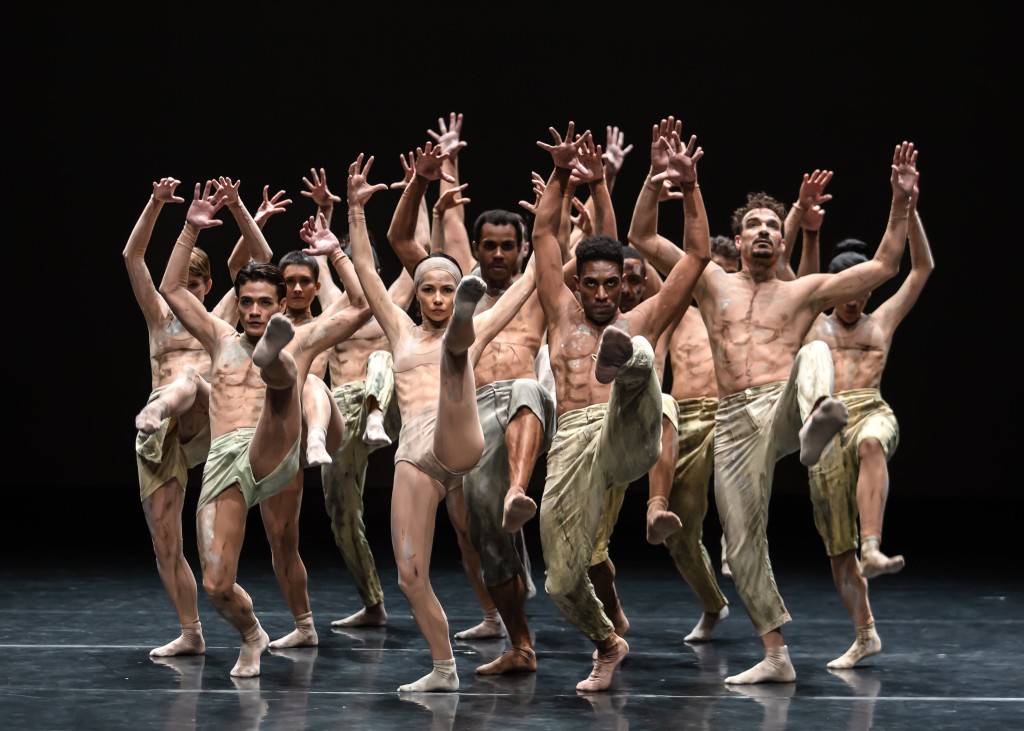
The evening was structured around three distinct performances, each unique in its focus and execution. The first piece, Goya Montero’s ‘Anthem,’ delved deep into the essence of life’s cyclical nature and the idea of collective identities. It drew inspiration from songs that resonate across different spheres, becoming anthems that define “individuals, groups, generations, or nations”.
This performance was not just a dance but a reflection on the communal and personal hymns that guide and shape our lives, echoing the shared experiences and singular moments that define humanity. It was a sprawling narrative encompassing love, war, loss, and victory—a testament to the company’s ability to weave complex stories through dance.
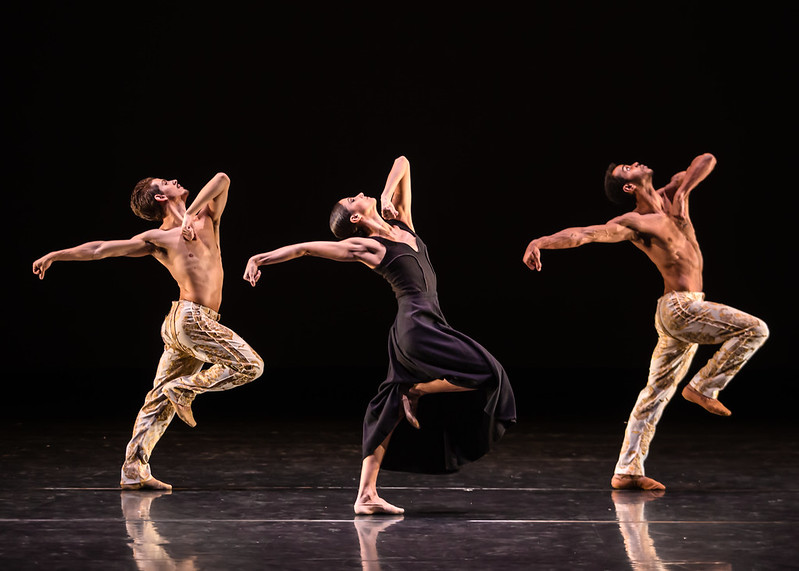
After the interval, the second performance transported the audience to a mystical world with its use of candles, jungle and rain sounds, and dramatic lighting, accompanied by traditional Northern African and South Asian music. ‘Gnawa,’ a piece that showcased the hypnotic, ritualistic sounds of Africa, was crafted by seven composers.
Under the guidance of Nacho Duato, known for his role as the artistic director of the Mikhailovsky Ballet, it immersed the audience in the world of the Gnawa people. Brought to North Africa by the Berbers as slaves, the Gnawa’s rich spiritual and musical traditions informed this mesmerising dance, blending Mediterranean heat with the profound depths of African musical heritage.
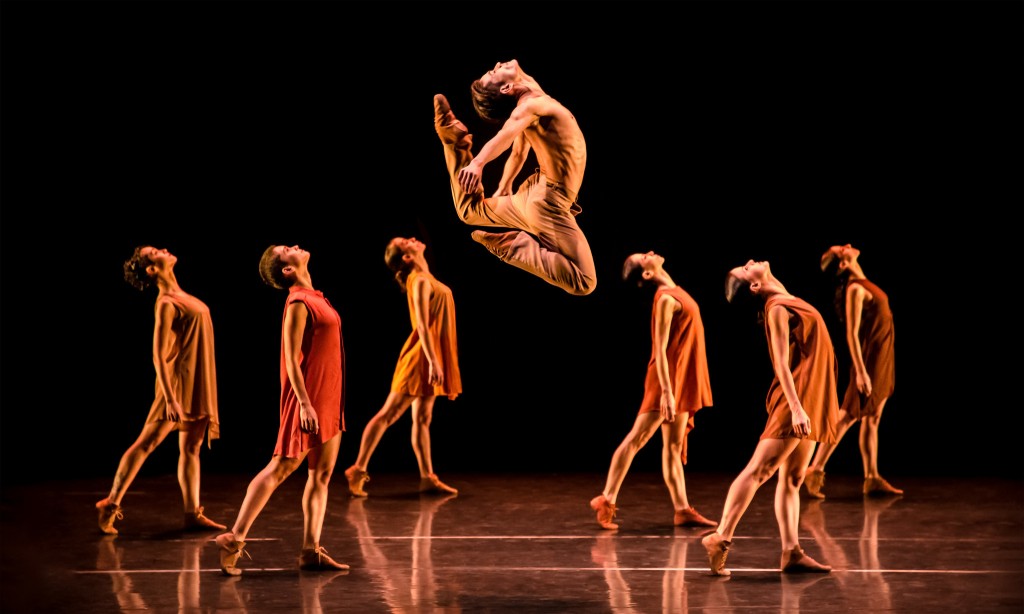
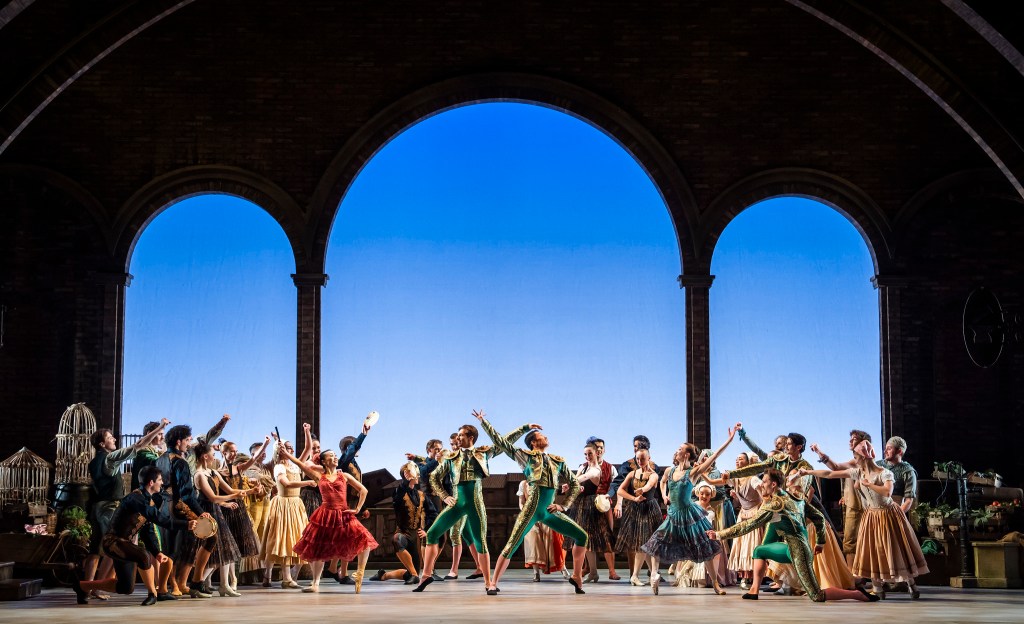
The final piece, ‘Agora’, was presented by choreographer Cassi Abranches. It was an exploration of time and rhythm that was both innovative and reflective. With dancers moving back and forth across the stage, their movements echoing the ticking of a clock, an innovative portrayal that was both captivating and thought-provoking.
Abranches sculpted the movement of the dancers’ bodies to the percussive beats and bass grooves of Sebastian Piracés’ electrifying score, which fused drums and Afro-Brazilian percussion with elements of rock music and vocals, creating a tableau that celebrated the universal rhythms that bind us.
A particularly noteworthy aspect of the performance was its approach to gender roles. Instead of adhering to traditional gendered movements, the SPDC opted for a choreography that was largely uniform across male and female dancers. This choice shifted the focus from gender to sex, emphasising the interactions and group dynamics rather than individual gendered movements. This approach not only challenged conventional norms within dance but also highlighted the universality of human experience, transcending gendered expectations.
This performance was not merely a display of technical prowess but a profound exploration of the human condition, leaving the audience in awe of the transformative power of dance. The SPDC, with their exceptional talent and artistic vision, reminded us that dance, at its best, is a mirror to our souls, a raw and beautiful reflection of the complexity, beauty, and diversity of human life. It was a journey through the cycles of life, the mystical depths of cultural heritage, and the rhythmic flow of time. It encapsulated the essence of Brazil’s fiery spirit and the power of dance to unite, celebrate, and explore the depths of human experience.
Through ‘Anthem,’ ‘Gnawa,’ and ‘Agora,’ they offered a mesmerising glimpse into the heart of dance, where rhythm, movement, and storytelling converge in a celebration of life itself.
São Paulo Dance Company finished its run at the Lowry (Lyric Theatre) on March 13 but it tours the UK until March 23.
Cassi Abranches’s Agora. Photo: Camilo Munoz + Iari Davies
 JADAR
JADAR 