
★★★★☆
Vignettes 6 is made up of six new short plays by female writers in Manchester – produced by female-led theatre company HERProductions. This was the fifth year that Hope Mill theatre has run Vignettes, where emerging and established writers alike show us a 20 minute snippet of their brains.

The standout for me was Anatomy of Desire – written by Obesi Osi-Iyere and directed by Justina Aina – which explores a mistress’ rise and fall through a heavily narrative, monologue-esque act. It was quite a different perspective where the mistress, called “HER”, almost seemed as damned and as hurt as the wife (or is she really the first mistress?) blurring the lines of how much destruction an unfaithful person creates when two-timing people, when legally wedded to one, and unfaithful to both.
“HER” was amazingly embodied by Ntombizodwa Ndlovu whose costume change from buttoned black dress to short red skirt and sharp red lipstick mocks herself, as she narrates her fantasy, all the way to being repulsed by herself and the unfaithful lover.

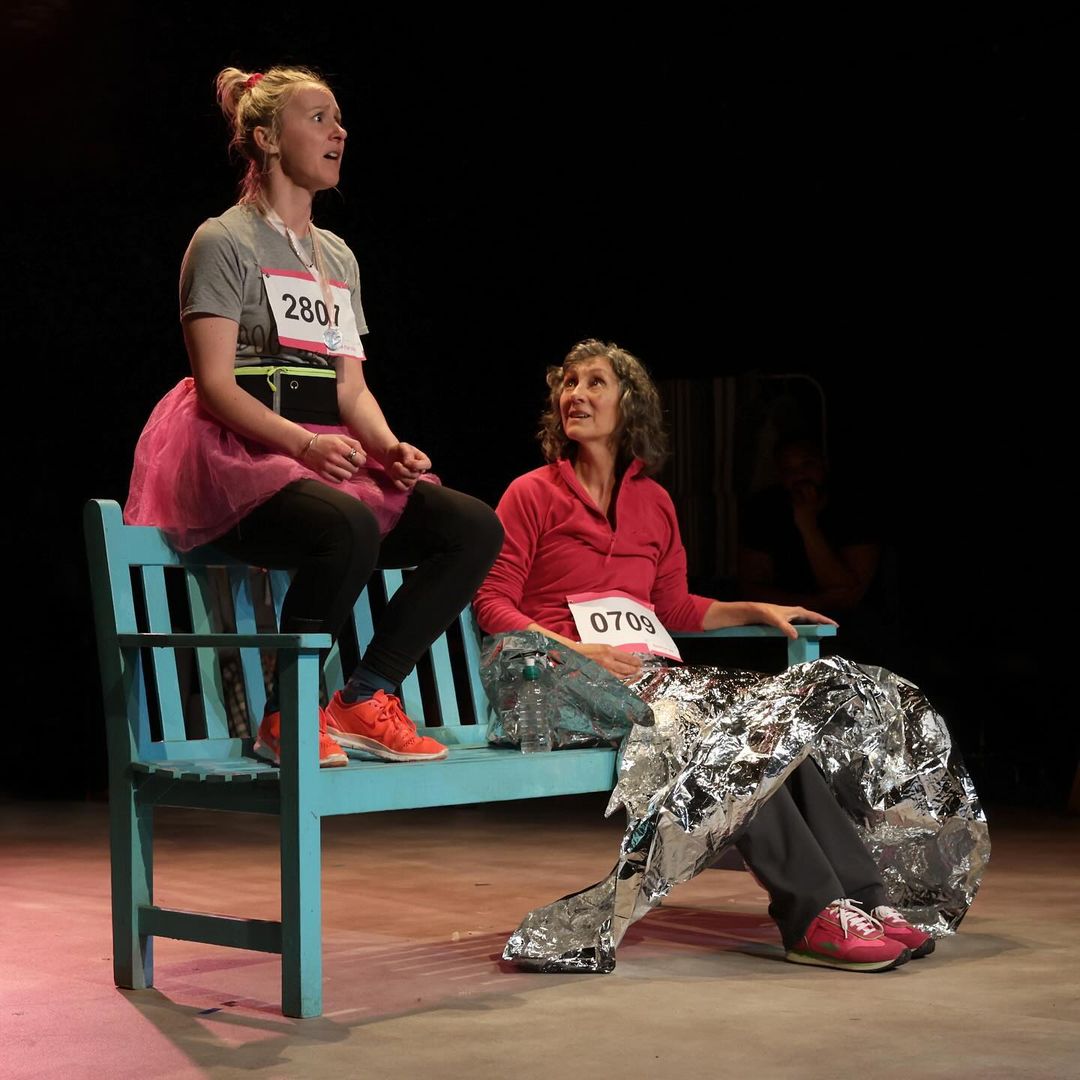
Marathon and running and fitness were key parts of two plays. Birds Don’t Run, They Fly, written by Lauren-Nicole Mayes and directed by Laura Woodward, made overt allegories between running, flying and bird, with a friendship reunion and an abusive partner. There were lots of monologues breaking up the dialogue which I felt could have been either more dialogic, as there was more telling than showing happening in the monologues of the two characters of Ashleigh, played brilliantly by Laurie Ogden, and Helena, played also brilliantly by Kate James.

The other play incorporating running metaphorically, was the first play, Race for Life, written by Christine Mackie and directed by Joyce Brannagh. Here, there are two opposing characters: a Professor of numbers, Alice, played by Christine Mackie, who has late stage pancreatic cancer, and Stevie, a dog-walking boss with a dead mother and lots of nephews, played by Ellaney Hayden.
Both connect over their mother’s who they loved and detested and both jar each other with their abrasive personalities. I really liked how the writing did not lean into their differences based on their different professions or their age differences but on mothers, which really connected with me. Both characters almost felt similar in that respect, having regrets and wanting to not be alone, and it came through very well in the writing.
Gains, written by Nasima “nasima b” Begum and directed by Nikki Mailer, showcased the complex realities of being a Muslim woman – and said Muslim women looking for love, both difficult and annoying in the UK. With two scenes, one more focused on a spoken-word monologue in the context of weightlifting, and the other scene of a bad, bad date with such high hopes at the beginning. Haiesha Mistry plays Ranad brilliantly, especially with her delivery of monologue.
Lamin Touray plays Ali, an unbearable character, adamant on twisting and turning Ranad to their desire. In this date from hell and the UK, Ranad directly leaves the date and addresses the audience, showing them how inane even people from our own communities can be owards you, asking you to be their definitions of what is appropriate – beautiful in showcasing this, with the line of having “signed an invisible NDA”. Another beautiful line which comes towards the end of the play is how resistance is the purest form of love, showing both care and action to be hand-in-hand not just armchair philosophy.

The Maharani of Manchester, written by afshan d’souza-lodhi and directed by Gitika Buttoo, makes use of blocks as writing, looking like a TV episode or film with the big blocks spelling out somewhere in Rochdale. Utilising a hunt in a forest as a parallel to vetting a potential partner, we, the audience, are reminded at the beginning and end that not all hunts are killings.

It was really well-played seeing a matriarchal figure, Maharani, played by Ifeoma Uzo, vet Joshua, played by Raphael Santiago, for her unseen daughter, Tamara. Maharani laments but accepts her attraction to men as another character Princess, played by Riah Amelle, looking like a soldier in uniform and mannerisms, speaks highly and softly of Tamara, to which Maharani casually notes that she would be more than suitable for her daughter, if so wished. Joshua, a sort of well-meaning but bumbling masculine-trope of a man, amplifies the comedic tone of this piece.

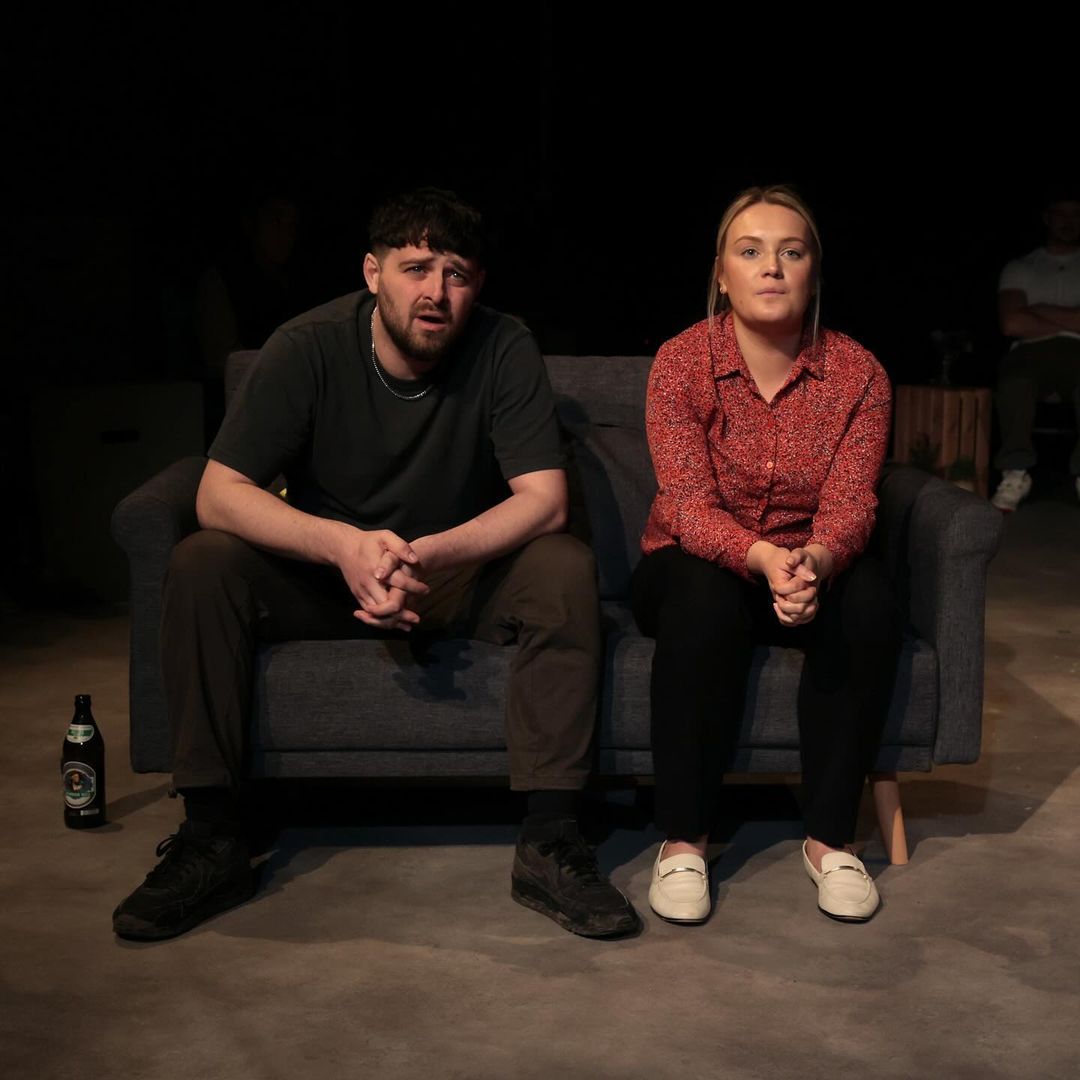
Interesting, written by Alex Keelan and directed by Jess Gough, one of the producers of the Vignettes, has a comedic, dark tone. 17-year old Bo played by Eleanor Booth, is angry, irritated and keeps videoing herself pretending to be her therapist mother with three key phrases she cannot endure. A brilliant scene ensues with a very real couple, Laura (Stacey Harcourt) and Max (Barney Thompson). Their communication issues are met with the pretend therapist of Bo, who somehow effectively uses the hollow sounding questions of her mother to help the couple communicate.
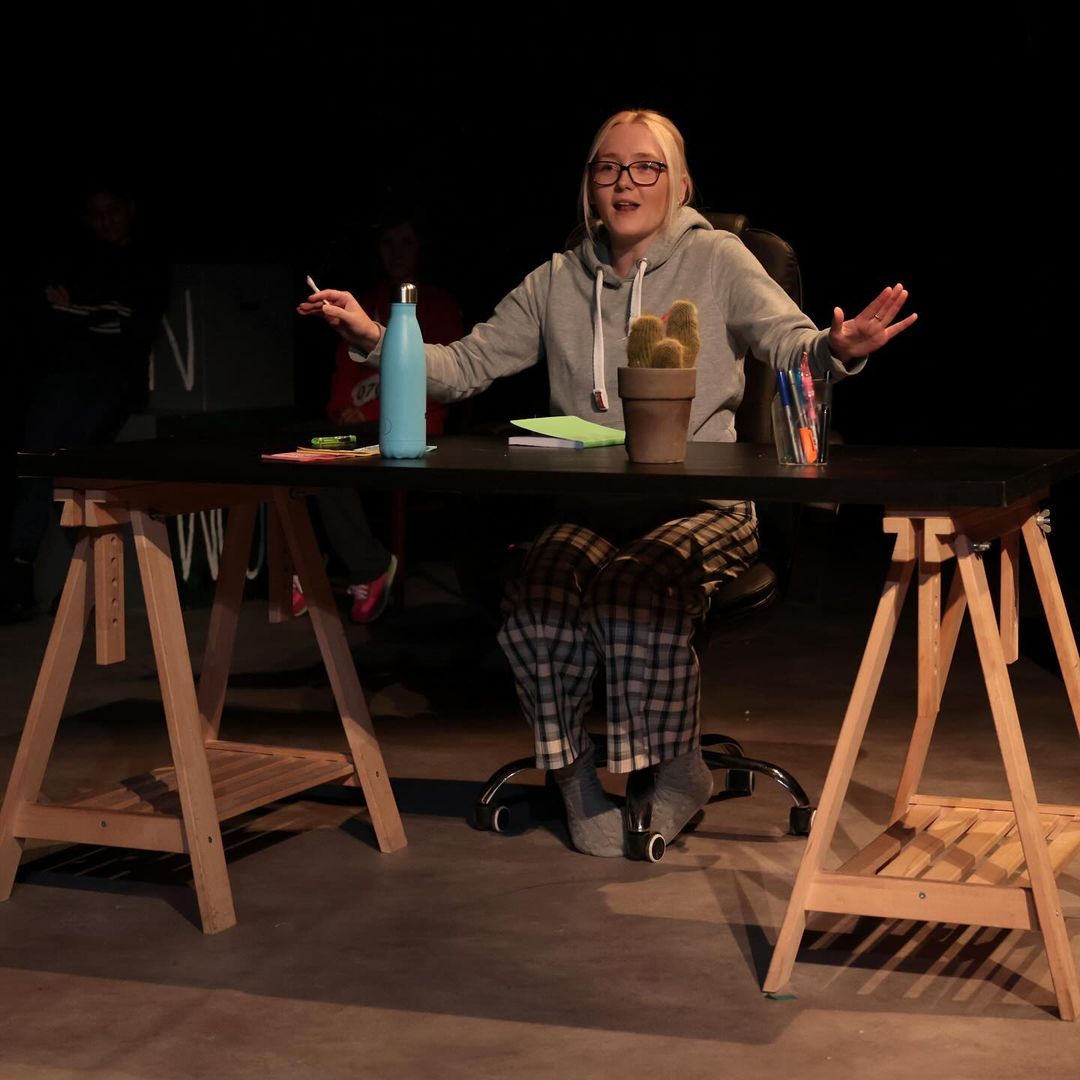
There’s a brilliant scene where the inner-child of Max and Laura are played out, showing their childhood behaviours enacting themselves into adulthood. Something shifts, I’m not quite sure what, but Bo panics just as Steven breaks down. Suddenly, Laura is both soothing Max and Bo, as Bo lets them into her deception, which neither seem too nonplussed by. As Bo rushes into her mother’s arms, there’s lots of tears, some mine too.
It was a really enjoyable night and definitely good to be mentally prepped for six punchy plays over 2 hours. It offers a really good idea too of how to deliver a pitch of a play, and I hope the writers were able to get good ideas for how to take these ideas forwards, backwards, onstage or onscreen.
Vignettes runs at Hope Mill Theatre until April 24.
 JADAR
JADAR 