★★★☆☆
Written by Madison French
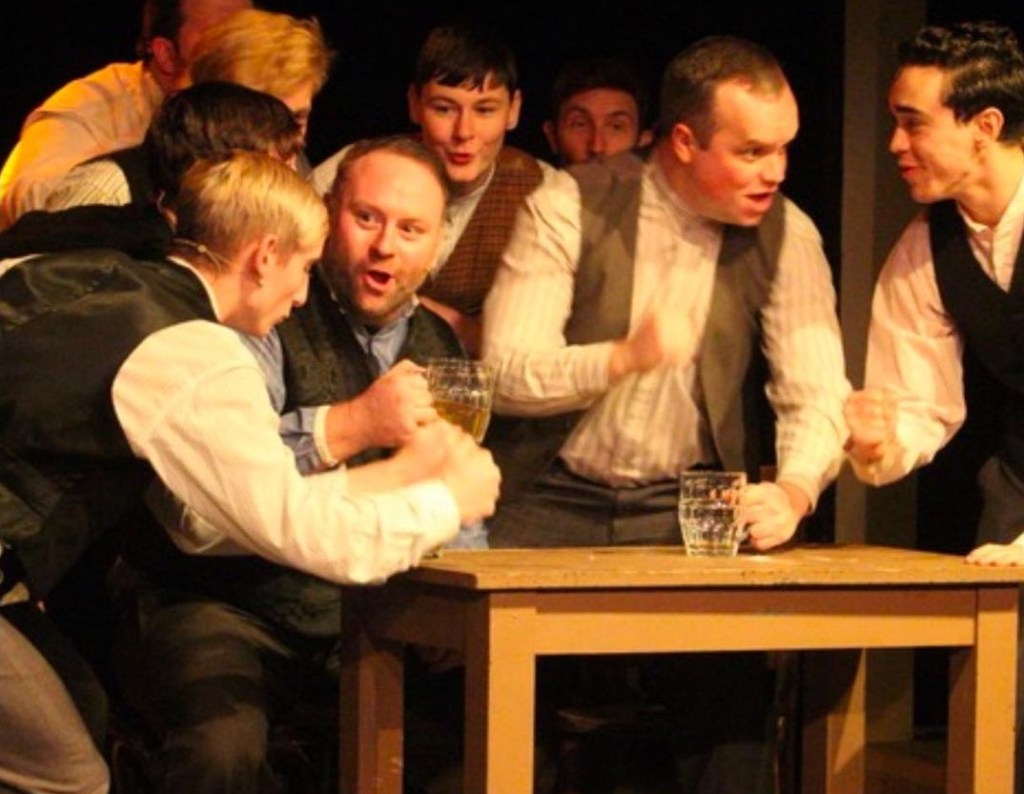
Trench: An Original World War I Musical originally premiered in Manchester in 2018 with critical acclaim. The musical was written by Prab Singh, with music by Ross Johnson and additional material and contribution by Mark Beaumont. This production is an homage to Singh’s grandmother-in-law, exploring the transcendent power of love during war time. This original production is produced with the North West Theatre Arts Company and directed by Singh, himself.
Singh brought new life into the soft spoken story of his grandmother-in-law, sharing a story that would have gone untold. The love and dedication Singh poured into this show is obvious. This devastatingly beautiful musical illustrates the true impact of grief in wartime and the impact community can have. The musical followed a group of men from Manchester going to fight in World War I and the lives they left behind.
I was apprehensive about heavier themes being represented through a musical but there were deeply impactful moments throughout the show. There seemed to be a lot the author wanted to cover in a short musical, which is not a bad thing, but it led to a confusing narrative.
From the beginning of the show, there were inconsistent motifs, feeling like they were almost scared to commit to one overarching idea. The show was marketed to be a love story but there were discussions and representations of religion, education, mental health, the horrors of war, even discussing the ethical applications of donkeys leading lions.
In terms of narrative, there was a marketed expectation to see the untold story of women during the war, however there was a lack of development I found difficult to look past. Unfortunately, a lot of their characters fell flat–solely discussing their husbands, while the men were given conversations about brotherhood, the morality of war and about their personal sacrifice. I wanted to watch the same solidarity with the women that was represented with the men; I often found that the ensemble men and women were reduced to nagging about their annoyance of their partner, making a disconnect in the emotions of the performers.
Similarly, I felt that one choice was made repeatedly to represent female grief, often articulated through heavy sobs and loud, heart-breaking screams, which became overbearing towards the end of the show. I wish there had been various reactions and representations of grief to match the initial frustrations shown in the female ensemble, or a deeper acknowledgment of their contributions during the war.
Finally, I found the leading male characters, Ted and Tom, to be flooded with mainly positive attitudes in the trenches of World War I. Their characters had visible flaws, mostly to do with their attitude and treatment of their wives, but it seemed like the narrative was trying to force heart-warming moments on these characters. For example, when the troupe caught a German soldier, Ted was adamant to let him go to return to his family, only for one of the British soldiers to kill him on stage moments later. Ted seemed to be the moral compass for the entire show, muddling the narrative completely by making Ted untouchable to the horror around him.
The highlight of this production was the talent present in the cast. Tempany Windsor, performing as Younger Mary, was a particular standout, providing an excellent performance. In particular, her vocal mix was spectacular during the emotional climaxes. It is obvious that Windsor has a long career ahead of her in musical theater.
Melissa Grimes, playing Peggy, was another standout performer. Her high soprano voice was beautifully delicate, complimenting the innocence of her character well. Grimes delivered a highly professional show with a superb grasp on her emotions throughout the production. Similarly, the voices and performances of both Billy Morrison (Tom) and Anthony Horricks (Ted) were exceptional, providing an honest and raw emotional journey. There was an undeniable love for the show and production that was shown by all performers, truly making the star of this show the phenomenal dedication of the actors.
The pacing of the show had a slow beginning which guided the audience into a more dramatic second half. The first act gave audience members a detailed setup of life before the war but this also demanded for an onslaught of new characters popping into the second act of the show, making the story seem rushed. I believe the first act of the show should have been condensed greatly in order to set the pace of the production.
There was brilliant direction in place throughout the musical with remarkably hard-hitting moments scattered across both acts. The story revolved around various stories of grief, and at times, I was scared that the ending would no longer hit the audience as intensely as the others had. However, Singh’s direction navigating each death had a remarkably different impact that left audiences grieving for various characters. One of the most obvious choices made by Singh was the use of young performers, highlighting the real ages of the men and women involved in the war. This had a devastating impact, giving us an historically accurate insight of life at war.
Musically, there was a lot to look at in terms of the lyrics and developing themes. One of the highlights being, ‘We’ll Start Over When It’s Over,’ where Windsor and Horricks sang a harrowing duet about their hopes after the war. This song became an overarching theme for the couple, causing emotional rises in the audience through the show. Another particular highlight was, ‘Please God, Please Not Me’ with show-stopping emotional performances by the female ensemble. Finally, one of my personal favourites was ‘It’ll be Over By Christmas,’ with comedic performances being done by an exceptional male ensemble. In particular, Szymon Tomczyk, playing Brierley, was highlighted in this moment.
This being said, there were moments of confusion for me both musically and lyrically. There were moments where the upbeat tone of the music was juxtaposed next to devastating narratives which felt out of place. There was an almost pop-music element to the production which yearned for rag-time, brass, and traditional music hall. I wanted to see traditional war time music complement the modern day ‘pop’ that was shown in Trench. With development, the writing and musical has a lot of potential and could continue to gain audiences, fans and widespread success.
This production was a starkly amateaur production; the design of set and costume were prominent and detailed but often ill-fitting. There were elements of historical accuracy and artistic bending of the history to fit into a story. This is exactly what can be expected from a local community theatre. This show has deep roots within the community, clearly reflecting a story based in Manchester with friends and families scattered throughout the audience.
I do believe it is highly commendable to produce, direct and write a completely new show for stage, let alone a musical. It is obvious there is a deep running talent amongst the creative team and it is important to highlight strong production value. The North West Theatre Arts Company (NWTAC) is a strong company with rising talent in both performers and stories. Surely, this production is one of many that are worth attending.
 JADAR
JADAR 