★★★☆☆
Despite its age, Jaws is a movie that rightfully deserves its title as a classic. Its 1975 release was met with widespread acclaim, and its chilling score and tense atmosphere were fairly exemplary alongside the famously monstrous shark. Ironically, the Universal Orlando ride was my first interaction with the series before watching the movie years later- a good but slightly dated monster movie. Therefore, the idea of a play immediately piqued my interest, even if Bruce wasn’t the central character!
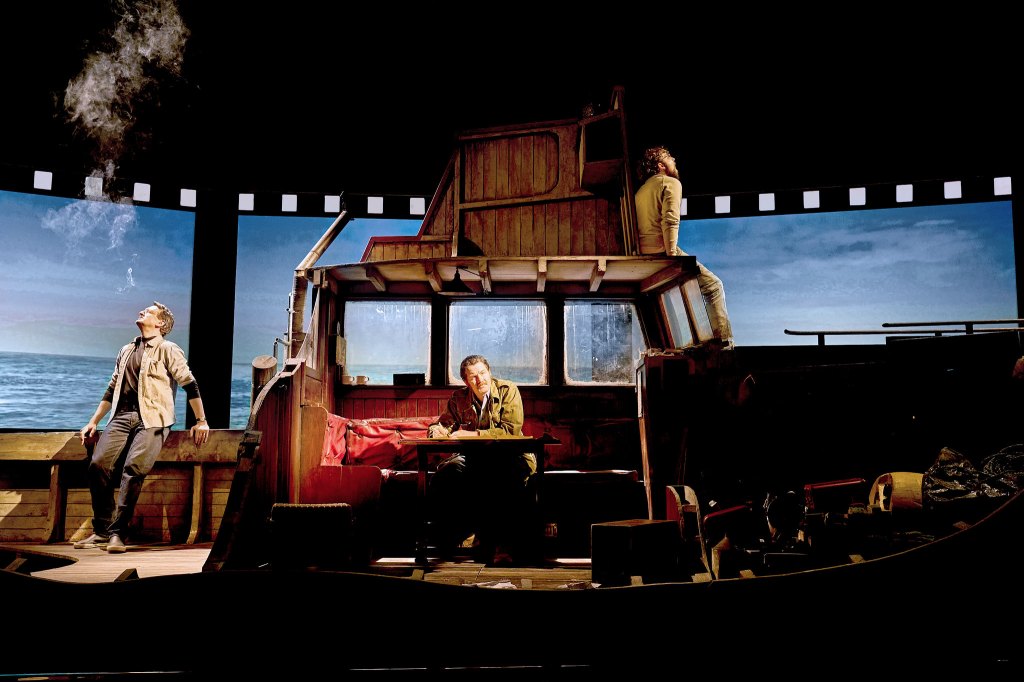
Instead, The Shark is Broken focuses on the film’s trio of actors, Robert Shaw (played by his son, Ian Shaw – co-writer), Roy Scheider (Dan Fredenburgh), and Richard Dreyfuss (Ashley Margolis), during shooting delays caused by the notoriously faulty shark animatronic. The three bond and bicker over the acting profession, family life and alcohol while trapped on their little boat and waiting to wrap up the movie.
But was it smooth sailing or was there some-fin missing from the show?
On arriving at the Lowry, guests were surrounded by the show’s posters, a goofy little shark sketch on the bar, and tons of shark-themed merchandise from pens and pins to hats and mugs – cute yet a little misleading for a show where the shark is only shown once.
While it was a crafty introduction, I was a little flabbergasted by Bruce’s one on-screen appearance: a dorsal fin in the opening video alongside the iconic Jaws music. In fact, aside from references to the animatronic, the actors’ appearances, and little nods to Spielberg and his genre-spanning franchises, one could be forgiven for forgetting its Jaws connection.
The plot is just as meandering and aimless, taking us through the trio’s often strained interactions, revealing tragic details about their pasts, and sharing a few tid-bits about production issues that failed to keep me hooked. Its disjunct structure is interspliced with some great comedic moments including on-the-nose meta-humour, funny interactions, and some cracking insults from Shaw.
However, the lack of real progression or substance were biting issues that made the show feel like 90 minutes of pub-prattling; drunken ramblings, existential crisis’, jabs at current affairs, and gambling rather than a so-fish-ticated tell-all about Shaw. There was no tension or sense that anything the trio discusses would have any impact. They reference extinction events for humans and the arts, believing future films will revolve around capitalist greed with “sequels to sequels” and “remakes of sequels”, yet fail to scratch the surface of the subject after laughing it off in the same way the more emotive moments are shirked away as impromptu lapses (a result of sticking close to reality and masculine secrecies perhaps).
While quaint and effective, the staging is equally stagnant for the full 90 minutes, consisting of a boat with a seating area, a cargo area crammed with props and hidden stashes of booze, and a backing screen with seascape videos. While the lighting or videoed “weather” change from time to time along with a few awkward transitions, the stasis of the set and dialogue become rather tedious.
I can’t deny that as a tribute to his father, the show is touching and tragic, allowing audiences to see Shaw perfectly replicating his father’s mannerisms while also highlighting his trauma and alcoholism with incredible tenderness and vulnerability. Audiences are indulged with an interestingly deep figure – his gruff, cruel exterior melting away when helping Richard through a panic attack, and slowly softening up to him in their chats.
Fredenburgh also produces a surprisingly effective impression of Roy, recreating his slightly monotone voice and pairing it with his charming protectiveness of his crewmates. Margolis’ Richard was filled with child-like naivety and wonder, making him the perfect counterpart to Shaw’s pessimism. Their relationship is rocky but each character’s layers of sensitivity and passion bring incredible dimension to their parts.
Sadly, the care and attention given to these characters (the Jaws actors), was not reciprocated within the plot. Some of the show’s best moments were its references to Jaws, whether that be rehearsing lines, the quirky introduction, or the final acted-out cut of Shaw’s movie speech. I just wish there were more of these moments and a clearer direction to blow it out of the water.
While its approach is unusual, the unmoving set and limited cast makes for an interesting premise when paired with strong story-telling. The show’s focus on the characters is touching but also results in a tiresome approach. With tweaks to the structure, adventuring further away from light-hearted rhetoric into the deeper traumas with added pathos, and including a few more shark teasers, it could be gold, but perhaps they bit off more than they could chew.
Ultimately, The Shark is Broken is an intriguing character study allowing audiences to get their fill on the making of a rather unconventional movie, but to make a real splash it was “gonna need a bigger” plot. The lack of structure, movement and purpose undercuts the cast’s incredible acting performances, leaving the show adrift in a sea of dialogue and inconsequential interactions.
The Shark is Broken runs at The Lowry until February 8 and tours the UK until May 17.
 JADAR
JADAR 