★★★☆☆
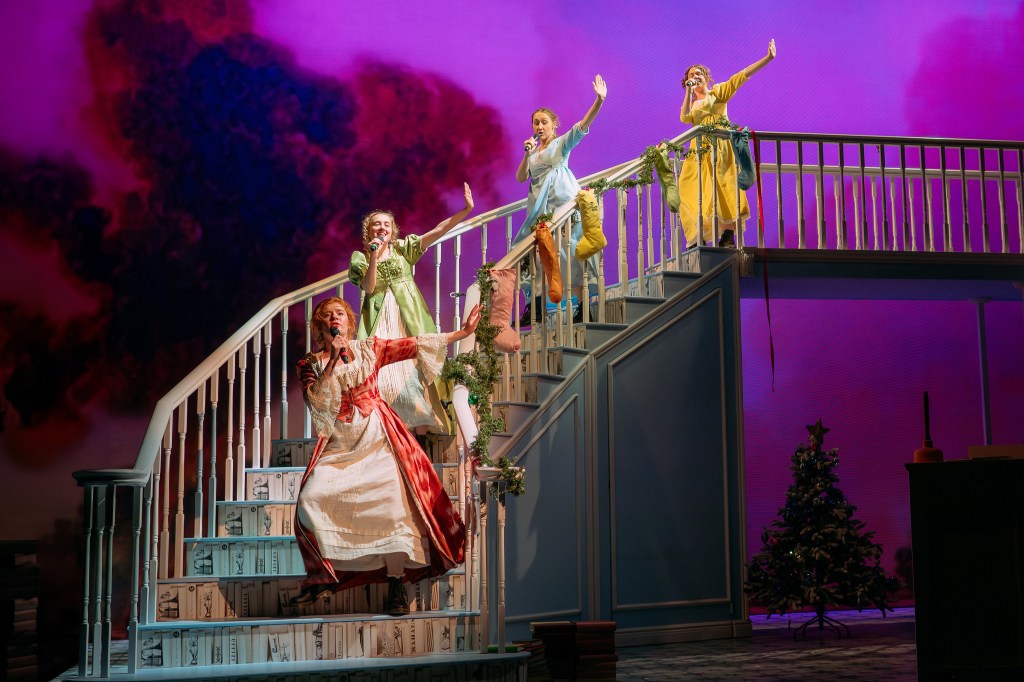
Following its phenomenal West End debut, Pride and Prejudice* (*sort of) is currently touring the United Kingdom with the Olivier Award for Best Comedy. The show is a love letter to its phenomenal cast, where dozens of complex characters are portrayed by only five fiery women. Written and directed by Isobel McArthur, this classic retelling has provided an excellent example of how beloved narratives can be reimagined successfully.
The narrative had a distinct intention to recentre Austen’s writing into an approachable retelling, focusing on the necessity of female companionship, while also showcasing a wide-range of female talent rarely seen in modern scripts. The structure of McArthur’s writing is an approachable and honorable one, opening up an otherwise exclusive tale set in high society, to be about the working class. However, does this rendition successfully maintain the critiques of modern society and evaluate how pride of self interferes with our ability to connect?
The draw of Jane Austen’s Pride and Prejudice is a reflective love story critiquing the spread of misinformation. In modernizing a story with this theme, within our current culture that is increasingly dependent on the spread of misinformation and information alike, I was expecting a clear socio-political stand from the narrative, but found a surface-level exploration present in story and props. There was an attempt to create a modern narrative, but I found the script to be muddled and not fully committed to these themes and intentions.
Some moments of comedy were utterly hysterical and other parts of the story could have been simplified. One main issue I had was the use of karaoke to portray the mixed modern setting. I found two moments advancing the plot, one being when Elizabeth Bennet angrily sings ‘You’re so Vain’ at Mr. Darcy, truly a hilariously in-touch moment and the other an energetic dance number to ‘Young Hearts Run Free’ to close the show.
The other songs felt out of place–walking the line between a musical and a play in a confusing manner. I would be curious to see this same show commit to being a play, perhaps with music in the background acting as an easter egg for audiences, or full commitment to being a jukebox musical. The music, unfortunately, often cut off the lines of the performers and the mixing was different for every performer, making some lines inaudible and some lines too loud. There were noticeable issues with sound that hindered the performance.
Jane Austen’s Pride and Prejudice itself is a highly satirical critique on high society and the unjust expectations of women in the Napoleonic period, with a particular focus on life in England. Isobel McArthur explored the various ways these themes can be explored in relation to a different lifestyle and time period, relating this story to a Scottish, particularly Glaswegian, point of view. McArthur has a true talent for script writing and direction of physical comedy (alongside Comedy Supervisor, Jos Houben), but the constant and overwhelming style of comedy chosen created unnecessary gaps in the narrative.
The pacing of the entire show was intense and overly quick, leaving audiences with barely enough time to catch one joke before the narrative shifted. The comedy felt chaotic, often bombarding audiences with physical comedy, well-written jokes and reactions all at once, without time to sit in the laughter before the topic changed. The dialogue often jumped on top of one another and there were more than a handful of times that members of the audience were unable to hear what they were saying.
I believe the constant onslaught of various comedy types was overwhelming and the production would benefit with a focus on one or two styles per section: situational, slapstick, prop-comedy or physical. The use of all these forms of comedy for every single line was intense. In fact, I found the moments that highlighted one form of comedy to be standout.
For example, when Mr. Bingley (played by the sensational Emma Rose Creaner) repeatedly proposed to Elizabeth Bennet by drastically throwing her body across the stage, or when Jane Bennett (Christine Steel) dramatically rode on horseback while the cast made the noises of horse trotting, cinematic riding orchestration and real water spraying Elizabeth. These moments were standout because there were 1-2 forms of comedy at play: low comedy paired with situational awareness of its absurdity.
The show must be congratulated on its sudden rise and success across the UK. There is an undeniable charm present in this production, truly allowing for every performer to shine in what they do best. Every performer seemed to be having an absolute blast on stage, connecting with one another admirably. Their connection was reminiscent of the joys of girlhood that made this production so exciting. Fans of this beloved tale will certainly enjoy such a beloved classic being retold, but there may be a handful of jokes that dedicated Austen fans will solely understand.
Eleanor Kane (playing a variety of sisters, servants and lovers) was on point in her delivery, cadence and physical comedy. Naomi Preston Low had the difficult job of portraying the extremely confused and frustrated Elizabeth Bennet, balancing the emotions of anger and confusion well. Emma Rose Creaner (notably playing Mr. Bingley) was a true master of physical and emotional comedy, delivering a truly standout performance. Christine Steel (playing Jane Bennett and various other roles) was another strong performer in her ability to change characters quickly with complete emotional control.
Finally, the standout performer for me was Rhianna McGreevy who played the deeply beloved Mr. Darcy and the overly dramatic Mrs. Bennett. McGreevy delivered an absolute show stopping performance, with a wide range of emotional and comedic elements that drove this story home. Mr. Darcy was one of the slow-moving characters that allowed audiences to breathe in this production, making her performance an absolute triumph.
The standout element of this piece is the draw of five loud and rambunctious women playing make-believe, drawing the connection between storytelling and homemaking.
In relation to the original text, one part of the script I believe they portrayed exceptionally well is the overtly sapphic undertones brought to the forefront of the story, the delightfully charming nature of a neurodivergent Mr. Darcy, and a grasp on the pockets of joy that make this piece so showstopping. Every performer on stage had a true dedication to the script to their various characters and to one another. There were moments of pure brilliance that shone through in this piece, with particular emphasis on the relationship of these five women.
This is a show that must be consumed and celebrated for what it has done for modern scriptwriting and portrayal of women on stage. It is a testament to the reimagination of famous narratives and an exemplary piece of female-led comedy. There is a slight disconnect in themes throughout the piece, separating itself from the original text, but then again, it’s only “sort of” Pride and Prejudice.
Moving forward, I would be curious to see this show workshopped on its connection to modern society and to reinforce the themes of class and womanhood represented. This is raw, bold and certainly not your grandparents’ Jane Austen!
Pride & Prejudice (*sort of) runs at Lowry (Lyric Theatre) until March 22 and tours the UK until June 14.
Photo: Mihaela Bodlovic

 JADAR
JADAR 