With the constant leaps in medicine and the first pig-to-human heart xenotransplantation trialled in 2022, our reality seems to be blending more and more with works of science-fiction. While largely unfamiliar with Malorie Blackman’s 1997 children’s novel, which was later adapted into a BBC television series, it poses ethical questions just as relevant as Kazuo Ishiguro’s Never Let Me Go; another sci-fi world filled with un-consenting organ “donors” and unconventional experimentation.
Reimagined for the stage by Winsome Pinnock, Pig Heart Boy follows 13-year-old Cameron (Immanuel Yeboah) who’s given the chance to try a new experimental heart transplant. The only problem… he’s being offered a pig heart.
Cameron faces the ethical concerns of such a treatment and faces new forms of discrimination after news of his operation is leaked around his class and wider community.
Unfortunately, much of the novel’s emotional gravitas is lost among cringy humour, which trivialises serious situations to make them a little more digestible for the 9–13-year-old target audience. I appreciate that I am clearly not a part of this demographic, but it’s disappointing that shows with serious messages often feel the need to compensate with goofy comedy routines, absurd skits, and CBBC-style exaggerative acting rather than diversifying. Between inconsistent pantomimic interactions and eye-rolling gags, I was left constantly craving the emotion supposedly at the heart of the show.
Instead of making us feel bad for Trudy (Cameron’s donor pig) with a touching heart-to-heart, audiences are instead baffled by the introduction of a hammy Barbie-pink puffer jacketed sassy “pig” girl, trotting around with her pink pig-tails braids and bedazzled sunglasses – girly pop intro to boot. Her interaction is a fleeting tonal imbalance, and her character, while annoyingly stylised and memorable, is largely unimpactful since all of Cameron’s mounting guilt about taking her heart dissipates without a trace after the operation.
Themes of animal rights, strained friendships, and distrust are at play but feel underdeveloped by the time-hogging comedy segments and a few too many droning (yet touching at the core) narrations from the book.
Obviously, the show needs relatability in order to connect with the children in the audience and help them understand difficult subjects. However, the comedy routines, dialogue, and social interactions feel largely out-of-touch; a trait further exasperated by having adults acting like skittish 13-year-olds, although I appreciate that it’s a difficult balance.
The cast give convincing and passionate performances, but I can’t help but feel a little disconnected with the exaggerative direction (it gives “I’m down with the kids” vibes).
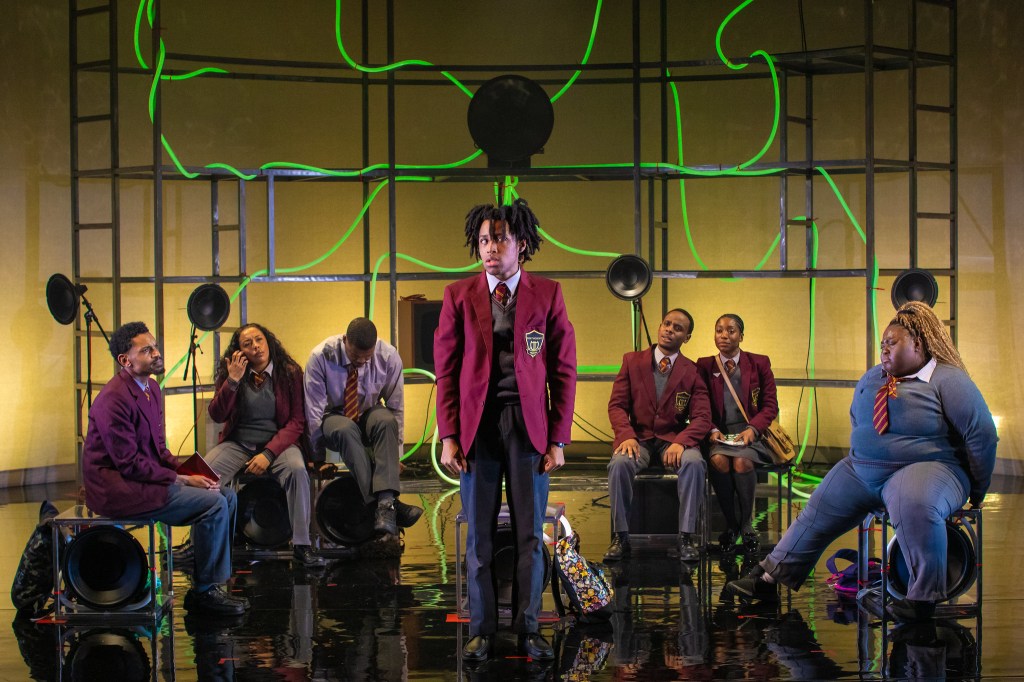
Regardless, Yeboah’s Cameron is witty, sentimental and endearing, despite his later bad-boy phase. He particularly thrives in his interactions with Christina Ngoyi, whose jovial smile and friendly disposition allow her to shine as Cameron’s best friend Marilyn. Chia Phoenix’s performance as Cameron’s Nan is charismatic, fiercely protective, and filled with palpable warmth. His parents, played by Christine During and Akil Young, have a charmingly realistic chemistry as a quarrelling but loving couple and share some tender moments with Cameron. Finally, Tré Medley’s Dr Bryce is enigmatic, sympathetic and chattery despite his mysterious and absurd ways.
Each actor (aside from Yeboah) also has to multi-role, playing not only adult family members but also strangers, journalists, pigs, and school friends. Their adult roles feel far more authentic, but I appreciated the effort they made with changing up their mannerisms and physicality to be teenagers, even if it was overdone.
The show, while trying to stay relevant, includes a random sprawl of 90s pop-culture iconography (confusing a child or two) from The Matrix and 8-bit video games, to The Looney Tunes, MJ’s moonwalk, and classics 80s/90s music like Anita Baker’s ‘Sweet Love’. The stylisation would be intriguing had it been fleshed out more, but inconsistencies and modern styles and sentiments sit the show in some weird temporal limbo between the 90s and the present.
XANA’s sound designs are some of the most engaging segments of the show with ethereal lo-fi beats, remixed roadrunner and porky pig sound-effects, thudding heart-beats, and some great music collaged into intriguingly funky and sometimes thought-provoking accompaniments.
Additionally, Paul Wills’ set, constructed with illuminous tubes wrapped around speakers, boxy TV screens, and scaffolding creates an interesting dynamic when paired with Andrew Exeter’s evocative lighting. The limited set transforms into a multitude of spaces; sterile white hospitals, serene and blue at the pool, or blood red in Cameron’s grizzly dramatized description of heart surgery. Other times it seems reminiscent of the body itself, the myriad of tubes eerily akin to veins, arteries and medical equipment.
However, the set’s stasis leads to some tedium along with a few awkward movements across the scaffold, and the suspension of disbelief in the pool “daredevil dive” scenes. Its not pig-ture perfect but worked well despite its limitations, I just wished there were more of these sustained and bold creative decisions driving the show.
In a major twist to the tail (pardon the pun), the story concludes with the death of a close family member after Cameron’s own close call. Both these moments feel rather rushed but the haunting scene in which Cameron desperately tries to wake them, before seeing their spirit (dressed in a bathing suit) tranquilly moving on. They also lead to touching dialogue, with Cameron making videos for his future sibling and prioritising his family and friends.
There’s a poignant message at its core, but it’s muddied by tonal and temporal inconsistencies, clunky characterisations, boar-ingly slow-paced monologues, and an array of frustrating creative choices.
Pig Heart Boy tours the UK until June 14.
Photo: Ali Wright

 JADAR
JADAR 