★★★☆☆
Ten years on from winning the Bruntwood Playwriting Prize 2013, Yen by Anna Jordan returns to the stage at Bolton Octagon this September, directed by Connor Goodwin with Divided Culture Co. at the helm.
I was invited directly by Divided Culture Co., led by founders Dan Lovatt and Connor Goodwin, to review the piece. It was especially lovely to be asked, as I hadn’t yet seen any work at Bolton Octagon.
Having met Anna Jordan at a Bruntwood 2024 event last year, and being a fan of her writing for some time, this revival felt exciting to approach. Jordan herself even posted a video congratulating the team, warmly endorsing their interpretation of her renowned piece of work.
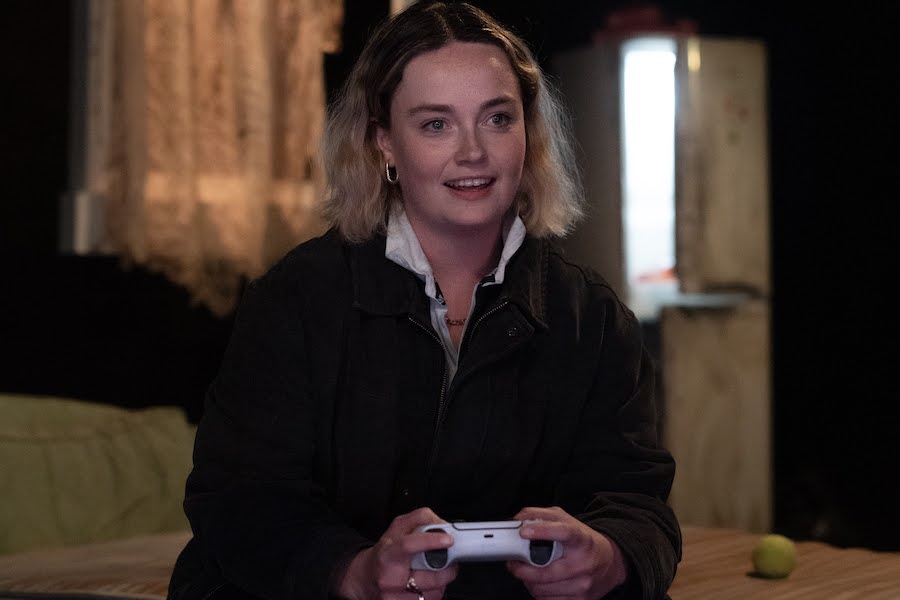
Yen opens with brothers Bobbie, 13 (Jonny Grogan), and Hench, 16 (Adam Owers), shirtless and lounging together on their single bed amid the chaos of their bedroom, there’s litter everywhere, they sit watching adult films at full volume. It’s a blistering start – one that immediately sets the tone for the play’s raw, unflinching look at adolescence and masculinity. Two young boys are left to raise themselves, intoxicated by violent, obscene images with the promise of playing out their fantasies with real women.
A decade has passed since the play’s debut, yet Jordan’s themes resonate even more sharply in an age defined by the manosphere and children growing up online. Soon we meet their mother, Maggie (Vicky Binns), distant and distracted, more absorbed in drink and her new boyfriend than in parenting her sons. Jennifer (Lucy Eve Mann) steps in, therefore, as a pseudo mother figure and love interest for Hench, picking up the pieces left by their absent parents, and offering to care for their neglected dog, Taliban.
Jonny Grogan’s Bobbie is believably thirteen, bouncing around the stage without breaking a sweat, his mood rising and crashing just as quickly. He vies for Hench’s attention, growing angry and low when he can’t grasp it. Adam Owers’ Hench is incredibly considered, playing the sheepish teenager, conscious of how he’s perceived, cards almost always close to his chest. Although he doesn’t quite look sixteen, he captures the soul of a boy caught between being himself and trying to look cool, pretending not to care about the things he values most.
Lucy Eve Mann as Jennifer is a breath of fresh air, bringing the sunshine needed in the brothers’ dark lives. Sickly sweet at first, Mann soon settles into Jennifer, offering a gentle presence that softens the world around the boys. As the literal mother figure, Vicky Binns’ Maggie is erratic, drifting in and out of her sons’ lives, crying out when they fail to appreciate her incompetent parenting. Binns throws herself into the role, pouring a huge amount of emotion and energy into her craft. This contrast between mother figures underlines the play’s central truth: the importance of love in shaping childhoods. The brothers thrive in Jennifer’s presence and unravel under Maggie’s influence; yet ultimately, the dominance of violent videogames and isolating environments takes precedence. Love cannot always prevail, and the play closes in sexual violence and heartbreak.
The production moves through conflicted rhythms at times, with contrasts in tone between the characters. Some transitional scenes felt a little uneven, with the animalistic physicality and vocalisms occasionally standing out from the rest of the performance. Hench’s quiet, considered presence provided a calm counterbalance to Bobby’s energy and Maggie’s brashness, though at moments these shifts shifted the focus in unexpected ways.
It’s in the second act that Divided Culture Co’s Yen really takes flight. The chemistry between Jennifer and Hench held the room captive, each moment of discovery charged with anticipation as they explore intimacy for the first time. One particularly aching exchange sees Hench admit he doesn’t know how to touch Jen. He’s seen how but refuses to imitate the violence of the films that shaped him. Instead, he struggles between what he has absorbed online and the instinct to explore romantic love on his own terms.
Yen shows a glimpse into how young people can thrive when given the love and care to do so, but Jordan reminds us that “Love is dangerous”, and reveals the sheer destruction that men can bring about when brought up in absense of love and left to their own devices.
With a little more clarity in direction, this revival could easily grow into a strikingly powerful production. As it stands, Divided Culture Co’s Yen is a thoughtful, promising take on a modern classic; one that honours the play’s raw power while confidently making their own mark.
Yen runs at Octagon, Bolton until September 13 before transferring to Alphabetti Theatre, Newcastle from September 17 to 20.
 JADAR
JADAR 