
★★★★☆
Based on Sadiq Ali’s lived experiences, Tell Me is a powerful, raw and deeply moving performance that takes the audience through the journey of a woman facing an HIV diagnosis in today’s society. It is a show that does not try to explain or soften the experience. Instead, it allows it to unfold through the body, emotions and the space on stage.
With very little dialogue, the story is carried through an impressive mix of contemporary dance, Chinese pole, circus and theatre. Performed by just three artists, Sadiq Ali, Jonah Russell, and Phoebe Knight, their technical skill is clear from the start, but what stands out most is how this technique serves the story rather than overshadowing it. Movement becomes the main language of the piece. Through moments of strength, fragility, balance and risk, the performance communicates feelings that are often hard to articulate: fear, desire, confusion, isolation and resilience.
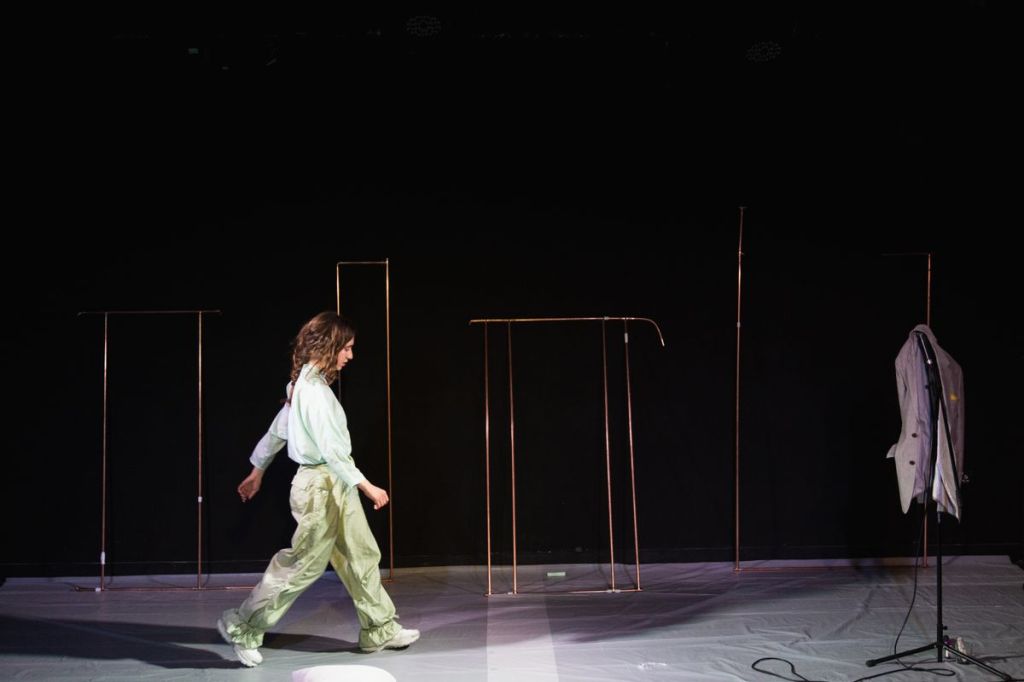
The set and costumes, designed by Aslı Özüak, may appear simple at first, yet they quickly proves central to the storytelling. The red squares of different sizes are full of meaning. The colour, closely linked to support for people living with HIV, sets the tone of the work. These structures suggest social pressure and limitation, but they are also spaces where the performers climb, resist and regain control. They frame and restrict the body, challenge it, and at the same time enable some of the most memorable moments of the performance.
The lack of spoken explanation gives the audience room to reflect on what a diagnosis can mean. Not only internally, but also in relation to others: partners, family, friends and society more broadly. Shaped through the dramaturgical work of Rishi Trikha and supported by choreography consultants Jonathan Lunn and Junior Cunningham, the silences invite attention and allow each person to make their own sense of what they are witnessing.
Tell Me engages with stigma, fear and death in a way that feels honest and direct. The performance does not shield the audience from the weight of these themes, nor does it tell them how to respond. Alongside this, there is a strong sense of sensuality throughout the show. The performers’ movements are intimate and confident, reminding us that desire, vulnerability and pleasure remain present even in moments of fear or uncertainty.
This is a deeply human work. One that shows resilience not as something heroic, but as something ongoing and necessary. The performers move effortlessly between strength and vulnerability, holding the audience’s attention throughout.
Tell Me is a beautiful and confronting performance that leaves a lasting impression. It challenges assumptions around living with HIV and opens space for reflection and conversation on a topic that is still too often unspoken. It stays with you, not because it tells you what to think, but because it allows you to feel.
Photo: Alberto Santos Bellido

 JADAR
JADAR 