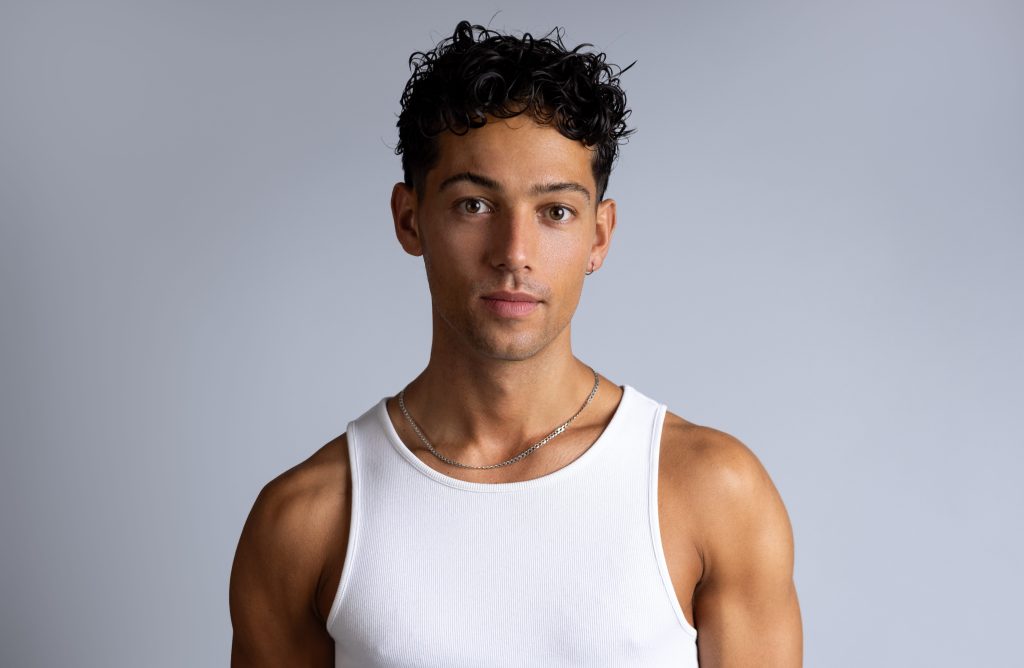
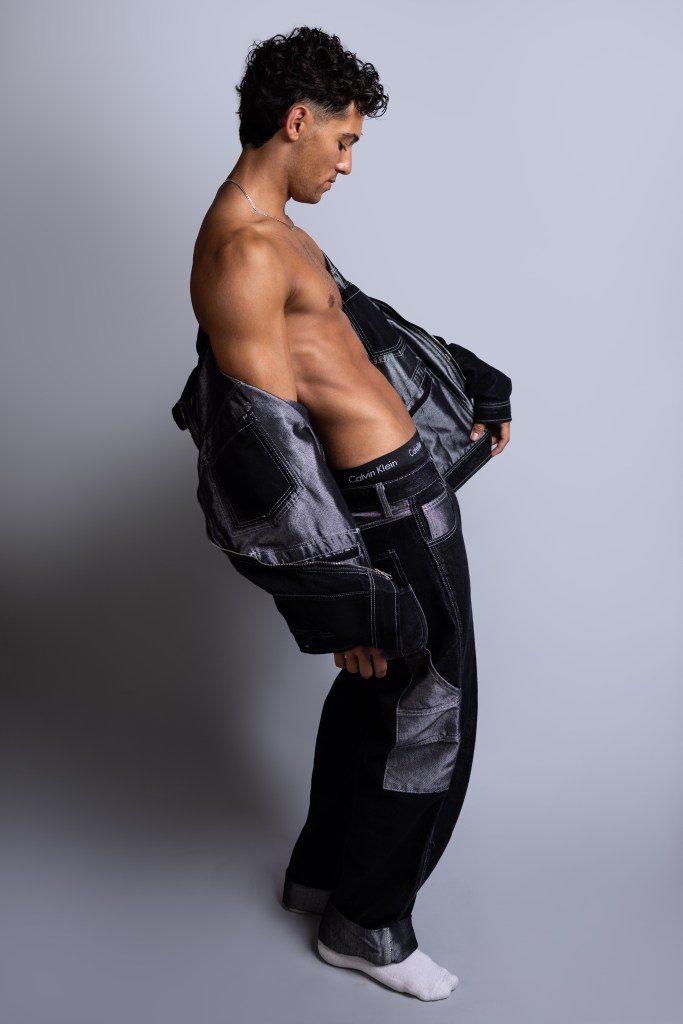
Gabriel Clark is a queer British-Sardinian creative from Greater Manchester. Best known to many as Ollie Morgan in Hollyoaks, he is currently starring in Derek Drake’s one-man play The Night Larry Kramer Kissed Me and will soon appear alongside Alan Cumming in Russell T. Davies’ highly anticipated queer drama Tip Toe. A versatile theatre-maker, Gabriel is the co-founder and Artistic Director of Switch_MCR, a founder of Sixth House Theatre, and recently starred in the critically acclaimed queer play Jock Night. Beyond his artistic work, he is an outspoken activist, using his platform to champion causes ranging from queer rights to Palestinian liberation.
I first came across Gabriel before his Hollyoaks days, when we interviewed him during my very first year (of four!) as Theatre Editor of The Mancunion. Even then, it was clear he was destined for great things. Gabriel isn’t just incredibly talented; he’s passionate, thoughtful, and hard working – and all that effort has paid off. On top of that, he’s genuinely one of the loveliest, coolest, smartest (and nerdiest!) people I’ve ever met. I’m so glad that we have become friends through working together on this in-depth feature, where we do not leave a single stone unturned.
Raised around the arts
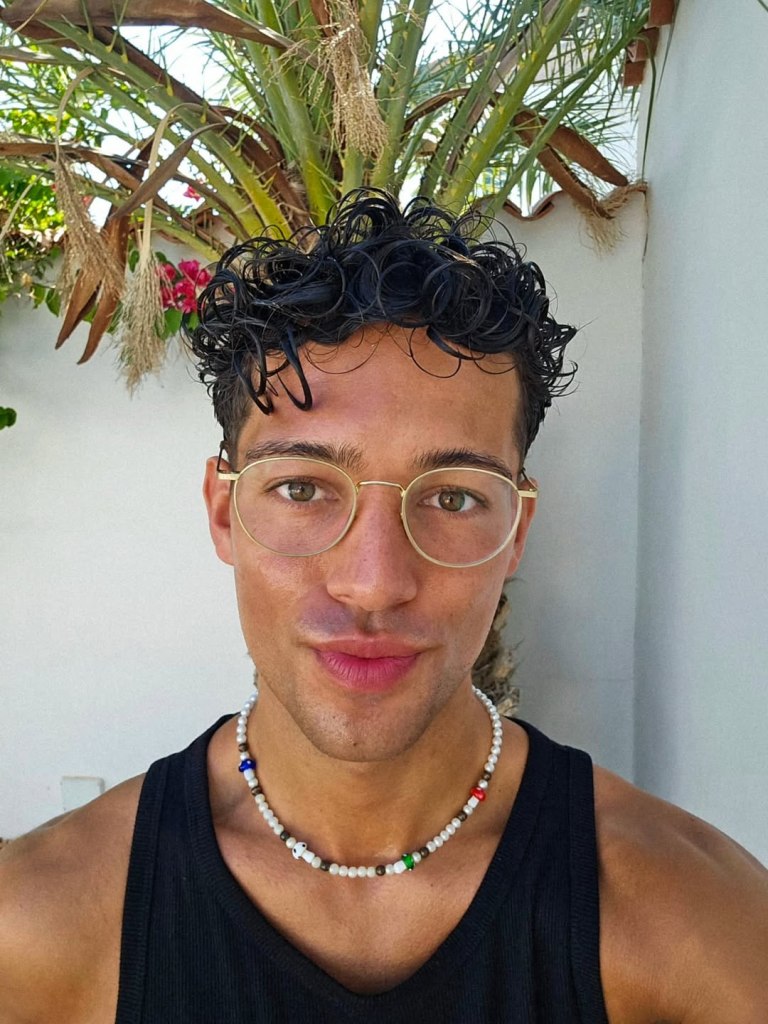
Gabriel is half Sardinian and half Boltonian! His British-born mother is the child of Sardinian immigrants, and his father is from a family of miners and factory workers. But unlike a lot of other kids from working-class backgrounds, Gabriel was fortunate enough to grow up around the arts, with his mother being an opera singer and his father playing in a band.
“I didn’t realise I was being raised around the arts; it was just all I knew. We didn’t go to the theatre loads as kids, partly ’cause my mum was often working. My dad’s in a band, plays guitar, and mum’s an opera singer. I always felt very different at school, and that just made me feel more different. But to me, it was so normal, but I only ever realised it wasn’t if we ever had to talk about what other people’s parents did. Growing up with parents who are artists, we’re not living the most luxurious, rich lifestyle, but that’s fine, and I’m quite used to that, and I’m happy that I’ve grown up in a house where my dad’s family were miners and my mum’s were migrants.”
Many people in the creative industries come from privileged backgrounds, while working-class and immigrant families often discourage their children from pursuing careers in the arts. For Gabriel, however, having creative parents meant he never saw his ambitions as unrealistic or out of reach.
“My dad fixes furniture and plays in a band – so he was doing what he loved and making enough money to live. And my mum’s family came to the UK in the ’60s and struggled, and she went on to be an opera singer and go around the world singing and get flown to really cool places. Growing up, I didn’t think, ‘I’m never gonna escape Bolton’. It’s really nice not having that barrier because your parents have already done it – so I feel very lucky to have grown up with that ’cause I felt very encouraged going into it.
“There wasn’t this sense of, ‘But he needs to be a lawyer’. I’m sure I would have been a great layer – probably not – but I was very academic and very nerdy, and I think the idea of having a kid who’s doing well at school saying, ‘No, I wanna go and not earn any money and pretend to be someone else,’ there wasn’t ever a, ‘Fuck. How can we dissuade him?’ For them, that was, ‘Can’t afford to send him to drama school, but we can afford to take him to the Octagon Young Company because it’s ’round the corner and it’s free,’ and that changed my life. And the Royal Exchange Young Company – stuff like that, I think, is brilliant.”
Hollyoaks
Gabriel’s first major role was Ollie Morgan in Hollyoaks, when he was 21. I asked him what it was like starring in the show whilst he was at uni.
“Well, I don’t know what it was like not doing it whilst I was at uni,” he admitted. “Well, I did, ’cause then I finished uni [but] I didn’t realise how much work I was doing until the whole thing was over. It was a lot of work. It was really hard. But also, it was really fun. Because it was the middle of the pandemic, and a lot of stuff had gone back, but universities were still remote, so it meant that I could actually do it because Channel 4 and University of Manchester worked their schedules around each other, so I was able to sit in my dressing room and do a lecture on Zoom and go to set and film some stuff… I wrote half my dissertation on the back of my scripts on set.”
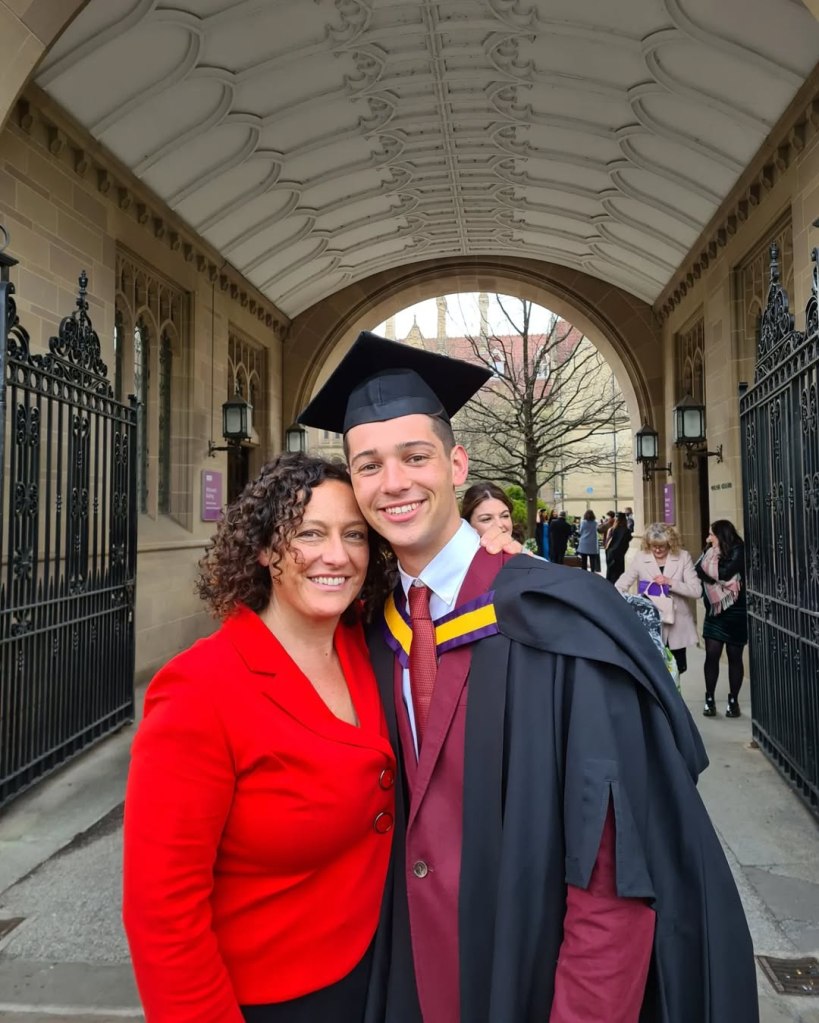
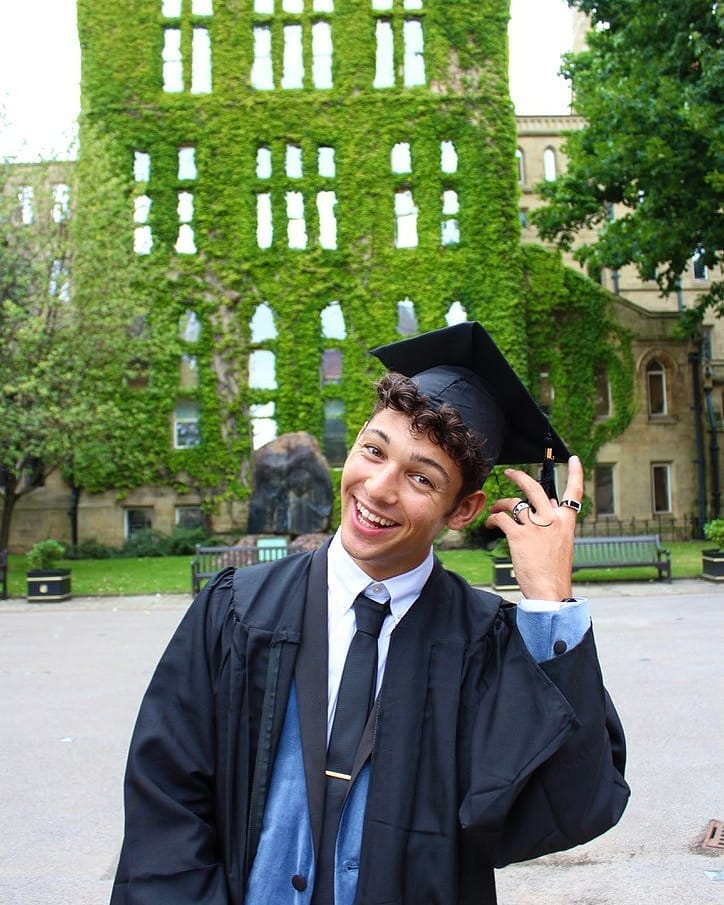
While working full-time in television, he still managed to graduate with a BA in English Literature – earning First Class Honours!
Working with Katie McGlynn
One of the actors Gabriel worked most closely with on Hollyoaks was the remarkable Katie McGlynn, who first gained recognition as Scout Allen in the original series of Waterloo Road.
“We just got on so well. I think it’s really fun when something like that happens on a soap, when the writers can see how you’re getting on, they can then start writing for that energy. The storyline was just bonkers, in the best way, like we were becoming these sort-of mad conspiracy theorists and trying to blow up a hospital. Some really prevalent stuff that was happening at the time about vaccinations, and interesting to respond to that but respond to it in a way that only Hollyoaks could do.
“Katie was doing Strictly at the time as well so she was nonstop. But she was an absolute machine. It was really inspiring working with her, in terms of someone’s work ethic. Probably one of my favourite things about doing that job was working with her. She was the best… She is the best; she’s not dead! If I was a heterosexual man – I mean, I fell in love with her anyway.”

Storylines
I asked Gabriel whether he found it intimidating to take on controversial storylines — from drug addiction to conspiracy theories — given that soap actors are so often mistaken for their characters. After all, Samantha Womack was famously abused in the street after her character, Ronnie Mitchell, swapped her deceased baby with Kat Slater’s (Jessie Wallace) living baby.
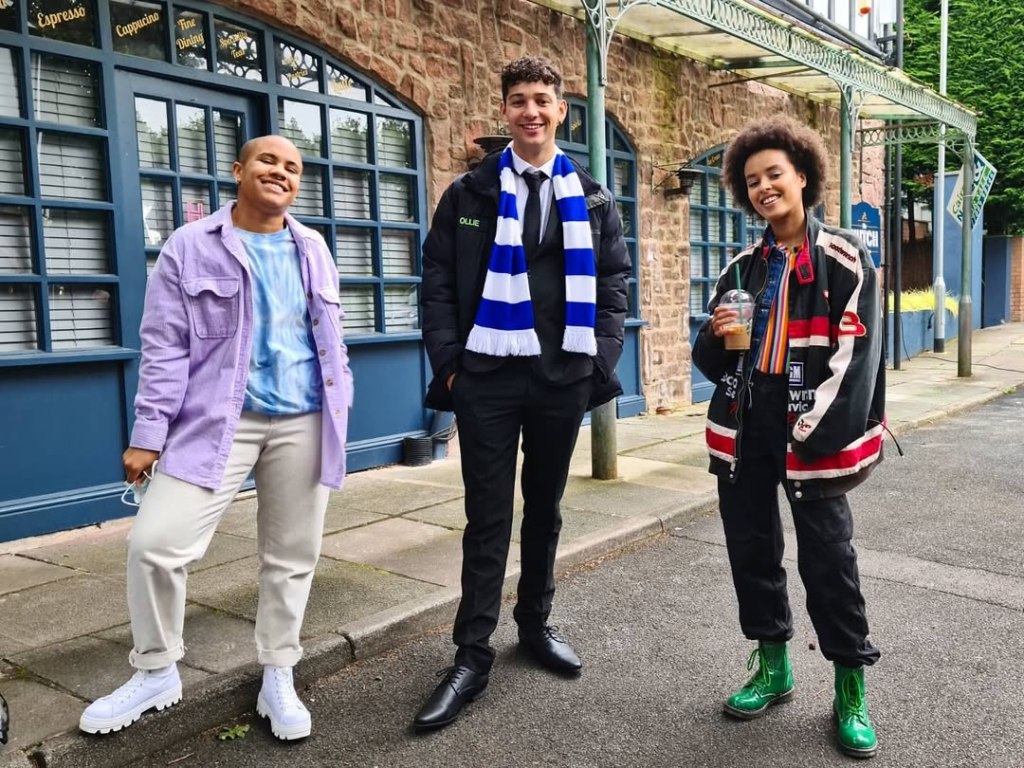
“People do think you’re the character. I remember being at Leeds Festival, and I’ve never done any drugs in my life. Someone came up to me and was so convinced I was the character [and] was trying to push ket up my nose. Grabbing [me] and talking to [me] as if I was Ollie. I remember someone shouting at me in the street about what I’d said to my dad. I was thinking, ‘What are they on about? Do I know them? Oh, shit, no, they mean Hollyoaks.’
“People know that it’s not real but I think there is a slight blurring of the lines between reality TV and soap because it’s sort-of a similar thing of it’s meant to be as real as possible, it’s on every night of the week, you’re in people’s house every night of the week, it’s very grounded – even though the story’s sometimes a bit mad, it still feels real – and it’s shot on cameras that make it look real and it’s edited to make it look real. Sometimes I think reality TV looks more glossy and edited than soaps do.”
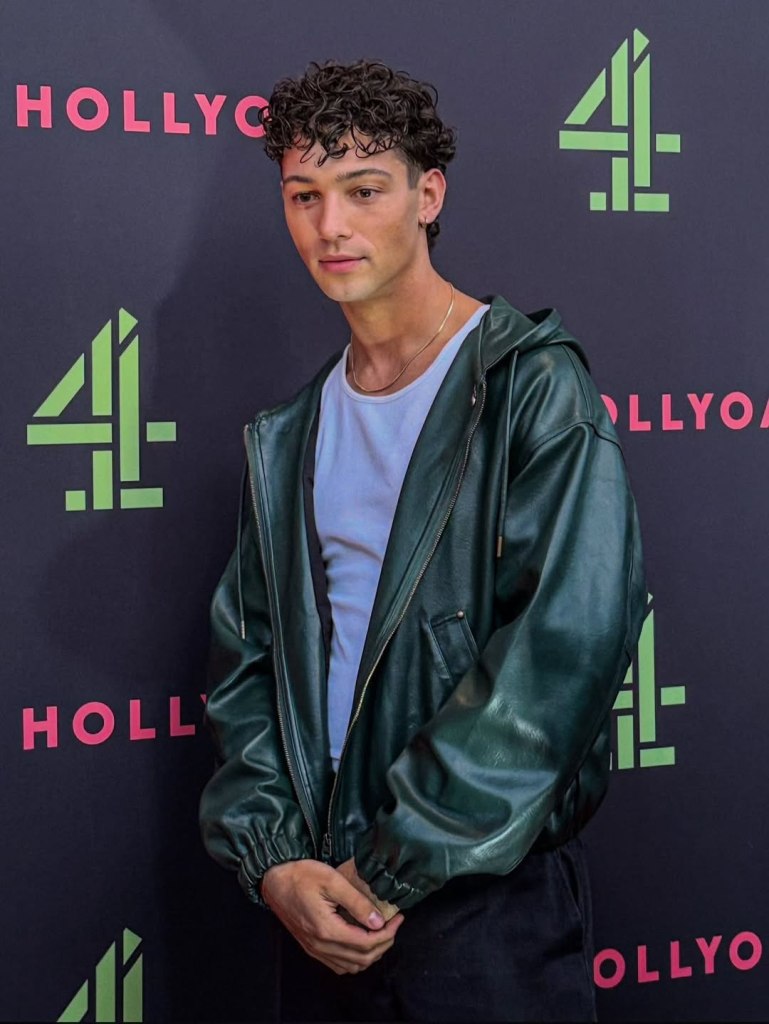
During his time on Hollyoaks, Gabriel wrote, directed, and starred in the web spin-off The Ollie Diaries. The idea grew out of a storyline in which Ollie discovered an old camera belonging to his dad, who had dementia, and began using it himself to document moments for him. Inspired by the Doctor Who mini-episodes, and knowing Hollyoaks had experimented with similar projects before, Gabriel pitched the idea of a digital miniseries to the show’s digital team, who gave him the green light.
Coming out publicly
Whilst on Hollyoaks, Gabriel wrote an article for Metro about his experience of coming out. Although he was already out in his personal life, he had never made a public announcement on social media because he didn’t feel it was necessary. That changed when someone asked if he was gay on Instagram. He replied honestly – and by the next day, the tabloids were reporting that a Hollyoaks actor had come out. The experience was a wake-up call about the public-facing reality of soap stardom. He was asked to write about his journey, which gave him the chance to reclaim the narrative.
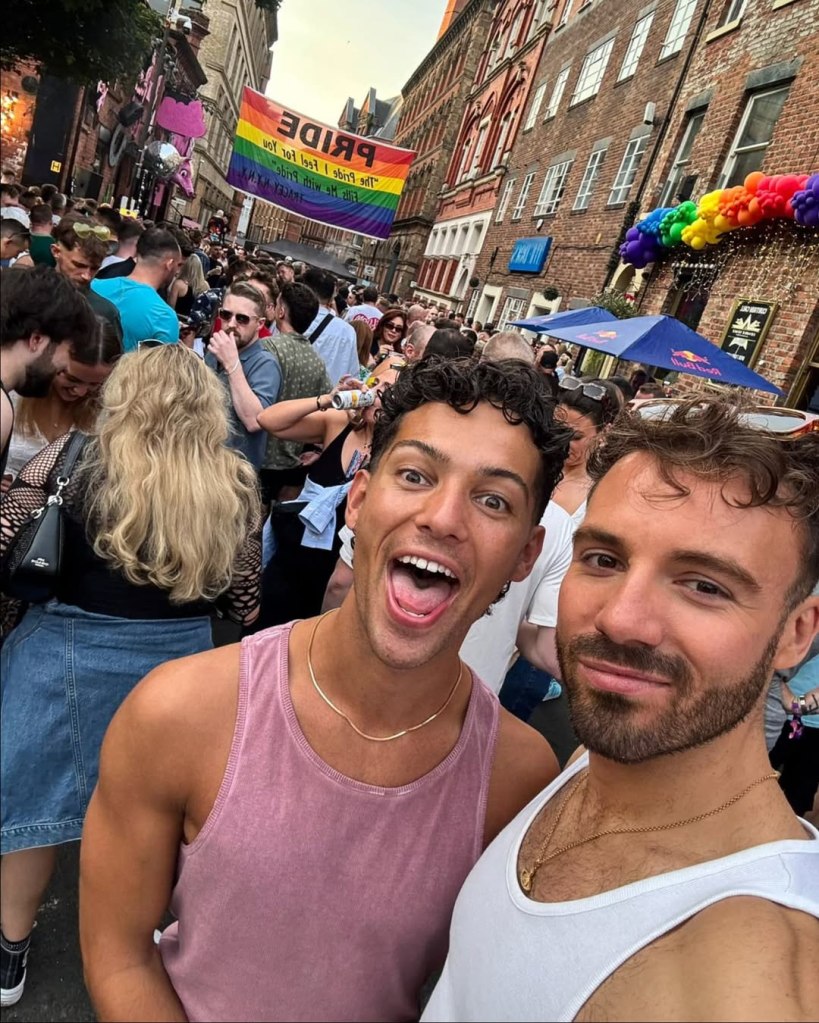
The response was overwhelmingly positive. Gabriel values being seen as a role model for young queer people, especially since he lacked such figures growing up. He remembers not knowing of any openly queer actors who played non-queer roles and fearing that coming out might limit his opportunities. Ironically, for a long time, he was rarely considered for queer characters — perhaps because, thanks in part to Hollyoaks, people assumed he was straight.
Switch_MCR
After leaving Hollyoaks, Gabriel took over the role of Artistic Director at Switch_MCR, an OFFIE Award-winning Manchester-based theatre company creating new and exciting accessible work. It was founded in 2018 by Royal Exchange Young Company graduates who aim to provide an opportunity for emerging artists to make the work they want to see.
“I couldn’t afford to go to drama school. I got a scholarship to go to the Uni of Manchester. Young Companies were accessible, bursaries, and also weren’t expensive, and my parents could afford to let me go to them, so that was where I got my training.”
It’s a shame that, amongst other huge changes at the Royal Exchange, the Young Company won’t be running in the same format this year.
The graduates, all aged 18, wanted to continue the work so they decided to found a theatre company!

In 2020, just before we went into lockdown, Switch_MCR did a “very weirdly prophetic show” called We Won’t Fall, which Gabriel co-directed. I recognised the name of the show; Gabriel reminded me that The Mancunion reviewed it – it might just have been the last show we reviewed before theatres were forced shut!
Whilst the play was very timely, they actually started working on it way back in 2018.
“It was about a world in which Manchester had been put into these shutdowns because the air wasn’t breathable, but also, the government had become really far-right and started to make protests illegal.”
“Oh, my God, you manifested-“
“We manifested the wrong thing!” he laughed. “It was this devised show, and it was such a fun thing to make, and then the pandemic happened, and then the government made protest illegal.”
Gabriel drew a parallel between this “life imitates art” moment and the way some audiences assumed Andor reflected the current situation in Gaza, when in fact its writing had begun almost a decade earlier.
As the pandemic drew to a close, Gabriel put himself forward to become Artistic Director of Switch_MCR. By then, he had a stronger understanding of how theatre companies operate, drawing inspiration in particular from Willem Dafoe’s company, The Wooster Group. Under his leadership, the group formalised its structure and officially registered with Companies House.
“[We] gave a lot of people their first experience performing onstage and became the platform for some people that we had to create that company that we became. We only make new work. We celebrate new voices. We’ve done audio dramas. We’re now looking at doing a short film. We all want to be filmmakers as well as theatremakers but there aren’t many companies that do both, and I just think that’s a bit odd, because, we all, as individuals, as actors, have worked between the two, so why can’t we as storytellers? I don’t know why that’s not possible; I think it is.”
The Other Side
Gabriel told me about The Other Side, a stage horror he co-wrote and directed, which played at 53two in 2022 and is set to tour the UK this year, hopefully starting in Manchester.
“It’s a two-act play. The first act is Gothic horror; the second act is camp horror. So the inspirations jumped between Victorian Gothic horror – Woman in Black, Dracula, Frankenstein, that Dickensian, slow-burn, unnerving, lightning and all that sort-of stuff – and then the second half we wanted to be almost fairy tale crossed with American Horror Story but set in the UK, in the North, and seeing what happens when you meld those two things.
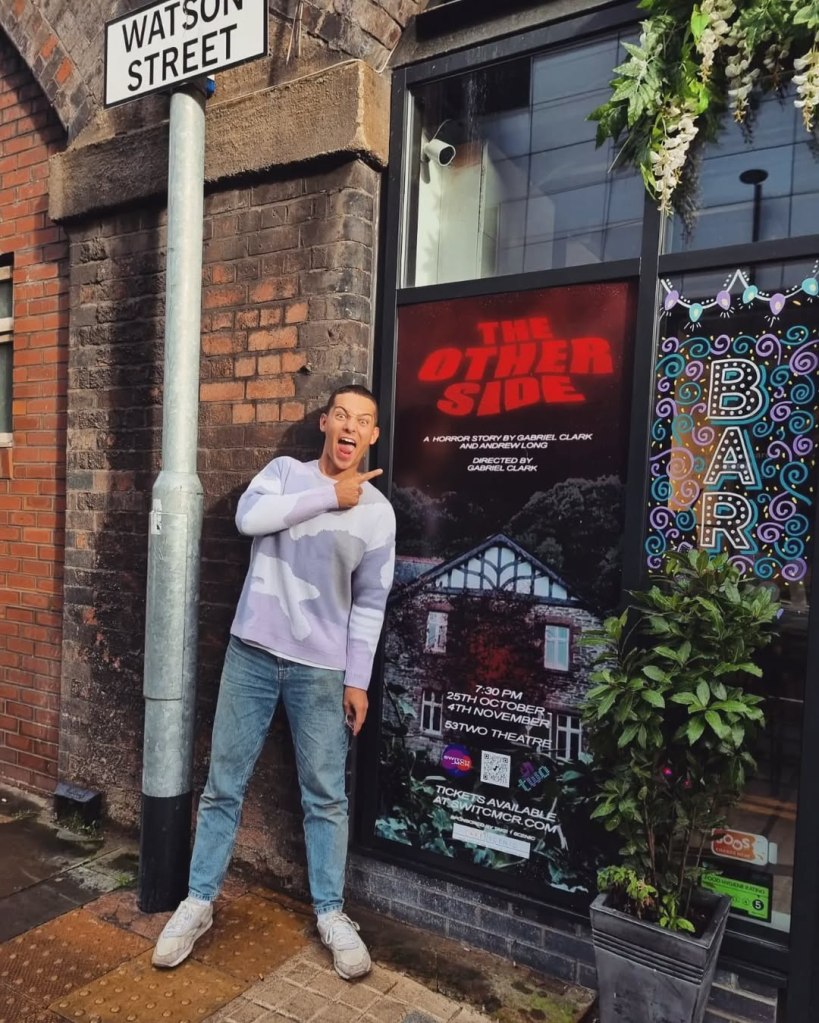
“If I’m making something onstage, it has to answer the question, ‘Why theatre? Why can’t this be a TV show? Why can’t this be a film? Why can’t it be an audio drama?’ And something happens in the play, this big sort-of twist, that can only happen in theatre; it only works if the audience are there live. And when that twist happens, that’s when everything you understand about the play changes and you come into a different genre in the second half.
“Horror films are just good films that happen to be in the genre of horror. For us, it was about writing a human drama. It could easily be a story that wasn’t a horror; it just happens to have moments that are scary, but we didn’t wanna have any cheap scares where it’s just something pointless and isn’t pinned into character.”
Bad Science
Last year, Switch_MCR took part in PUSH Festival at HOME with a developmental piece called Bad Science, which we gave a glowing review. Gabriel dramatically described the show as, “Unbelievable, incredible, amazing, the best thing ever, never been done before, groundbreaking – all of those things!”
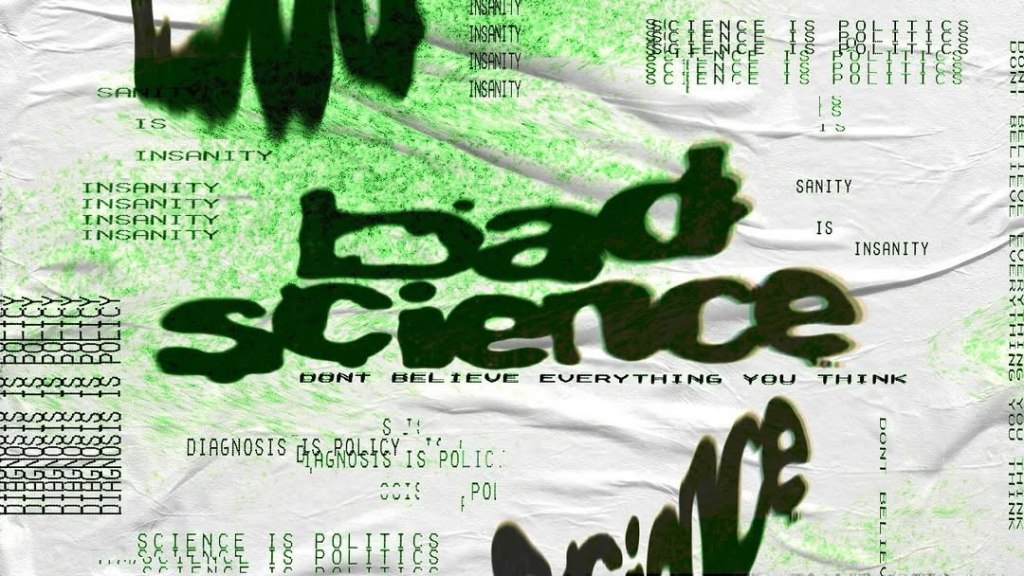
He went on to describe Emily Bold, who made Bad Science, as “one of the most brilliant, funny, clever, talented, caring artists I’ve ever met in my life. The biggest expert on everything that that world is about. We are really hoping to take it to [Edinburgh] Fringe next year. Emily does loads of work with accessibility so has captioned two shows that are going to Edinburgh this year. Creative captioning is something that Emily is currently one of the forefront artists in the UK pioneering – which is to say, embedding captioning into performance from the first day of rehearsals or from the start of the writing process. So, not just having a screen. There were moments where they were interacting with the captions, which I’ve never seen in any show. And making accessibility not something that’s tagged on but is part of the production and elevates it, having captions on somebody’s body and having captions jump around the space.”
He described the show, itself, as “hilarious but also incredibly moving. It’s got its foundation in shows like The Thick of It, which Emily and I love. Proper like political comedy. Like hard-biting, relevant satire that feels searingly prevalent whilst also just being able to sit back and enjoy it. It’s the first show I think I’ve ever watched in my life where audience participation is part of it, but it gets to a part [where] you’ve got the audience almost screaming to get picked and get involved – which, usually, you see people like, ‘Oh, God, don’t pick me’ – but Emily managed to create this environment where everyone wanted to be part of the show.”
Sixth House Theatre
Gabriel is also a founding member of Sixth House Theatre, Lowry’s new resident company, which was created as part of the theatre’s Hothouse Programme. It is formed by six multidisciplinary artists who will utilise their cross-cultural experiences, a total of five languages, and their various specialist disciplines – acting, puppetry, dance, music and writing – to develop robust accessible productions that push the boundaries of work today and create prescient, impactful theatre for tomorrow.
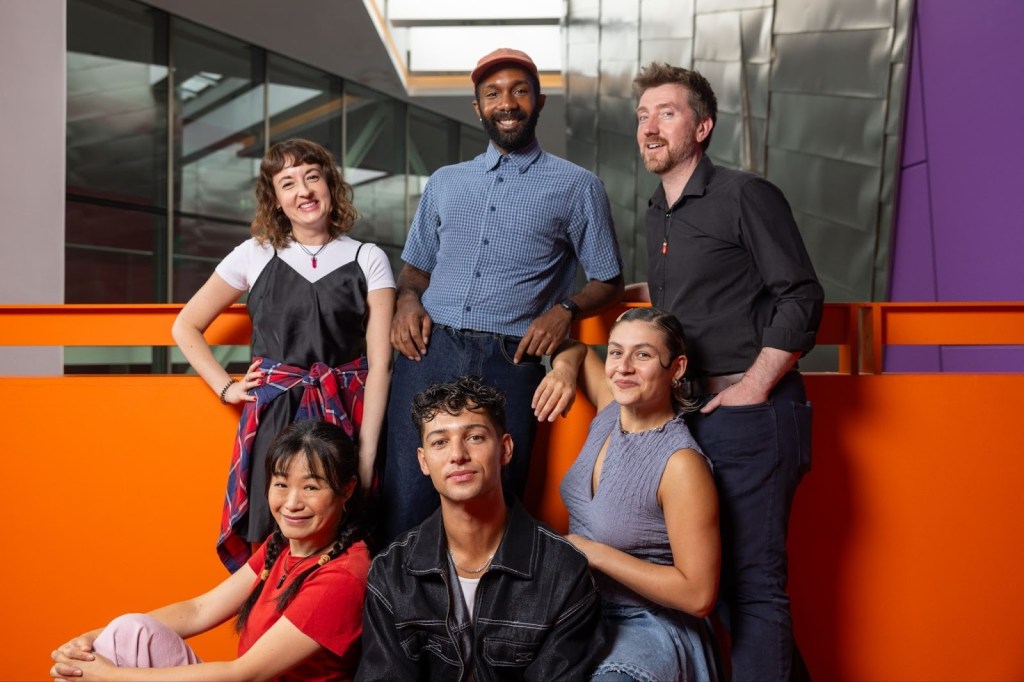
In the promotional video, Gabriel said, “It’s really rare to actually find spaces where groups of strangers can come together and share a story with live performers. I genuinely believe there’s nothing like it, and I think it’s the only thing that we can trace back to being cavemen, apart from eating and drinking, is telling stories, and I think it’s such a beautiful tradition to be a part of.”
Doctor Who (Big Finish)
As huge (whoge?!) Doctor Who fans, Gabriel and I spent perhaps too long talking about Doctor Who, but it was ultimately relevant because, in 2024, Gabriel starred in Doctor Who: The Stuff of Legend – The Live Stage Show, a live recording of an audio drama to celebrate 25 years of Big Finish, a company that produces book and audio plays. The show was nominated for Best Audio Drama: New/Original Work at the inaugural The British Audio Awards (aka The Speakies). Gabriel described Big Finish as “the most fucking brilliant company ever,” adding, “When Doctor Who wasn’t on in the ’90s, it was still on because they made Doctor Who – and everything they do is part of the Doctor Who canon.”

He was hired not only as a voice actor but also a foley artist (the art of creating and recording custom sound effects), something which he would love to do more of.
He particularly loved working with Paul McGann, the Eighth Doctor; Executive Producer Nicholas Briggs, who is best-known for voicing the Daleks and the Cybermen; and the director of the episode, Barnaby Edwards, a Dalek operator.
Jock Night
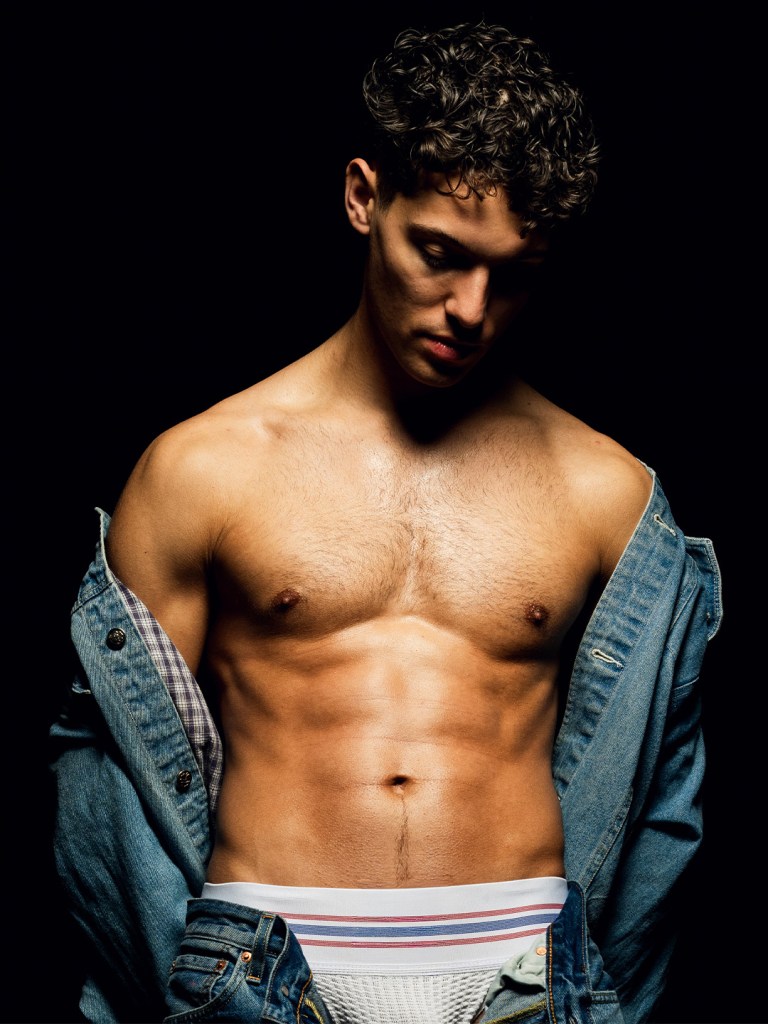
Gabriel and I first met at the Manchester press night of Jock Night, a queer play about the gay chemsex scene.
Gabriel first read the script for Jock Night on a flight back from Romania, where he had just finished filming a Nintendo commercial. Although he already knew of the play before being invited to audition, he had never actually seen it performed.
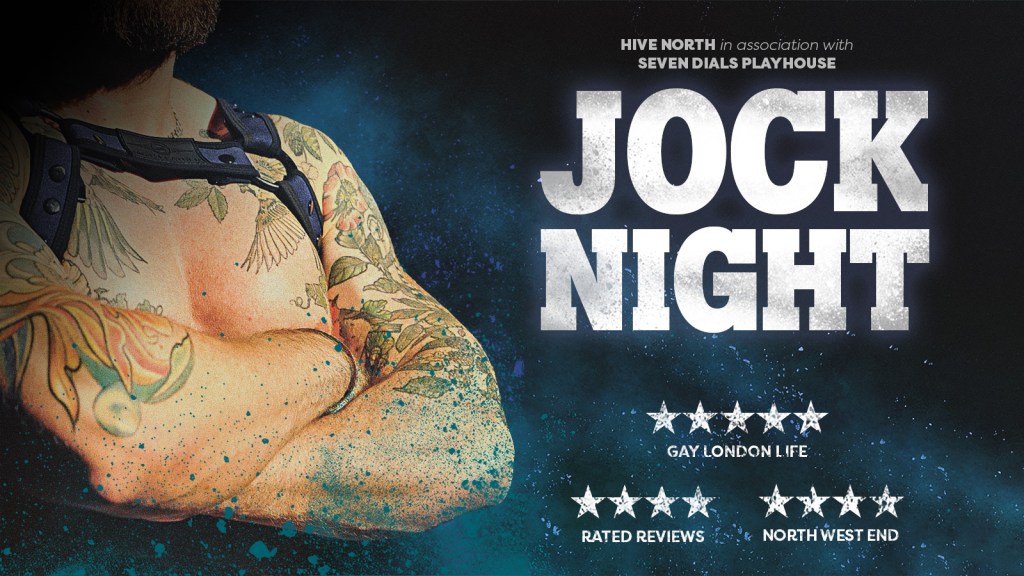
“I just knew that people were topless because that’s all I could remember of the photo. I thought, ‘Well, I’ve taken my top off in my life, so, whatever’ – opened the script just as the flight attendant was coming down, handing out the free chocolates, and I opened my iPad, and just as I read the words ‘double penetration’, she leaned over with this chocolate, and I closed my iPad really quickly.
“But once you got past that first page, it became such a rich, exciting, important story that I’d never read anything like in my life… It really gave me a lot of confidence, with my body, that I’d lost, for different reasons, and also just that I never had – so I felt like I reclaimed things that I lost and then got more from it… It was quite nice to, literally and metaphorically, be stripped back as a performer.”
Jock Night’s handling of sex
The play begins with Gabriel’s character, AJ, being double penetrated – but it’s a good few minutes before you realise that there is another guy underneath him!
Gabriel, surprisingly, loved doing this scene. The actors rehearsed it so much that they became desensitised to it.
“We were in rehearsals, blocking it through, after we’d had the intimacy coordinator in. I’m straddled on top of Eddie [Ahrens] with James [Colebrook] pressed against me, holding my back, and the three of us are just chatting about what we’re gonna have for lunch. It was only on the first night that we came out of the duvet, and I was being double penetrated in front of a hundred people, that I realised I was being double penetrated in front of a hundred people.”
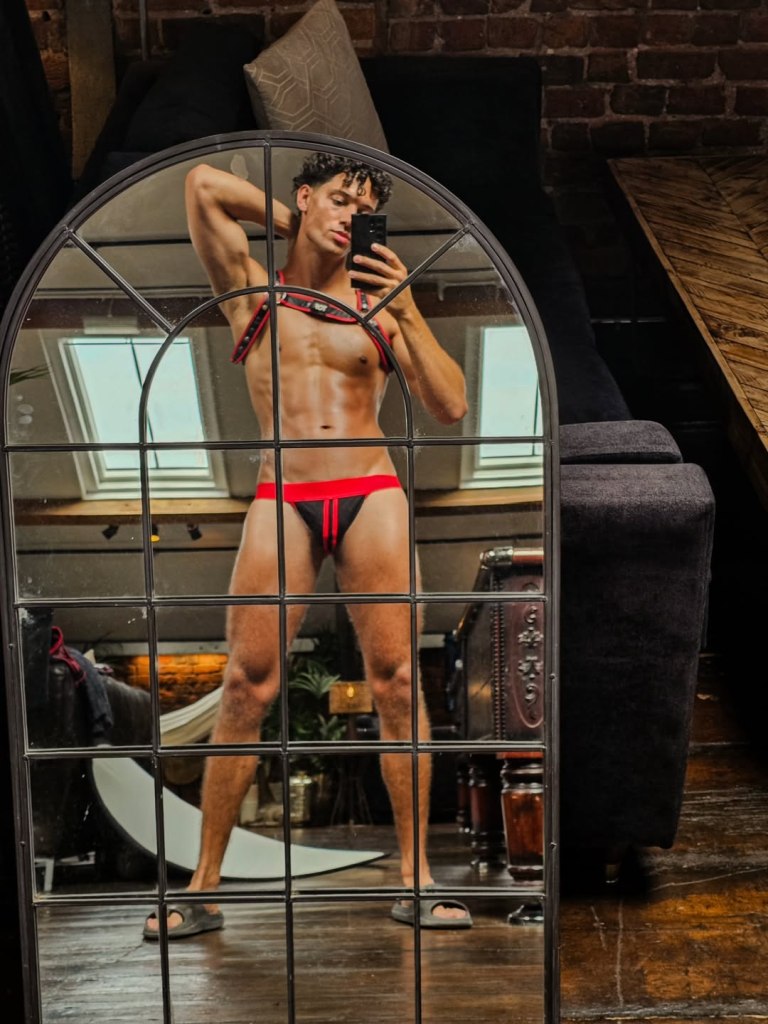
Whilst the play is ostensibly outrageous, it tackles some very serious themes and issues.
“For anyone who’s come to watch the play for that, they get it, and then the rest of the play isn’t like that. For anyone who doesn’t know what they’re in for, it’s a real like, ‘Woah, okay,’ and then you’re prepared for anything, and a lot of stuff happens. I think it’s a really clever way to open a play ’cause after that there’s not a sex scene at all but it’s the most intense, in-your-face sex scene there could possibly be, and it’s like a massive cake that you give to the audience, they eat it, and then you can get on with the play – as opposed to people thinking, ‘Oh, yeah, this is really important, but when are they gonna have sex?’ It’s just a really good idea to get it out of the way, and then the story starts.”
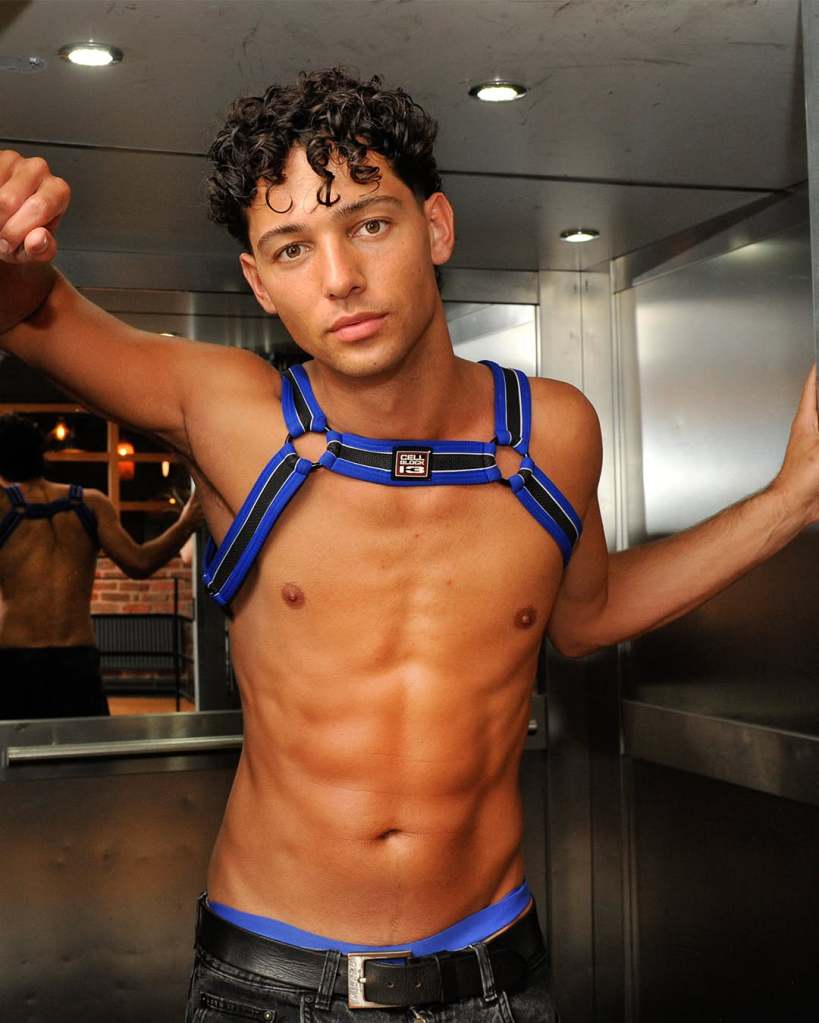
I told Gabriel – as I said in my review – that I love how the play captures how sex is not always sexy but also often messy and funny; it’s surprisingly subversive. The play’s handling of sex is thus realistic. Gabriel said that they wanted it to look really hot for the first few moments and then it becomes funny and awkward, and they enjoyed going through all of the motions of what sex can be in a single scene.
Jock Night’s handling of chemsex
The play is largely about the chemsex culture, which Gabriel – who, like me, rarely drinks and has never done drugs – was largely unfamiliar with. He realised that it is an epidemic in the gay community that nobody is talking about because of shame.
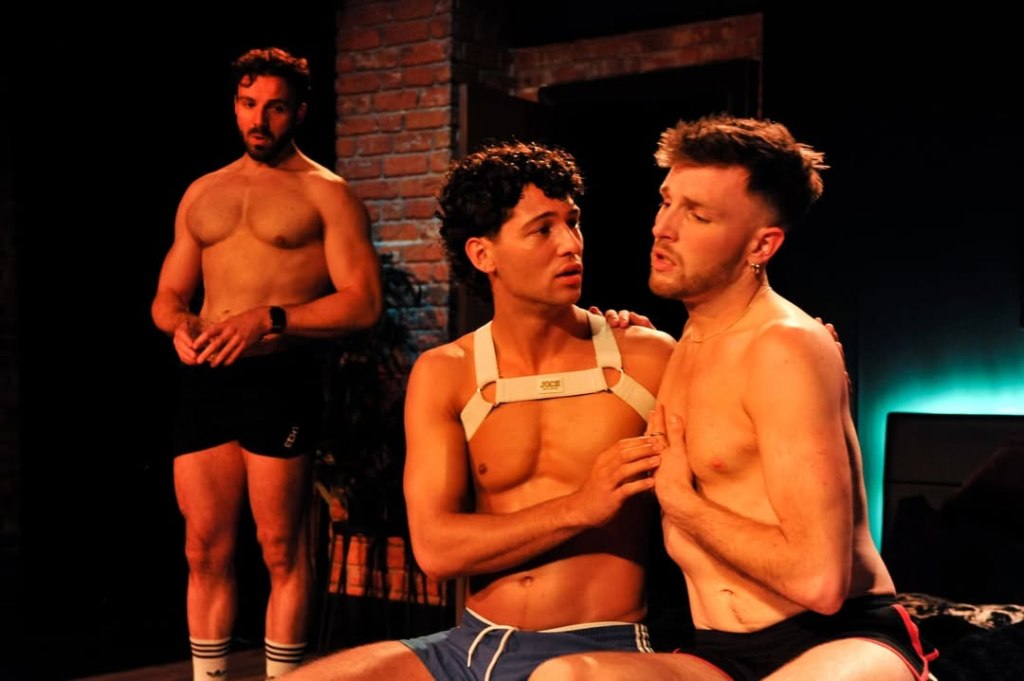
“So much of it, I think, also comes along the lines of how sexuality is repressed when we’re younger. I think a lot of gay men, we form associations cognitively from a young age, and it’s a real shame that, still in 2025, gay men have their first experiences with sex intertwined with secrecy, guilt and shame.
“I know, for me at least, that was the case, hooking up with people, until I came out, was terrifying until I arrived, because I didn’t want anyone to know where I was going or to see me. I’d come up with like 10 different alibis for people to know where I was so that no one found out where I actually was. Told the person that I was with that I was out because there was a weird shame about being closeted. And then it would happen, there would be a moment where I would manage to clear my brain of any intrusive thoughts and enjoy it for half a second, and the rest of it was stressful, and then it was over, and then the first thing you wanna do is forget that it ever happened and try and turn yourself straight.
“But then your associations are formed, and you link sexual pleasure with guilt, repression, shame, secrecy. I think it becomes really hard, still, for gay men to talk about sex, full stop, never mind addiction, and then when that intertwines with sex. And the fact that it’s drugs, it has to be secret. I suppose, there’s an element of it that reignites that part of your brain which is your first association with pleasure, which is also secrecy, and that becomes addictive. It’s such a minefield to talk about.”
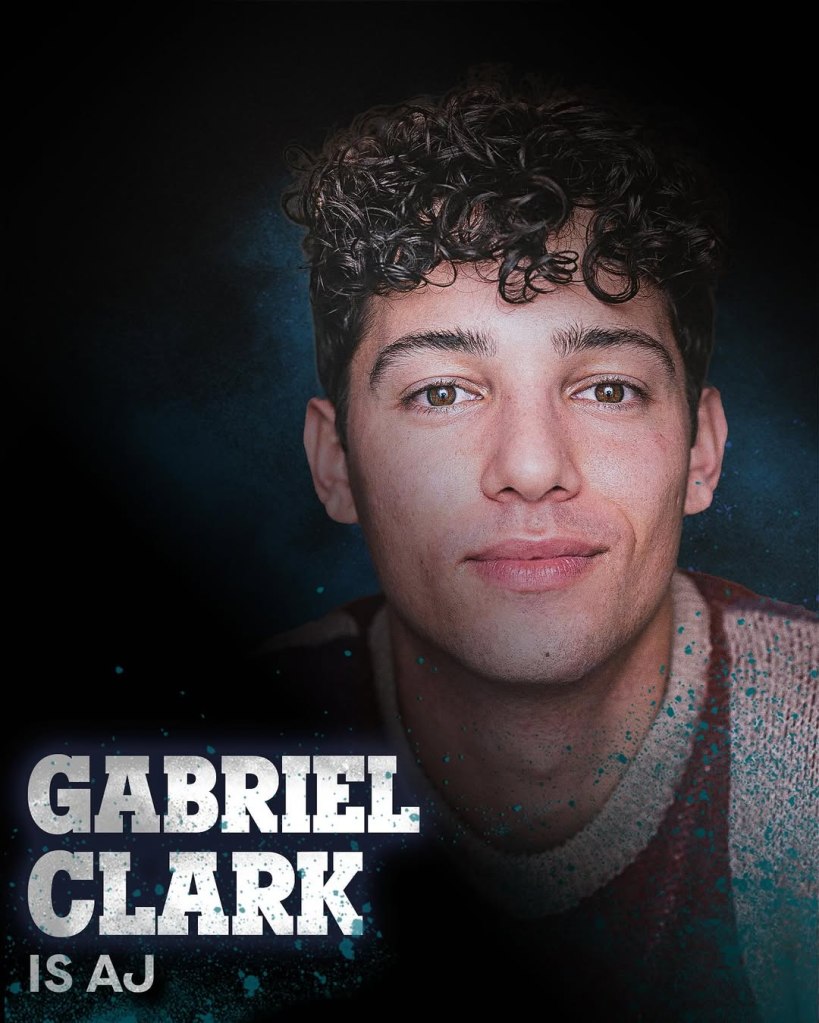
“I don’t wanna say to people, don’t do something, because everyone’s free to do what they wanna do, but unless we talk about it, more and more people are gonna die. So, it was such a profound wake-up call, to me anyway, that that was going on.”
A queer creative team
Gabriel especially enjoyed working on a project where every single person, right down to the producer, was a gay man.
“You don’t realise how much of your life you spend fitting in until you don’t have to. The rehearsal process was much quicker because there [weren’t] points of having to explain basic things. It felt really safe to ask questions and to be myself. So cliché but it does become like a family.”
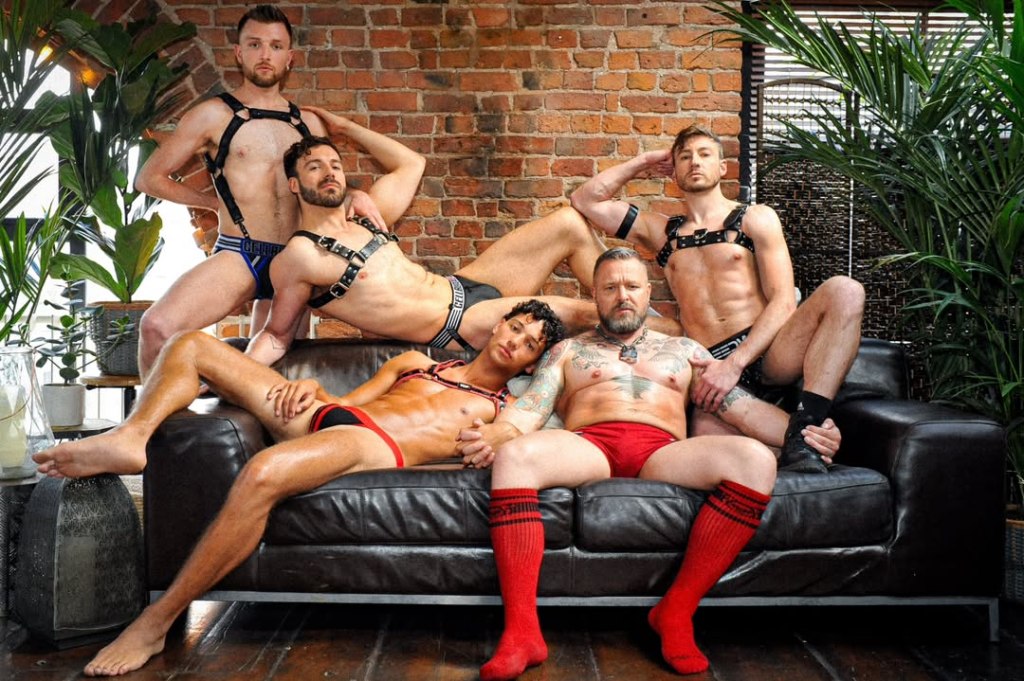
At press night, I got chatting with one of Gabriel’s co-stars, James Colebrook, who – because of my own prejudices and insecurities (but also experiences) – I expected to be a certain way, but he’s actually, genuinely, lovely!
Gabriel explained, “He’s just a massive nerd who’s found himself in the body of a God. He’s a gamer. He loves Star Wars and nerdy stuff and Mario. When we were first chatting, I’d just done this Nintendo ad, so I was telling him about that, and he knew everything about it. He’s just a proper geek, who, like in every geek’s dream, has found himself with the body of Adonis. He’s just so kind and so lovely. We’d all go to the gym together, and James’d come over and give us free PTs sessions. Him and Dr Ranj, his partner, are brilliant.”
Hive North
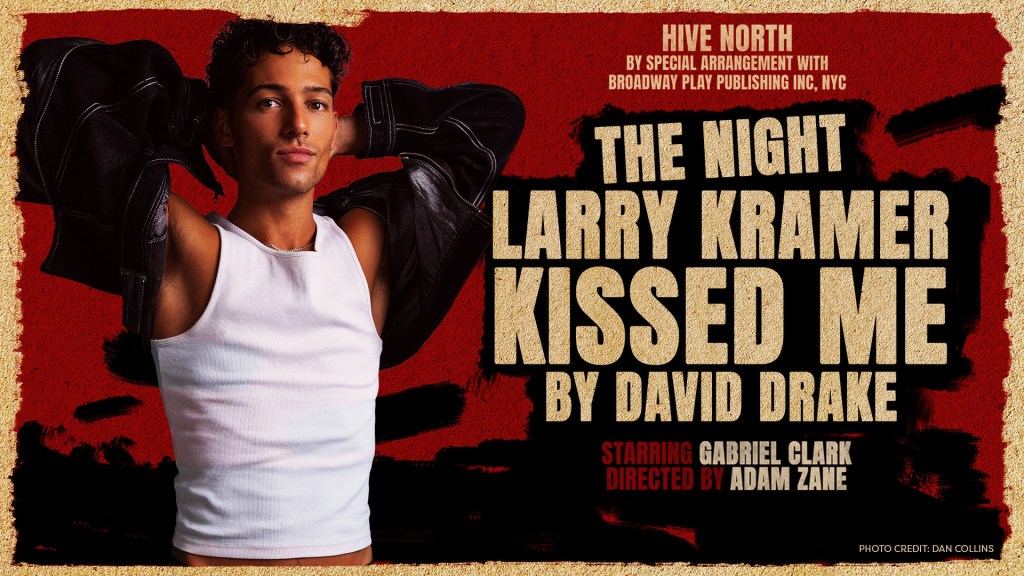
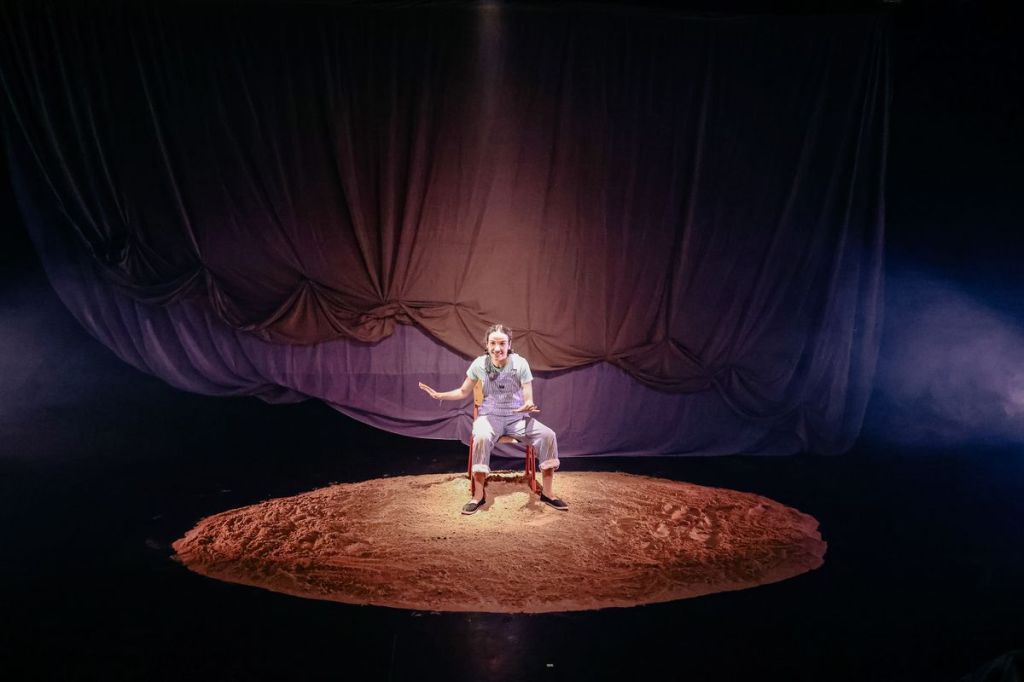
Gabriel is currently starring in David Drake’s semi-autobiographical, one-man show, The Night Larry Kramer Kissed Me. Produced by Hive North and directed by Adam Zane, who also directed (and wrote) Jock Night, its run at Hope Mill Theatre was the play’s first Manchester staging in more than three decades. It is presented as part of LGBT History Month. We gave the show a glowing review – whilst we had a few small critiques of the text, one cannot possibly fault this specific production; the direction, design and, of course, performance are all exceptional.
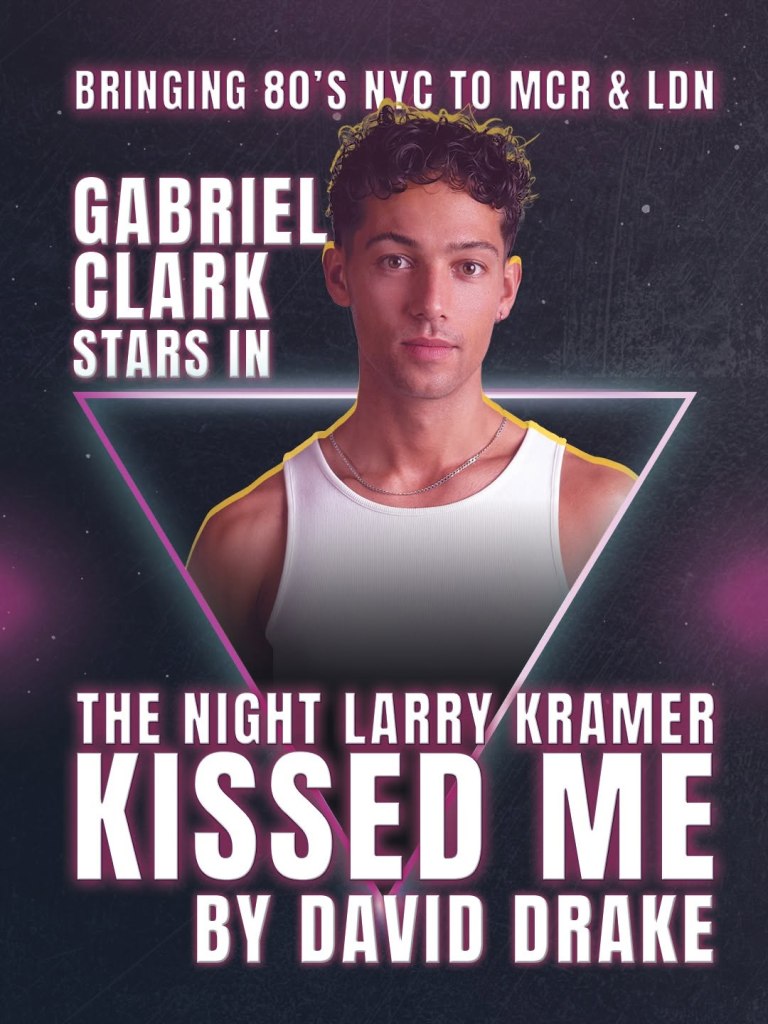
“The Night Larry Kramer Kissed Me demonstrates how art inspires activism: I was instantly gripped by Drake’s ability to blend a coming-of-age story with the universal feelings of pain, rage, and helplessness in the face of injustice,” Gabriel said in the promotional material.
“Those feelings reverberate through the play and, with a genocide in Gaza, trans people’s rights being rolled back in the UK and US, and the far-right on the rise, they echo loudly today.”
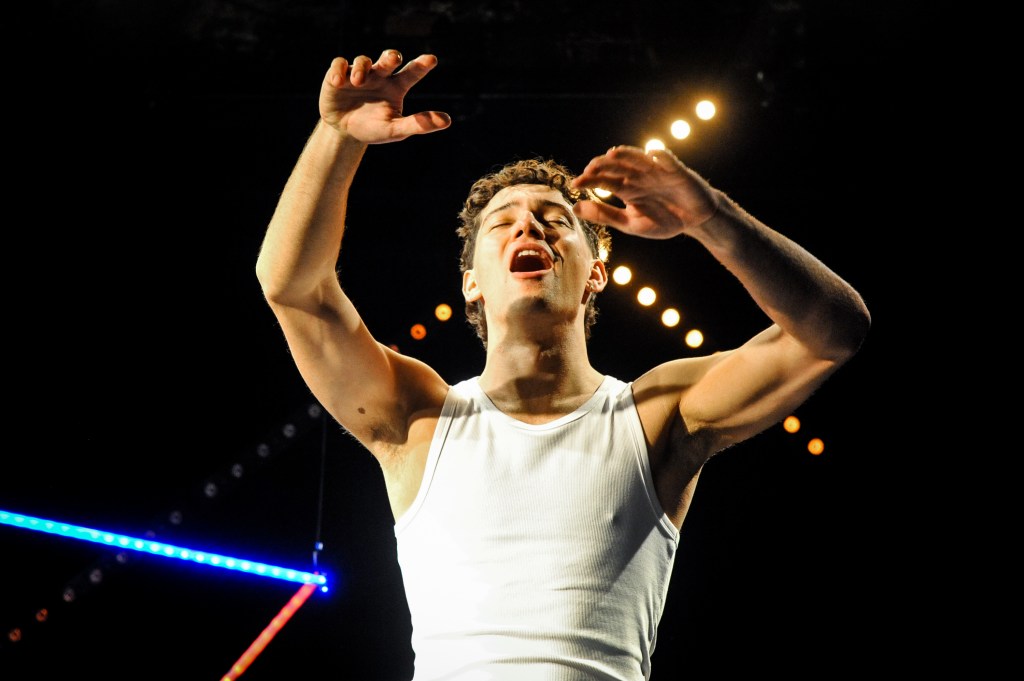
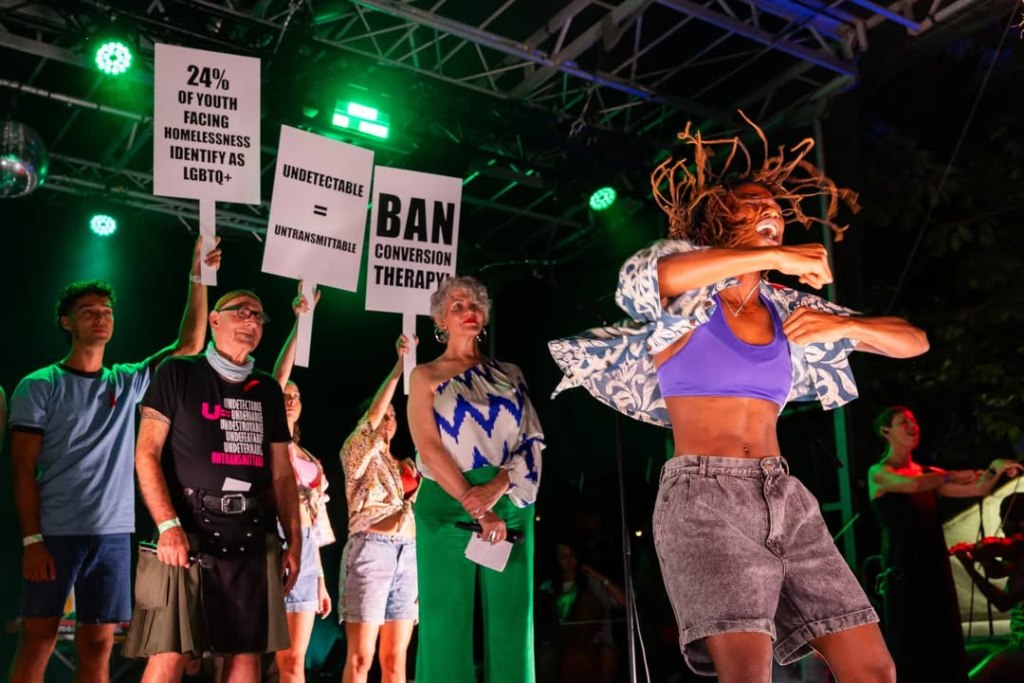
Gabriel performed an extract of the play at at the Worlds Aid Day Candlelit Vigil in Manchester, which I made sure to attend, even though it was raining (Gabriel kindly let me share his umbrella!), and I had to rush to a premiere…
“Words are weapons, and the right artist has the ability to find the right words that can wake people up to injustice, rally people to stand together, to act up, to fight back. Art can inspire activism; that is its power,” he said before the reading.
“One such story that inspired me, that became a rallying cry for change when it was first performed, was Larry Kramer’s play about the early days of the AIDS crisis, The Normal Heart. That play inspired me into activism, into making my work political.
“Kramer’s play also inspired many people, including the writer David Drake. David Drake was also motivated into activism and wrote the play The Night Larry Kramer Kissed Me. Now that play was last seen in Manchester 30 years ago but the themes of pain, rage and injustice still echo loudly today. And just as tonight, we’re looking back at 40 years of the George House Trust, next year, we’ll be looking back at The Night Larry Kramer Kissed Me and bringing it back to Manchester, raising funds for the George House Trust’s incredible work.”
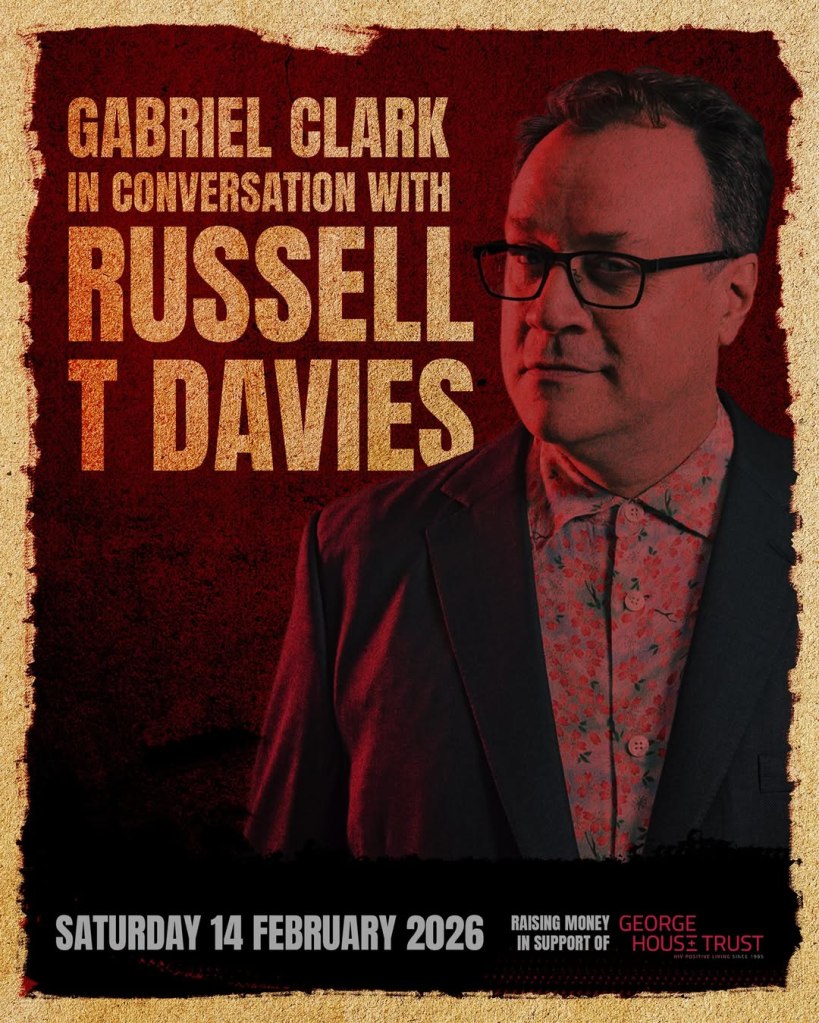
Some performances are followed by in conversations, with the sold-out gala night on Saturday 14th February featuring Russell T Davies, the creator and showrunner of shows such as Queer as Folk, Doctor Who, Cucumber, Banana, Years and Years, It’s a Sin, and Tip Toe – which stars Gabriel and will air later this year. Amazingly, almost the entire audience stayed for the in conversation with Dr Monica B. Pearl (Gabriel’s lecturer), a member of ACT UP New York, after the first performance, which revealed that the show is reaching the right kind of audience.
The struggles of acting
Gabriel has had the privilege of doing both screen and stage work, and he does not have a preference.
“They’re different extensions of the same craft,” he explained. “It’s not live when you’re on set but it is because you’re still sharing an energy with an actor. I don’t really have a preference. I feel like, the more I spend doing one, the more I crave for the other. But they’re both acting. If I’m working, I’m happy.”
When asked about his dream role, he admitted, “I’m really scared to give myself a dream role because I feel like then I would spend my whole life being sad that I wasn’t doing that role, or getting it and then thinking it was slightly anticlimactic. But I’d also be lying if I said that playing the Doctor wouldn’t be the most incredible thing ever. But I love Doctor Who, and I would be so scared of breaking it, but also, I don’t like watching myself, so I don’t know if I would like to not be able to watch Doctor Who because I was in Doctor Who, so that’s something I’d be really worried about – what am I gonna watch?!
“But also, work’s work. If I’m working, it’s my dream, so that’s always my dream job, just being employed. It’s a terrifying job. You spend so much of your time being unemployed. I’ve got loads of mates who have got their own houses, are having kids, are really secure and have a life. But I also would hate my life if that was my life because I wouldn’t be doing what I love.”
Gabriel, like many actors, has done other jobs alongside his acting. “I do whatever I can,” he admitted. He teaches at ActUpNorth, which he loves because he got into acting through people running classes and workshops. “I’m a product of outreach programmes and young companies and acting classes that are affordable and in the North. I’m not the most accomplished actor in the world but I’ve had quite a bit of experience, and I write and direct, and if I can do anything with the time that I’ve got to help other people on their journeys and give back what I have learned and share how I’m able to sustain a career, I absolutely will do.”
“Trying to make the arts more accessible for everybody,” I said, prompting Gabriel to reply, “And make it more competitive for the rich people who get all of the opportunities!”
This prompted us to discuss nepotism in the industry. Gabriel does not resent nepobabies – “Why deny the world their talent?” – but is against people giving them jobs simply because it helps with their promotion.
“Nepobabies exist in every industry – it’s not exclusive to acting,” he said. I added that Emma Roberts, herself a nepobaby, complained that we only talk about female nepobabies. “Men get a free pass with a lot of shit,” he acknowledged.
Activism
Gabriel, a self-described socialist, is very vocal about various issues on social media, from queer rights to the genocide in Gaza.
Gabriel was born into a politically engaged family, made up of migrants and miners. He has two lesbian great-aunts who were active in marches and demonstrations. As a closeted young person, however, he avoided conversations around sexuality. Looking back, he believes that growing up gay in Bolton shaped his political outlook – as did the frustration of being just a few months too young to vote in the Brexit referendum.
“It’s very hard not to become politicised when your whole future’s taken away by a group of old racists, who have now died, frankly, and fucked my future – if it wasn’t for the fact I had an Italian passport – because it’s destroyed the economy, it’s torpedoed so [many] of our services that relied on EU funding. So, I think it’s not a surprise that so many people in our generation became politicised because we had our voices erased when it came to deciding our future – and I think it’s incredible that the Labour Party are lowering the voting age to 16.
“Unless it affects people while they’re in school, it won’t be talked about in school, and I think a big issue with our school system is that we’re not taught about politics. The reason that there are so many policies that are tailored towards older people is because they’re the largest percentage of voters.”
Palestine
I asked him, frankly, if he ever worries about backlash, or even blacklisting, for his unapologetic approach to informing people about what’s happening in Palestine.
“No, because that would be selfish. Partly because I’m a White man, and I have White privilege, so I have had access to work and opportunities that thousands and thousands of people won’t ever get given access to. So, if my career ends because I’ve posted about Palestine, I’ve had a nice enough career. If my career ends because I’ve posted about Palestine then I don’t wanna be in a career that doesn’t allow you to talk about human rights. So, no, I don’t worry about it. Maybe I should. Maybe I do worry a little bit but I’m struggling for work anyway. I don’t wanna work for someone who’s against calling out genocide or transphobia; I don’t wanna put myself in that environment.
“I just don’t think it’s difficult, especially if you’ve been given a platform, which I have, because of the work that I’ve done – it’s not the biggest platform in the world, but it’s big enough – what would be the point just posting pictures of myself or pictures of stuff that I’ve been up to whilst there’s a genocide happening, or whilst trans women are being denied access to go to the toilet in our country?
“I’m a gay man; the rights I have, I have because of trans women. And I’m a British man, and a lot of the reason the conflict in Palestine exists is because of the British Empire, so not only do I feel like it’s important, but I also think I’ve got responsibility to talk about these things because otherwise, by being silent, I’m implicated in what’s happening.
“Also, we live in a democracy – I hope – and we live in a world in which our politicians, I think we forget, work for us, and we as a population [must] voice our disapproval with what’s going on – not just with huge wars but also with potholes and wildlife and the climate crisis or the cost of living.
“Every time I go [to a press night], I decide which badge am I gonna wear,” he said whilst showing me his trans and Palestinian badges, the latter of which he wore to the Jock Night press night and the Hollyoaks 30th anniversary event. “Those sorts of events, I think it’s important to show up. I think it’s important to shift the focus and go, ‘I’m not that interesting. This is interesting. This is happening right now. Talk about this. Or, if you’re gonna talk about me, I’m gonna talk about this.’”
I slightly disagree with Gabriel there: I would not have interviewed him, let alone spent 4.5 hours talking to him, both in person and on Zoom, if he was not interesting!
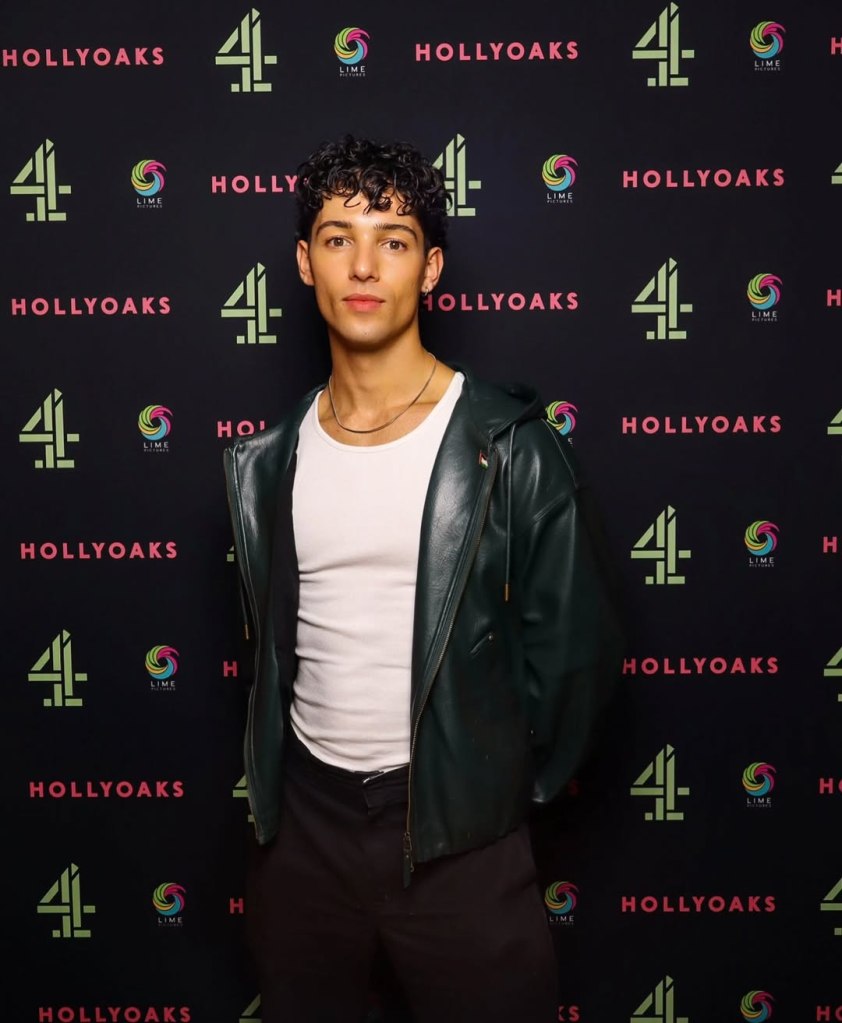
“I know a lot of people say, ‘But you’re an actor so just act; I don’t wanna hear politics’ – well, don’t follow me on Instagram then. You can say that about anyone in any industry, but then, by definition, the only people who are allowed to speak about politics are politicians, but politicians serve the people, and they can only serve the people if the people talk about the politics that they want to be enacted – so I have to.”
This reminded of Kerry Washington, who is as much an activist as she is an actor, explaining, “I don’t talk about politics because I’m an actor; I talk about politics because I’m an American.”
Gabriel continued, “That’s my personal Instagram; I’m talking about things that are personal to me. The laws we have as gay people we’ve got because people did things that were illegal because politicians were ignoring things that the people wanted. Gay men, trans people, lesbians took to the street and caused civil disobedience; it’s the only way to make change sometimes – and part of that, I guess, is using your platform. If every single actor posted about it and talked about it, they couldn’t sack every actor.”
Indeed, whilst scores of people have been blacklisted in recent years because of their criticisms of Israel – even Susan Sarandon – it is now sexy, even in Hollywood, to talk about Palestine. Last year, Jewish-American actor Hannah Einbinder received thunderous applause when she ended her Emmy’s acceptance speech with “free Palestine.”
Yet, many in the public eye choose not to say anything – including, disappointingly, my lifelong favourite celebrity, Shakira, who is not only a UNICEF Goodwill Ambassador but also an Arab! – because they are afraid of losing work and alienating fans and supporters. Thus, I especially admire Gabriel for his unwavering commitment to the cause. Shortly after announcing that he had been cast in Tip Toe, he showered his Instagram story with pro-Palestine content.
Tip Toe
That brings us on nicely to Tip Toe, an upcoming suburban thriller, by Russell T Davies, which explores the most corrosive forces facing the LGBTQ+ community today, examining the danger as prejudice creeps back into our lives. Problems we thought were long-gone are returning, toughened and weaponised, until no one knows truth from lies any more. The incredible cast is led by Alan Cumming.
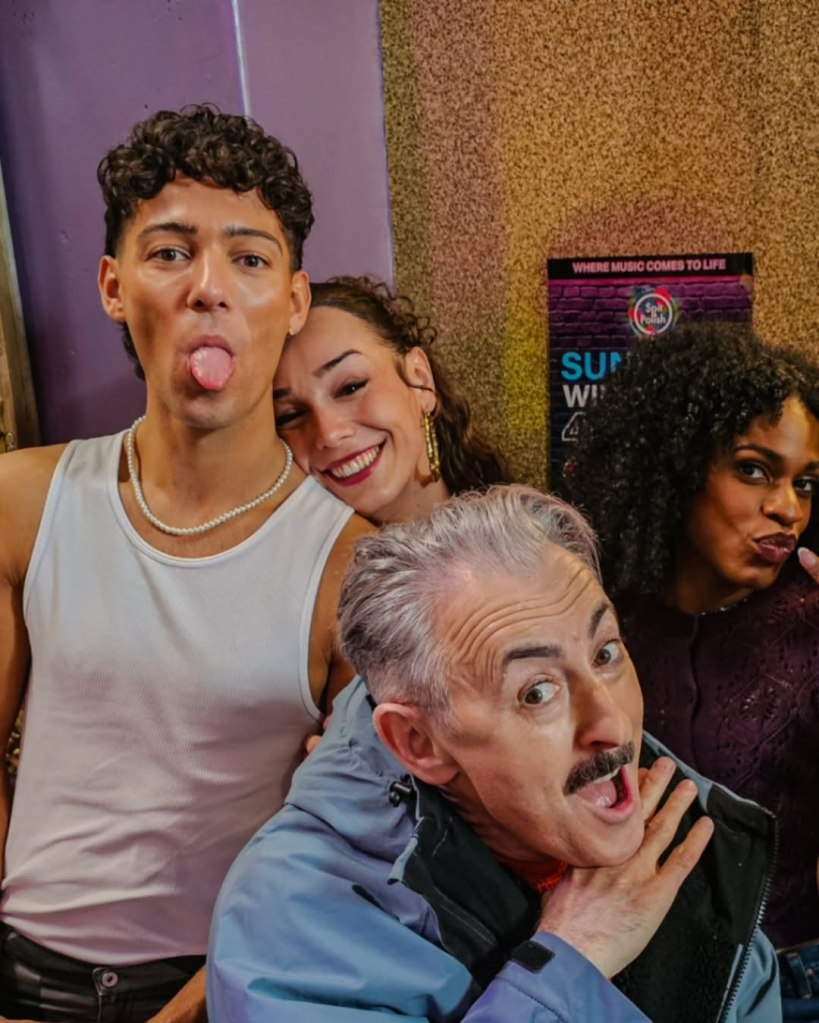
Gabriel, a lifelong Doctor Who fan, is, of course, thrilled to be working with the man responsible for reviving the series twenty years ago – and who recently returned as showrunner.
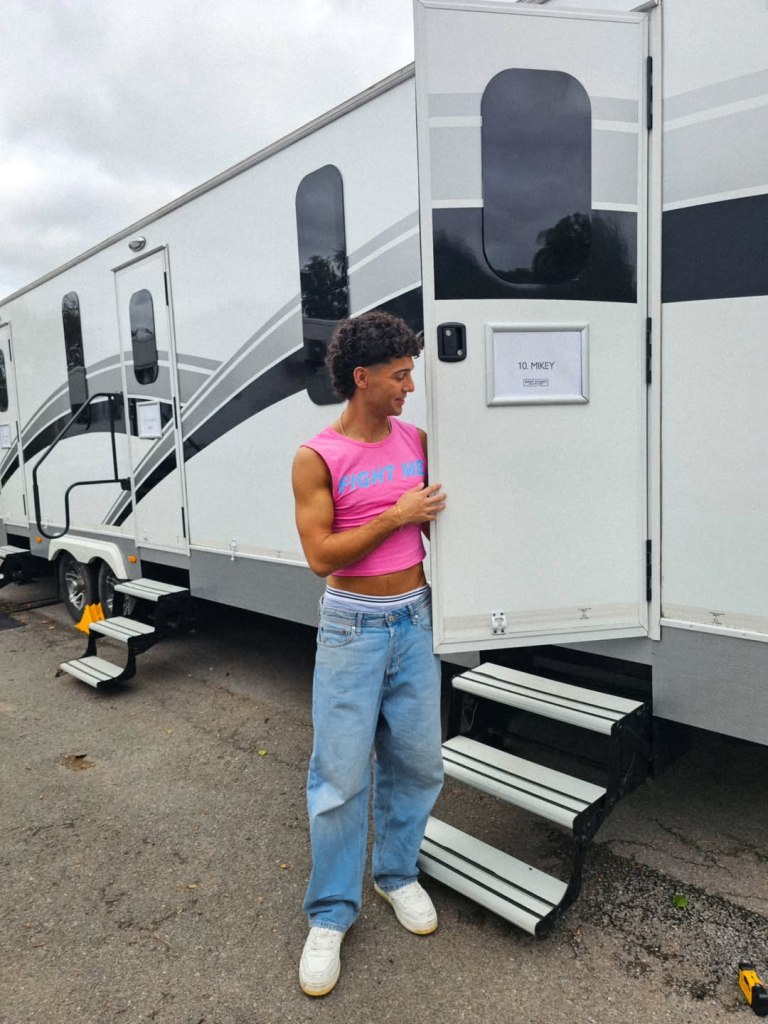
“I’m beyond excited to be joining the cast of Tip Toe. The scripts are, of course, incredible, and the cast is fantastic. To be making a show that is as important, powerful and timely as this in Manchester, surrounded by the most talented Queer creatives, passionate allies, and Northern artists is a dream come true.”
You can catch Gabriel in The Night Larry Kramer Kissed Me at Seven Dials Playhouse, London from February 17 to March 1. Whilst it is a one-act play, some performances will be followed by an in conversation, in which Gabriel interviews an activist. Check out our review of the run at Hope Mill Theatre, Manchester. You can catch Gabriel in Tip Toe on Channel 4 later this year. You can follow him on Instagram at @gabriel_clark.
Photo: Dan Collins
 JADAR
JADAR 