★★★★☆
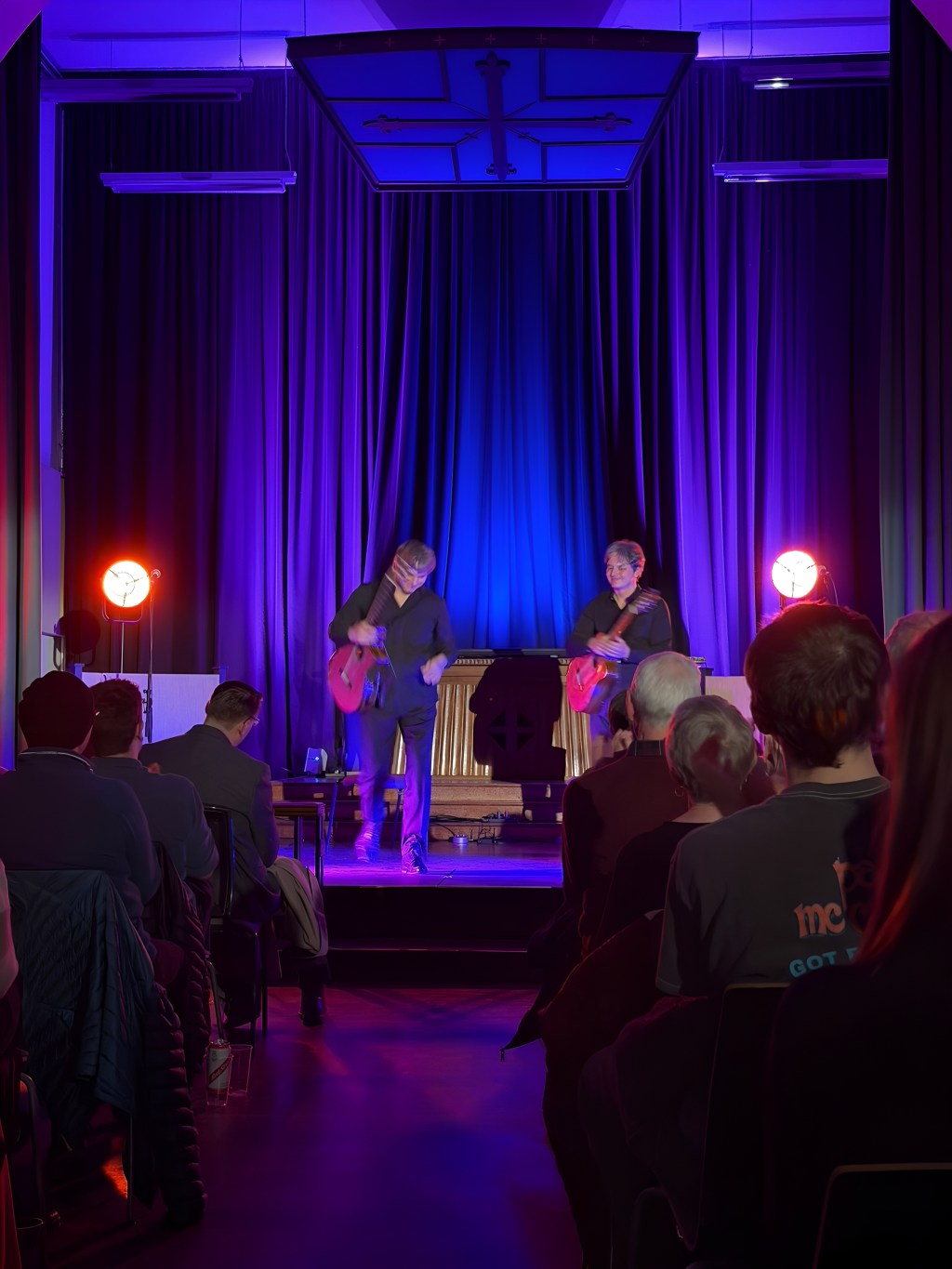
The Katona Twins’ performance at Hallé St Peter’s was a brilliant display of what classical guitar can achieve when approached with fresh, vibrant energy. Peter and Zoltan, originally from Budapest but now long-time residents of Liverpool, brought a programme largely drawn from their 2024 album, Alhambra Inspirations. The connection between the two was almost telepathic; it wasn’t just the music that impressed, but the way they moved in perfect synchronisation, even standing up in unison with a shared rhythm that felt entirely natural. This level of chemistry, forged over decades of playing together, gave the entire concert an air of effortless precision that allowed the audience to simply relax and get lost in the sound of Spain.
What really made the night stand out was the humour and the way the brothers invited the audience into their world. They are natural storytellers, frequently pausing to share anecdotes about the pieces that kept everyone laughing. A particular highlight was the lead-in to Francisco Tárrega’s ‘Gran Vals’. Just as the silence settled, a phone “rang” with the ubiquitous Nokia tune. Rather than being a distraction, it was a scripted part of the performance; the twins began “answering” the ringtone on their guitars, looping the melody before seamlessly transitioning into the actual piece. It was a clever, self-aware nod to the work’s modern fame, mirroring the creative way they recorded it on their recent album with the La Chapelle Musicale de Tournai orchestra. They brought that same inventive spirit to their arrangements throughout the night, adding a haunting minor variation to the Tárrega waltz and extending ‘Capricho Árabe’ with a stunning, original cadenza.
The duo’s approach to the Baroque section was equally insightful. They offered a fascinating explanation of why they chose Scarlatti’s guitar-inspired pieces, noting that because the harpsichord is a plucked instrument, it shares a certain DNA with the guitar that the piano lacks. By “back-arranging” these pieces for two guitars, they brought out a rhythmic clarity that felt perfectly suited to the instruments’ shared heritage. However, they weren’t afraid to push the boundaries: their version of the Aria was extended into a five-minute exploration with added counterpoint, while the Toccata in D underwent a complete Metamorphosis (which is indeed the title of their arrangement). By the end of the piece, they had almost completely abandoned its Baroque roots, leaning into a heavier style that felt more like Deep Purple than the 18th century. It was a bold choice that showcased their ability to find the modern energy hidden within classical forms.
The Spanish heart of the concert was where their fiery, percussive style really shone. They shared a bit of cheeky history regarding Asturias, pointing out that although the title refers to Northern Spain, the music itself is pure Flamenco (from the South), and that it was essentially a 19th-century marketing ploy to help the sheet music sell more copies. Their performance of it was spectacular, filled with syncopated rhythms and fantastic drumming on the bodies of their guitars. This percussive intensity reached a peak during Manuel de Falla’s El amor brujo, particularly the Danza ritual del fuego, where the sheer physical energy they brought to the stage was palpable. After a well-deserved standing ovation, they gave a lovely nod to their British audience and their adopted home with an original rendition of the Beatles’ Come Together. It was a perfect high note to end on, bridging the gap between their Hungarian roots, Spanish flair, and life in Liverpool.
Reflecting on the evening, I highly encourage everyone to seek out these kinds of solo (or duo) classical or jazz performances. In an era of over-produced stadium spectacles and digital “smoke and mirrors,” there is something vital about a stage where the only things present are raw talent and the music itself. These intimate shows are important because they offer an unfiltered, honest connection to the artist, reminding us of the incredible things humans can achieve with just a piece of wood and six strings. There is no backing track to hide behind and no light show to distract from a missed note: it is just pure, high-stakes musicianship. The Katona Twins are returning to Manchester next year with a completely different programme, and if you value authentic, world-class performance, I suggest you book your tickets as soon as they are announced.
The Katona Twins are currently touring the UK until May 9 2027.
Photo: Robert Gyorgyi @ JaDar