
★★★★★
Dark Noon is one of the strangest yet most engaging pieces I’ve ever come across.
Put simply, it’s a patchwork of creative pop culture references and humour used to reveal the harrowing and uncomfortable truths hidden or glorified by cultural forms like the western movie, captured both on film (with great cinematography, lighting and costume elements), and as a play.
In fact, its combination of modern tropes and genres is only one of the elements that make it so unique, jumping from a storybook narration to a comedy sketch with a cowboy’s herded cow trying steak, to an American football match between the natives and settlers (ending in a stark shootout), to Attenborough documentaries, to poetic monologues… a well-appointed collage of American culture used to slowly expose the truth of its barbaric and bloody history.
As Factory International’s Artistic Director John McGrath points out, Dark Noon is an important project that provides an “outsider perspective” of American history, utilising a talented and energetic Southern African cast (who add their own language and cultural flare to each element of the show). Its great humour both mocks the absurdity of some of the events and reflects tendencies to cover up tragedy with awkward humour or falsities.
Meanwhile, the show constantly engages the audience with breaks in character, fourth wall breaks, and audience participation, asking them to become cast members whether they were sold to the highest bidder, or paid witness to horrific shootouts in the communion.
Yet, despite its more light-hearted humour, it still poignantly encapsulates the harrowing nature of America’s dark history with impactful monologues, whether it be from ‘Chinese Man’ dreaming about a better world, or the suicidal citizen that startlingly takes his life naked on the train tracks, the camera mounted to the pully, capturing his final moments.
Structurally, the show has three main segments cut into smaller chapters of American history, first focusing on settlement before the gold rush and expansion of capitalist dreams. Opening with a startling shootout that highlights the absurdity of westerns and the concept of killing each other without reason, the narrator becomes the backdrop to the onstage acting before transporting us back to the start of these American cowboys. Those moments of travelling hardship, cannibalism and the murder of natives that disputed American claims to land ownership become the focus of the first segment as the actors cover themselves in white powder and wigs, trying to appear as white as possible to be allowed into America and become landowners. It later elaborates this racial disparity by “selling” and objectifying audience members.
The next section focused primarily on the gold rush and the ‘story of Samuel’ who first finds the gold that leads to several murders and an inundation of Americans crazed into searching for more gold. Here, a cute set of wooden planks creates a tiny mineshaft in which one of the men crawls through before finding his prize, a golden chain and more bling and gold paint to shower and coat himself in. Eventually, women make it into America, essentially working as prostitutes to many men, thus causing an influx of rapes, pregnancies and diseases.
The final theme, focuses on the building of infrastructure with a working ‘railway’ built across the mineshaft by Asian immigrants treated like slaves but blamed for the poor state of affairs. This treatment continues later when ‘Chinese Man’, the takeaway owner (comedically placed slap,bang in a western frontier) suffers racism and abuse in a monologue interrupted by his Coke-selling competitor (a running gag in the show). With railways come the American Dreamers bringing in the prejudicial church system, banks and jails with a cart riding sheriff and an entrapped Native American.
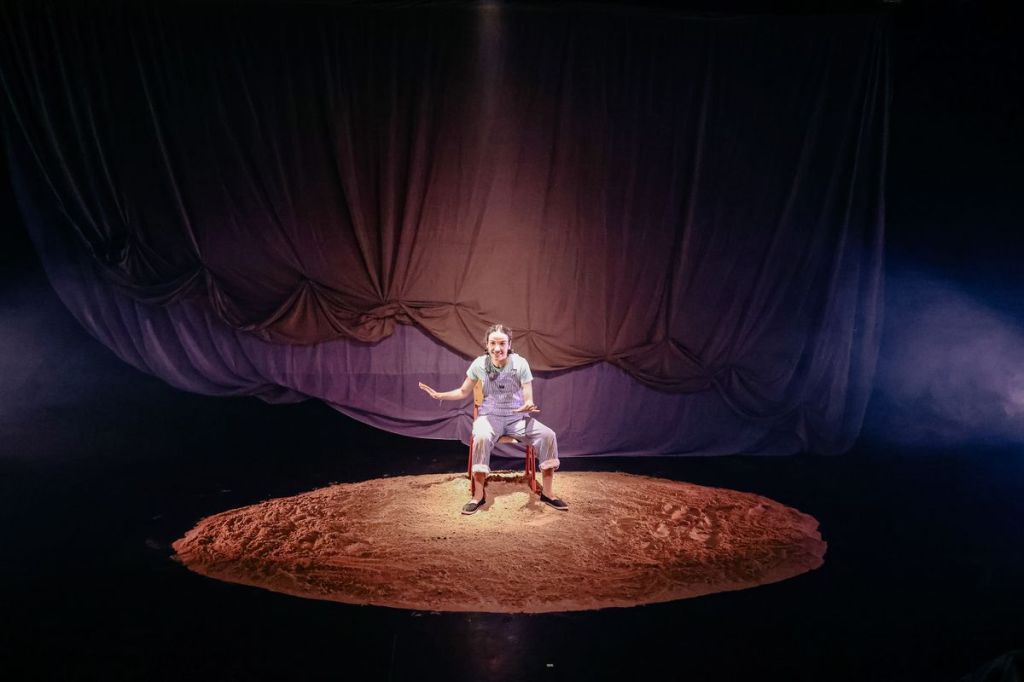
Interestingly, the set starts as a blank space but slowly builds as more inhbabitants join town, starting with a house and pub and developing into a highstreet of sorts, with food shops, more houses, churches, jails and banks creating a series of developed setpieces while still being basic frames to allow all audience members to see the space as it unwinds – and also creating a feeling if emptiness. It really felt like watching the transformation and foundation of American life.
Dark Noon is innovative with its balance of humour and heartache. It tells an important tale about the brutality behind America’s often glorified but brutal past.
 JADAR
JADAR 