★★★☆☆
Created by writer Henry Parkman Biggs and directed by Kate Salmon, Trompe l’Oeil is not a conventional musical. What unfolds on stage is an exaggerated and often chaotic theatrical experiment that turns modern political figures into distorted caricatures. Watching it, you are left wondering whether what you see is invented or simply a reflection of how strange political reality has already become.
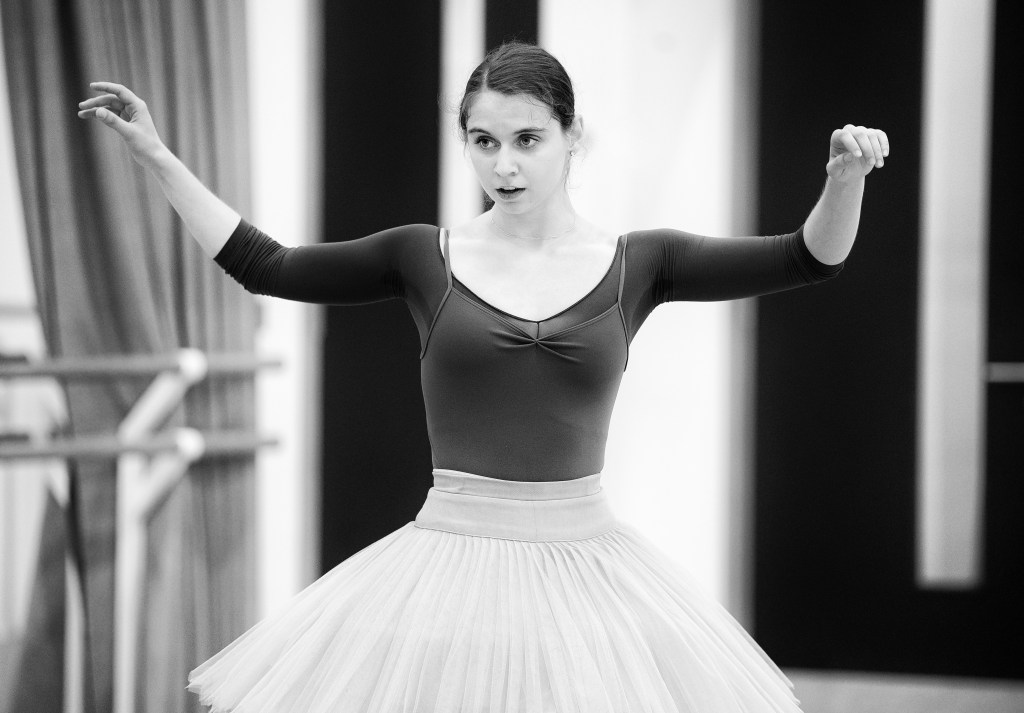
At first glance, the story follows Demi, played by Greater Manchester’s own Veronica Green, known to many from RuPaul’s Drag Race UK. She is described as “a little different from other girls,” but it quickly becomes clear that she is not a traditional central character of the plot. As the show progresses, attention constantly shifts, and each figure on stage takes focus in turn. Demi instead works as an anchor for the audience. Unlike the others, she does not fully belong to the surreal world around her, and her presence creates a steady point of contrast. It feels like the audience have to decide where they stand – inside the spectacle of absurd or observing it from the outside together with Demi.
The plot places Demi (as in Democrat) in the strange world of Donald Trump’s office during the early stages of his first presidency in 2017. Her goal is to save her conservative partner, RIP (as in Republican), played by Joe Pieri. This storyline introduces one of the show’s hidden ideas. RIP cannot reconcile his political identity with his feelings for another man and ultimately turns into a dog. Within the logic of the show, others assume the dog represents liberal values, but in fact he remains a conservative figure in distress. The idea is not subtle but it points to the tension between public identity and private reality.
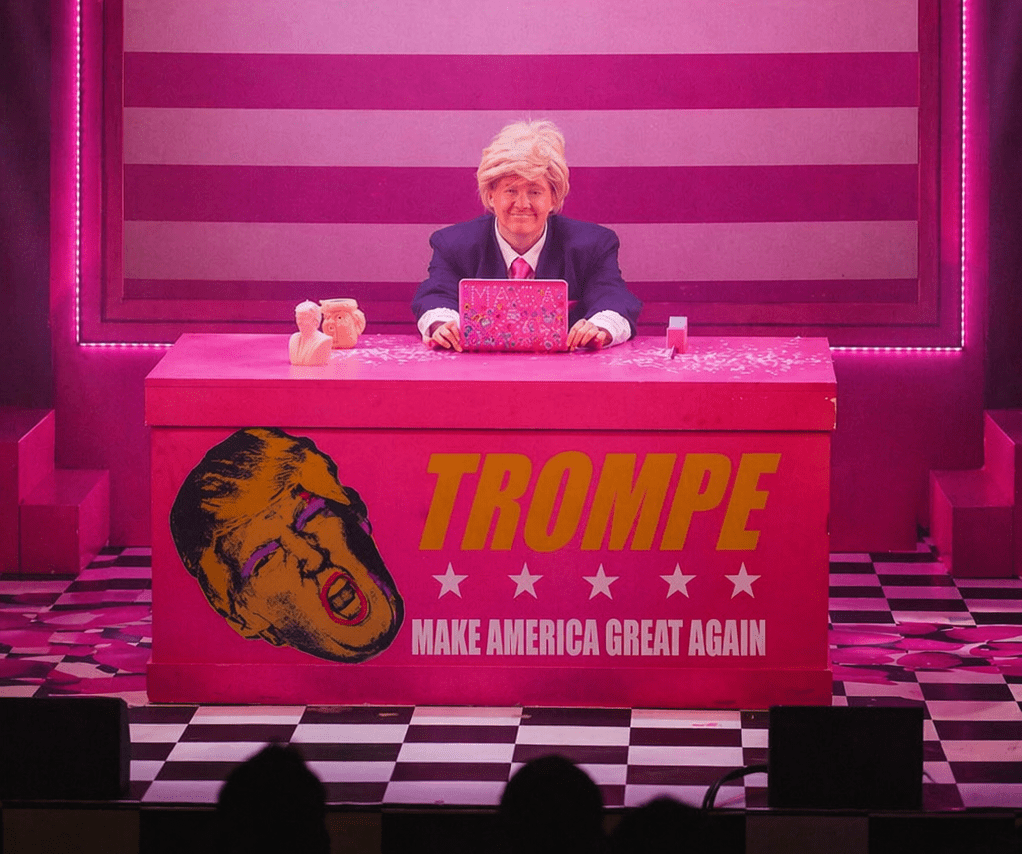
The portrayal of Trump, played by Caitlin Goman, is one of the strongest elements of the production. The performance captures both his physical presence and the version of him seen on the media. Scenes like “Bye Bye Tweets” show how his public image is built through repetition, spectacle, and digital fragments.
In another moment, a crisis is triggered by broken keyboard letters, suggesting how fragile that image of control really is. Similarly, “Erect the Fence” reframes the rhetoric surrounding the US-Mexico border wall, presenting political messaging as something deliberately sweetened for public consumption while masking more complex or contentious intentions. These moments demonstrate the production’s central strategy: exaggeration not as escapism but as a tool for exposing underlying truths.
The show’s satire extends to the wider political circle. Ivanka Trump, played by Phoebe Garr, is given a slightly more reflective portrayal beneath the surface-level absurdity. Meanwhile, Steve Bannon, played by Kemi Clarke, appears as a rapper, with his dismissal staged as a huge ceremony. These choices turn real political events into theatrical set pieces. Or do they simply reflect the reality we are living in
Other portrayals are more direct. Jared Kushner, played by Nathan Hobley-Smith, is presented through exaggerated sexual frustration, raising the question of whether the joke draws from specific real-world narratives or simply amplifies public perception. Vladimir Putin, played by Sarah Louise-Hughes, appears as a literal devil figure, showing the production’s preference for bold, simple symbolism over nuanced interpretation.
Overall, Trompe l’Oeil is loud, strange, and at times deliberately uncomfortable. Beneath that, however, is a clear attempt to examine how political figures are constructed, consumed, and understood.
At the same time, the show demands a certain level of prior knowledge. Much of its humour and many of its references work best if you are very familiar with the scandals, personalities, and contradictions surrounding the Trump presidency. It is not enough to recognise the names; you actually need to remember what happened a decade ago. Because of this, some viewers may leave the theatre with a feeling that the show is less immediately entertaining than expected. However, this is a production that benefits from being seen more than once. Its layered jokes and references do not fully register on a first viewing. With each return, new details emerge, and what at first feels overwhelming begins to take clearer shape.
Trompe l’Oeil runs at Contact (Space 1) until May 2.