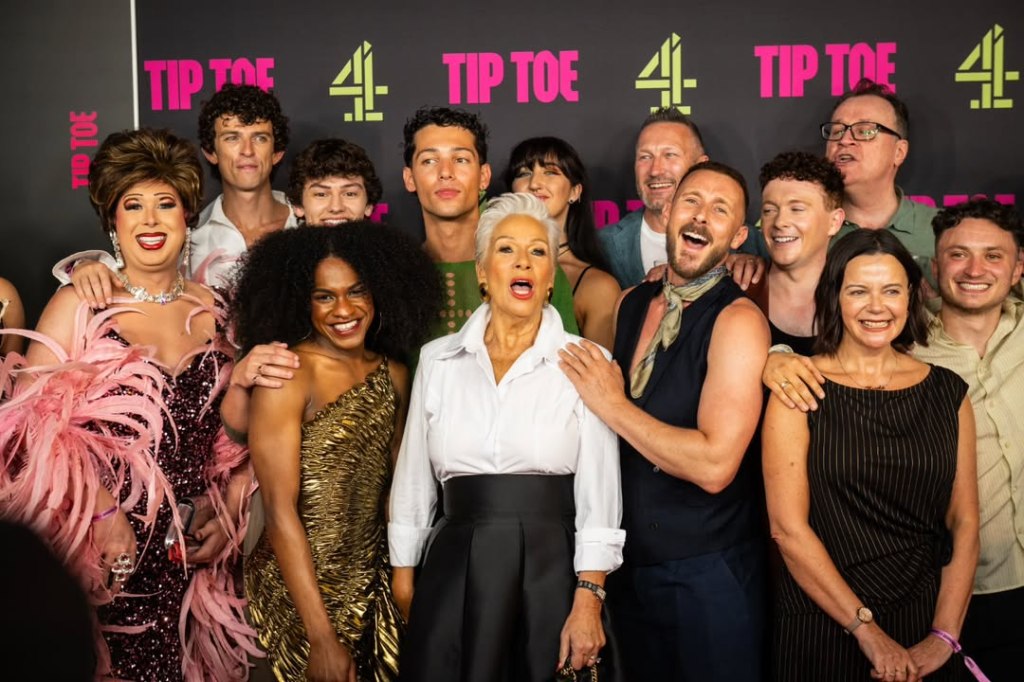
Tip Toe is the latest TV series from legendary screenwriter Russell T Davies. Whilst it is a queer drama set in Manchester, like Queer as Folk, it’s also a thriller that has lot to say about the state of the UK, like Years and Years, especially regarding the rise of homophobia and transphobia. We attended the premiere at HOME in Manchester, where we asked Russell and the cast why the series had to be set in Manchester and how important it is in the current political climate.
Russell T Davies
“It’s important to me to set this in Manchester because I’ve done my entire career never working in London, and I’m very proud of making shows outside London, because it’s not all about London. I’ve either worked in Manchester or I’ve worked in Cardiff. To have something set here, to show our pubs and clubs and out streets and our communities and our sense of humour, is vital.
“This series has got stuff to say about the political climate. It’s also a great thriller, I will say that. If I was told to go and watch a show about the political climate, I’d go to sleep instead, but this is a thriller, it’s got cliff-hangers, it’s got shocks. In there, it’s got a lot to say about the politics of the state of the world, but I hope it’s very fun as well, believe it or not.”
Peter Caulfield
“I think Manchester is kind of like the second capital of England. There’s so much queer culture here. And there’s also like this polarisation of far right, very far left meeting in this city. And I feel like this story is kind-of like encapsulating this moment in history.
“[Tip Toe] touches on so much that’s happening right now. I mean, it’s so current, it’s so edgy, it’s got a lot of anger and violence. but then there’s also a lot of love and camaraderie as well which always comes through in Russell’s shows.”
Charlie Condou
“Russell also wanted to revisit the Canal Street from the old days in Queer as Folk. It was a decision for him to set it here. Manchester has always been very important to him.
“At the moment, it feels like rights are are being wound back for the LGBT community, and I think it’s a really important wake-up call for people to see that things are not okay at the moment, and we need to step up.”
Gabriel Clark
“These stories are happening everywhere but increasingly so in the North. I think there’s a lot of people who, whether it’s for the cost of living crisis, the rise of the far right, the rise of Reform and fascism, are looking for easy answers. A lot of these stories that take place in the south feel quite alien to a lot of people who aren’t from there. But there’s just something about this that feels really regional and really important. And that it’s not just happening in the cities; it’s happening everywhere.
“Also, just the community in Manchester – everything about it just feels so vital. And I think for all of us in the cast, growing up feeling quite alien a lot of the time, growing up being queer, being in the North, not necessarily having direct community straight there – it feels like this show is creating what we needed growing up.
“I feel like this series is a call to arms. This is a real radical cry for people to take action, people to wake up, and people to realise that this sort of insidious transphobia, homophobia, racism – it’s creeping into every part of our society, and we need to wake the fuck up.”
Check out our extensive in conversation with Gabriel Clark.
Denise Welch
“You couldn’t get a more thriving gay community than in Manchester. I’ve been here 30 years now, my adopted city, and when Queer as Folk came out in 1998, my party days were spent on Canal Street. Canal Street embraced everybody – gay, straight, trans, everybody – and Queer as Folk changed the landscape and allowed people to be who they wanted to be. And now we’re telling a story of how that’s gone back.
“Obviously, loads of us are from the North. This is a worldwide, global story, but it’s told via a northern voice. I’ve heard it described as a gay drama; it’s a human drama; it’s about everybody. The subject matter is dark, in parts, but it’s also funny and it’s fearless and it’s of now. Six months, it would have been a different story. It’s now, and it’s perfect for now.”
Joseph Evans
“Manchester as a city adds so much to the story because of what it is as a city. It’s a culture of inclusion. People can feel themselves. And you get a lot for free when it’s in Manchester. It’s got a history to it. It’s got a vibrant scene in it. Canal Street, obviously very important to Russell’s writing journey as well. I’m from here so I’d obviously say but it’s just a mint place. You’ve [Jackson Connor] fallen in love with it.”
Jackson Connor
“I have fallen in love with it. I love Manchester now. I come here all the time. I do.”
Dominic Holmes
“This cast is predominantly a northern cast, which was amazing, and I think we all have our experience of Canal Street. We all have our experience of growing up in Manchester; I’m from Bolton, personally, and I have a history with the place, so it’s been amazing to explore that and come back to my roots almost.
“I have not yet seen a queer thriller that addresses our use of phones and technology and the way we speak to each other and the way we relate to each other with this new technology that is fairly new but the ramifications are even more intense than they were five years ago or so, so I think it’s really, really important to see how this new form of communication is affecting not only the wider society but queers in general.”
Shakeel Kimotho
“Have you walked down Canal Street? Have you walked down Canal Street and Soho? Now, I love Soho, and I’m a big fan of Heaven the nightclub – well, I was when I was training – but Manchester has just got such British queerness at heart. I think it’s been untapered by the diversity and the world politics of London. How can you compare anything else to northern queerness?
“I think the show really doesn’t have any villains, doesn’t have any heroes in it. I think every single character has something about them which brings up a topic of conversation. One moment, they feel like they’re right, and you understand why their motives led them to there, and the next moment, you’re going, ‘Woah woah woah woah woah, what’s going on?’ And I think that conversation is so important right now. I think there’s so much black and white thinking, so much good versus bad, left versus right, and I think this really just says, ‘Let’s have a conversation about the climate, and let’s just shift forward.’”
Iz Hesketh
“I think it’s important that this queer thriller is set here in Manchester because I believe that the people that need to see it will see it, and the people that need to see themselves reflected in this, will do. Manchester, to me, has always been – I keep saying it, and I’ve said it all night long – the epicentre of queerness to me. I’ve lived in London since I was 17, I’ve been to some of the most amazing cities in the world, and I just always come back to here time and time again because I think it celebrates queerness not like anywhere else in the world.
“I believe it’s necessary because it’s happening, it’s here. I don’t think we’re far off of something like this happening literally here and now, which is why Russell has pushed so far for this to come out so fast. So, yeah, I believe it’s necessary.”
You can catch Tip Toe on Channel 4.
Check out our extensive in conversation with Gabriel Clark.
Photo: Will Johnston