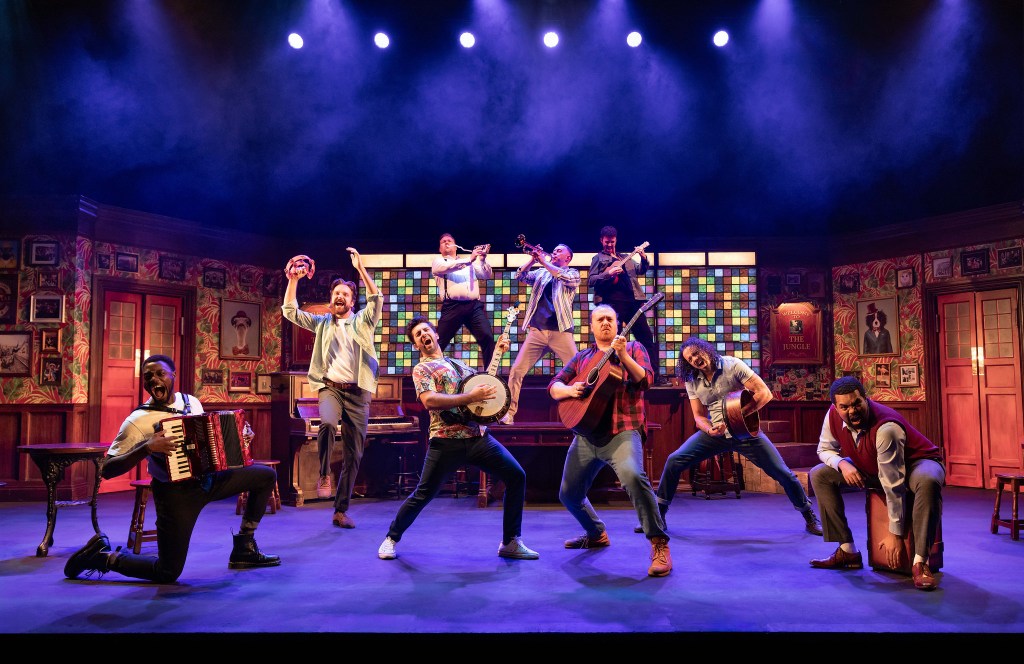
Matthew Bourne’s The Car Man is a critically acclaimed, genre-defying dance thriller. Loosely inspired by Bizet’s opera Carmen and the classic film noir The Postman Always Rings Twice, it transports the action to a sweltering 1950s American Midwest diner, following a handsome stranger who shatters a small town’s peace. It is currently touring the UK, stopping by at Lowry next week.
Why were you first attracted to Bizet’s Carmen?
“I resisted it for quite a while because there were so many versions of it, both ballet and opera, but I kept listening to the score and I felt that it was the right kind of music for my company, New Adventures. I also felt in 2000, when I made the original piece, that it suggested a different kind of movement than we had done before. It was particularly listening to the Shchedrin arrangement (the short 40–minute ballet version using only strings and percussion) which got me really excited and I thought, we’ve got to do this, we’ve got to use this music. But to stop myself, and probably everyone else, thinking, ‘Oh no, not another Carmen‘, I thought, well, we’ll use the music but we’ll tell a different story and that’s what really inspired me and made the whole thing feel like a totally original project. I was also keen to create a ‘dance thriller’, full of plot twists and suspense. You can’t do that with a story people already know!”
How does New Adventures’ The Car Man differ from the original Carmen?
Quite a lot but there are parallels with the opera story; there are elements of lust, fate, revenge and murder and all those things that are associated with Carmen. I think the essence of Carmen is there, but we’ve set it in a different place and time. The Car Man is set in an Italian-American community in a small mid-western American town in the 1960. Although it’s set in the USA there is quite a European feel to the production and although there are some obvious American elements, we’ve tried to add a gritty kind of realism, associated with Italian, French and Spanish cinema, and to avoid Hollywood glamour.
So place is not so important, it’s the flavour and feeling of the period that matters?
“Well, we came up with a name for this fictional town, which is Harmony – it’s also by chance the name of several real towns in the States. I was looking for something charming like Pleasantville, a name that could become increasingly ironic as the story develops. The characters are very gutsy and real, requiring a whole different acting style from much of the New Adventures repertory. It was certainly a change of direction in 2000 following the royal court and lakeside fantasy of Swan Lake and the more genteel period feel of our war-time Cinderella. The Car Man has always been a piece that has challenged my company as actors too. The movement that came from this was also much more earthy and gritty and contemporary in feel. You could call it a classic film noir but one that tells a story that no film of that era would have been able to tell! In dance terms, 26 years on, it remains a comparative rarity, as the first ballet to depict bisexuality as a major part of the plot.”
Earlier you mentioned the orchestration by Rodion Shchedrin being only 40 minutes long, so presumably the other hour of music was commissioned?
“Yes. I really love the Shchedrin music and wanted to use this so I contacted Terry Davies and asked him if he would consider composing further music based on Bizet’s Carmen. There is a substantial amount of great music that Shchedrin did not use in his version, and so Terry’s brief was to use this other music, again with strings and percussion, to come up with a full-length score. With other shows that I had choreographed, Nutcracker!, Highland Fling, Swan Lake and Cinderella, I had worked to an existing score and I made the story fit the score but with this piece, I was able to work in reverse for the first time, so with certain scenes or dances I was able to ask, what kind of music do we need for this? In that sense, it was the first time I had collaborated with a composer to create a complete score. I think that the results are very filmic and incredibly contemporary in feel. A tribute not only to Terry and Shchedrin, but to the enduring genius of Bizet.”
You were talking earlier about the characters being different from the original Carmen. Is there a title Car Man character?
“The title of the show is there partly to differentiate between this production and previous versions of Carmen, but also to give an indication that we are retaining elements of the original, particularly in the case of the music. In terms of character, the title is quite literal really and it relates to the idea of mechanics working in a garage where most of the production is set. More specifically, it refers to the character of Luca, a stranger who arrives in Harmony at the beginning of the show and takes a part-time job as a mechanic at the local garage / diner. He is really the Car Man, the title character. Luca is a kind of fate figure who affects everyone’s lives and becomes the catalyst for change. Lana can also be seen as a Carmen figure, as can Angelo and Rita be seen as nods to Don Jose and Michela.”
So why revive The Car Man In 2026?
“Apart from the special Albert Hall London revival in 2022 to celebrate the iconic venues 150th Birthday, the show has not been seen around the UK, on tour, for over 10 years. The Car Man has become one of New Adventures’ most popular productions since its creation in 2000. It’s also probably the most popular show amongst my dancers who all want the chance to play these challenging roles. There is now a whole new generation of talented New Adventures artists ready to take up that challenge and that has to be one of the other main reasons for bringing it back into the repertory in 2026. It’s a particular favourite of mine because it combines my great love of cinema with a highly theatrical approach. It also gives me a great excuse to revisit many of my much loved old movies for research!”
Matthew Bourne’s The Car Man tours the UK until November 21, playing Lowry (Lyric Theatre) from June 23 to 27, before transferring to Koninklijk Theater Carré in Amsterdam, The Netherlands from November 25 to 29.