To celebrate Ai Weiwei’s arrival, with exhibition Button Up! and theatrical piece Seeing a Button, Factory International arranged an immersive line-up of events, including Chinese tea ceremonies, woodblock printing sessions, calligraphy tutorials, button craft events, live music, and even a Weiwei film marathon.
The Social has been transformed into a traditional teahouse, renamed The Social Teahouse, with various art forms over the new few months. During Sewing a Button, there was a series of events called Dusk to Dawn, beginning with Qigong and ending with Tai Chi, with the middle event called Echoes of Guzheng.
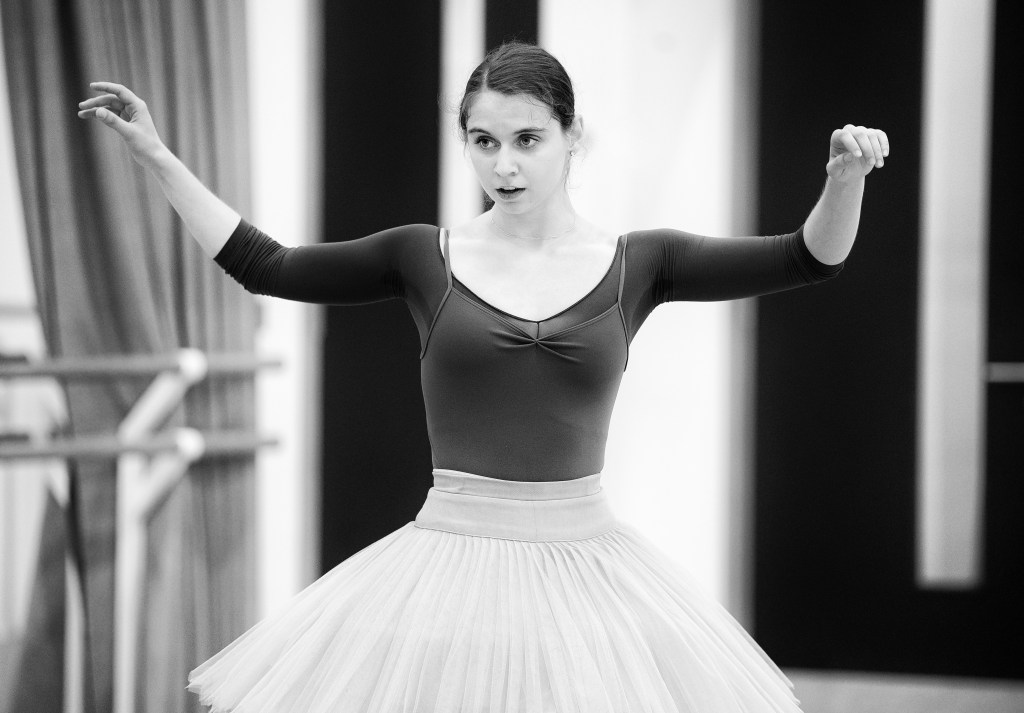
Along with contemplative narrations, Belle’s ethereal performance fused traditional technique with a variety of classical and modern influences. The quaint tearoom space, with its Mazha, beanbags, snacks, and tiny ornate decorations provided a relaxing backdrop to the event, alongside Weiwei’s unnerving livestream screens.
We also visited So Hong Kong Summer Festival, a pop-up market selling traditional food and crafts, at The Undercroft.
Sewing a Button
★★★★☆
An artist as renowned as Weiwei is always looking for new ways to shock and engage audiences but words can’t quite describe his companion piece. Sewing a Button is a surreal 24-hour performance, re-enacting the hellish routines experienced in his secret 81-day imprisonment by Chinese authorities.
An isolated wooden frame with fluorescent lights envelops Weiwei and his watchful guards. Whirring soundscapes accompany his restless sleep, while a silhouette peers at the beaming surveillance monitor in the corner. Somehow, it’s simultaneously dismally dark and hauntingly bright.
Audiences observe from the theatre stalls or through live-streamed footage, their voyeurism mirrored by the staring guards and rotating camera feeds. It’s invasively intimate, with audiences observing vulnerable moments of disturbed sleep, nude showering, eating, and exercise. It’s startling manipulation of the boundaries between viewership and surveillance. Simultaneously, you could feel yourself carefully studying for any movement or change in expression, endlessly waiting for the next thing to happen – trapping us in his endless cycle (despite, as an audience, being completely free to leave). Fast-running timers equate each second to a minute, playing with the meaning of time.
The monotony was intentionally palpable, a reflection of his imprisonment. As a result, some moments feel incredibly tedious, for better or worse.
In our timeslot we watched him sleep before being handcuffed to the chair for an interrogation conducted by poet and broadcaster Lemn Sissay. The chat was interesting with discussions about family life, poetry, Chinese culture, naming conventions, and more. Admittedly, the interaction drops the captivity facade, Lemn’s line of questioning interrupted by witty repartee from Weiwei and quite a few giggles when he really got involved. It became more of an interview than an interrogation, although clips of his session with Nihal Arthanayake suggest a much more stringent process.
Sewing a Button is a thought-provoking slow-burn performance piece. Its monotonous structure and voyeuristic focus are an unsettling reflection of Weiwei’s experience, but it can also be relentlessly arduous.
Button Up!
In contrast, Ai Weiwei’s Button Up! exhibition is anything but boring. The Warehouse space is used in its entirety, immense and imposing sculptures dwarfing guests as they enter the room. It’s genuinely a breathtaking display, with more than a few awe-inspired gasps.
Many of his pieces toy with heritage and modernity, repurposing antiques, reframing historical symbols, or employing traditional artistic techniques with fresh twists and a contemporary political lens.
The exhibition asks audiences to consider the complexities of global empirical history and its impact on contemporary politics, to consider who propagates and censors the narrative, to acknowledge national wrongdoings, and to consider the toll of war on humanity as a whole. He draws from Eastern and Western tradition and history, bridging the division with universal social commentaries.
The centrepiece of the exhibition is a circle of Chinese Zodiac sculptures inspired by similar sculptures looted from Yuanmingyuan. These surround a grand Murano glass chandelier, each section resembling an archaeological mishmash of ashen black human and animal skeletons. Its dark palette and the lack of light are decidedly morbid, a memento mori symbolising mortality and inspired by the cost war.
Then there’s enormous sculptures made from the tiniest pieces, giant lightly hued flags made from countless buttons, and reimagined historical artworks constructed entirely from toy bricks. One such piece is an amusing parody of Jacques-Louis David’s 1801 portrait ‘Napoleon Crossing the Alps’, propaganda depicting the “heroic” general atop his steed (in reality a mule at the back of the brigade). Instead, Weiwei literally flips the script, building the piece upside down, and replacing the stallion with a zebra in reference to French colonialism across Africa.
Another toy block piece, ‘Surfing (After Hokusai)’, draws from Hokusai’s famous ‘Great Wave’, replacing the fishing boats with dinghies full of refugees. His 47m long inflatable dinghy piece, ‘Law of the Journey’, depicts rubber refugees teetering or having fallen from the lifeboats in a similarly touching tribute, alongside a towering “porcelain pillar with refugee motif”.
‘History of bombs’ is the biggest toy block piece in the exhibition, with life-size replicas and diagrams of various deadly bombs. Each detail is painstakingly recreated, each trivial toy block representing a piece of a larger, deadly weapon.
Opposite is the grandiose reconstructed ancestral hall, using traditional joinery techniques as a response to concerns with modern China’s loss of heritage, simultaneously mirroring China’s recovering empire after the devastation of the opium wars. It’s grand and palatial with chunky columns and slatted rafters juxtaposed by cheeky contemporary twists as colourful patterns and hidden manuscripts peek out from every nook and cranny. Inside, a myriad of smaller pieces are displayed, as if a part of a museum. Centre-stage is a tea house made of compressed tea under the Chinese dragon flag, while an antique paint-splattered mirror, various ceramics, a printing plate and a historical timeline adorn the halls.
One of my favourite elements of the exhibition is its use of light and darkness, fascinating silhouettes creeping from the skeletal chandelier and slivering between the hall’s wooden joists. Perhaps its representative of the shadows cast by tyranny and misinformation, or perhaps it’s just a coincidental bioproduct… either way, it’s a gorgeously vivid juxtaposition.
Ai Weiwei is a social commentary genius and a multidisciplinary mastermind. Each piece is expertly crafted with meticulous detail and careful consideration. There’s a sense of solemnity as you wander around, poignant large-scale pieces forcing viewers to acknowledge global concerns and recognise historical transgressions. It’s powerful, punchy, and poetic. And yet, you can also sense Weiwei’s sharp wit, boldly repurposing and subverting oppressive symbols and propaganda. It’s by far the most impressive and affecting exhibition I’ve seen to date.
Ai Weiwei: Button Up! runs at Aviva Studios (The Warehouse), and The Social Teahouse runs in The Social, until September 6.