★★★☆☆
What do a zebra and Deliveroo have in common? Well, apparently Rigoletto, in Opera North’s modern adaptation of the Verdi classic. It’s bold, whimsical and brings in a refreshing contemporary perspective, but at times it lacks creative cohesion.
The original story is all very Shakespearean with its abundance of curses, self-fulfilling prophecies, tragedy, and inherently flawed protagonists. Based on Victor Hugo’s 1832 play Le roi s’amuse, Francesco Maria Piave’s 1851 three-part opera is set in the 16th century court of the Italian Duke of Mantua. Both versions depict court-jesters marginalised because of their physical deformities and consumed by overprotectiveness.
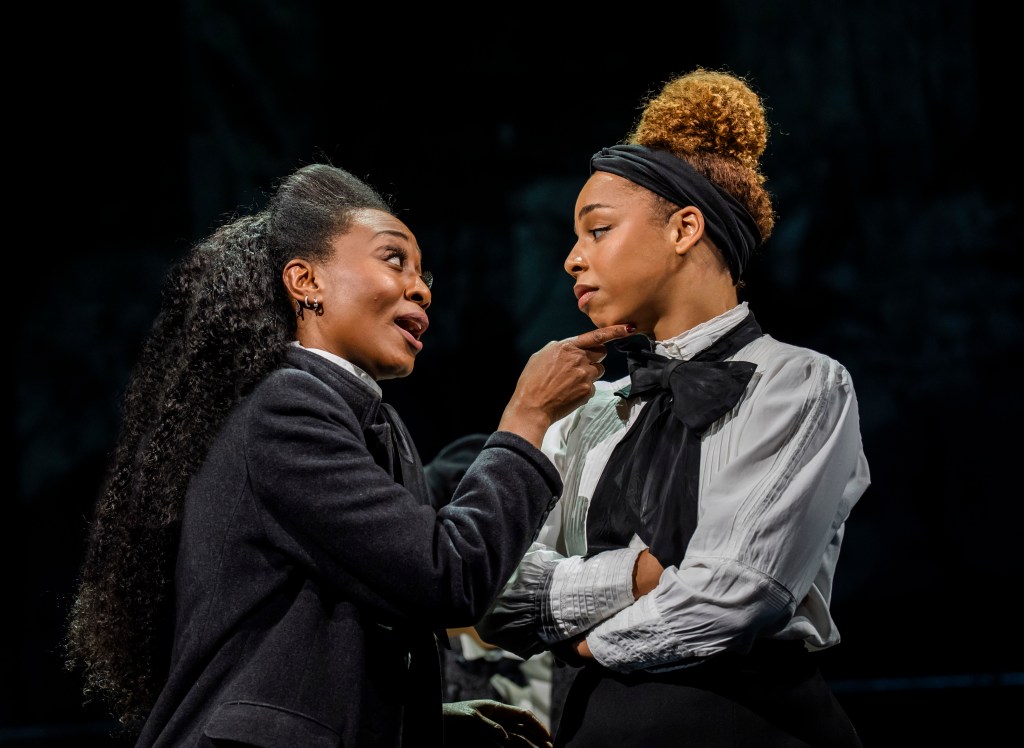
The show follows despised jester Rigoletto (Blake Denson) who is cursed after insulting the enraged Count Monterone (Sir Willard White). Wary of the lustful and womanising Duke of Mantua (Leonardo Sánchez), Rigoletto warns his daughter Gilda (Jasmine Habersham) against fraternising with men, but little does he know the Duke and Gilda have already hit it off. One abduction and an assassination attempt later and Rigoletto’s world is turned upside down.
Director Femi Elufowoju Jr reimagines the beloved opera with a poignant and relevant contemporary twist (rather than antiquated tropes). This time, Rigoletto is portrayed as a Black man in modern-day Britain, his paranoia and overprotectiveness rooted in a social isolation, insecurity, and imbalances in the dynamics between race and power.
Sprinkled throughout the show are symbols, paintings, patterns, and costumes rooted in Nigerian tradition. The reframing is an engaging interpretation but isn’t always executed well, with a seemingly random mishmash of absurd design elements muddying contextual clues.
At times, costuming feels just about as random as the racks at TK Maxx. The snazzily embellished tuxedos and eye-catching cocktail dresses of “the pleasure palace” dissolve into a garbled cacophony: a shabby hoodie, Georgian wigs, a prep school blazer, a high-vis jacket, a Deliveroo cyclist, some psychedelic shirts, red boiler suits with KKK-style hoods, and a strangely kinky sleeveless butler costume with dinky white cuffs.
Just as bizarre is the staging complete with a plastic zebra, a Toucan on a rope swing, an enormous painting, and a burnt-out car. It’s amusingly whimsical but also rather baffling. It’s not a clear adaptation when a random stranger turns to ask you: “What’s the significance of the zebra?”
To its credit, some elements are rather enchanting. Gilda’s garden is vibrantly decorated to reflect her innocence, with blooming vines, a golden-brushed floral frame, handfuls of glitter, and Habersham’s gloriously soaring soprano chirps. In contrast, are the moody lighting, swirling storm clouds, hauntingly wispy harmonies, and dingy tents of the tragic finale.
Like most operas, the women of the show are painfully naïve, manipulated into bafflingly misguided choices, infantilised by misogynistic ideals. [Spoilers] Gilda joins a long line of tragic opera heroines, making bafflingly misguided decisions before dying in her father’s arms. Meanwhile, her womanising lover gets away scott-free (his charm, power, and wealth absolving him of the consequences). This ending serves as a cautionary tale against toxic masculinity, but it would be great to see a contemporary production tackle its female lead with more nuance and reasoning. Perhaps she sacrifices herself not wanting blood on her father’s hands because he’d face further persecution from the court? Or maybe she dies in retaliation to the patriarchal oppression? Nevertheless, it makes for a hauntingly memorable finale.
While it’s not my favourite operatic score, the charm of Verdi’s music is undeniable. This is particularly evidenced by the Duke’s (Sánchez) captivating ‘La Donna è Mobile’, a bouncing melody and hypocritical verses perfectly capturing the Duke’s insufferable facetiousness despite the tenderness of his declarations in the ‘È il sol dell’anima’ duet. Gilda’s (Habersham) dreamy ‘Caro nome’ is another highlight, its youthfully frolicking melody requiring an incredible vocal dexterity and breath control. They beautifully juxtapose the booming broody soliloquies and distraught climaxes of Rigoletto (Denson). Admittedly, some sequences last a tad too long, but pacing preferences feel like fairly inconsequential critiques within the confines of classical opera.
Rigoletto is a vibrant and engaging contemporary interpretation of the beloved opera, reframing the story with relevant racial and social commentary. An energetic score, virtuosic vocal performances, and couple of whimsical design elements steal the show. However, some antiquated tropes, long arias, and a jarring jumble of mismatched costumes and set-pieces undercut and distract from the production’s pertinent themes.