★★★★☆
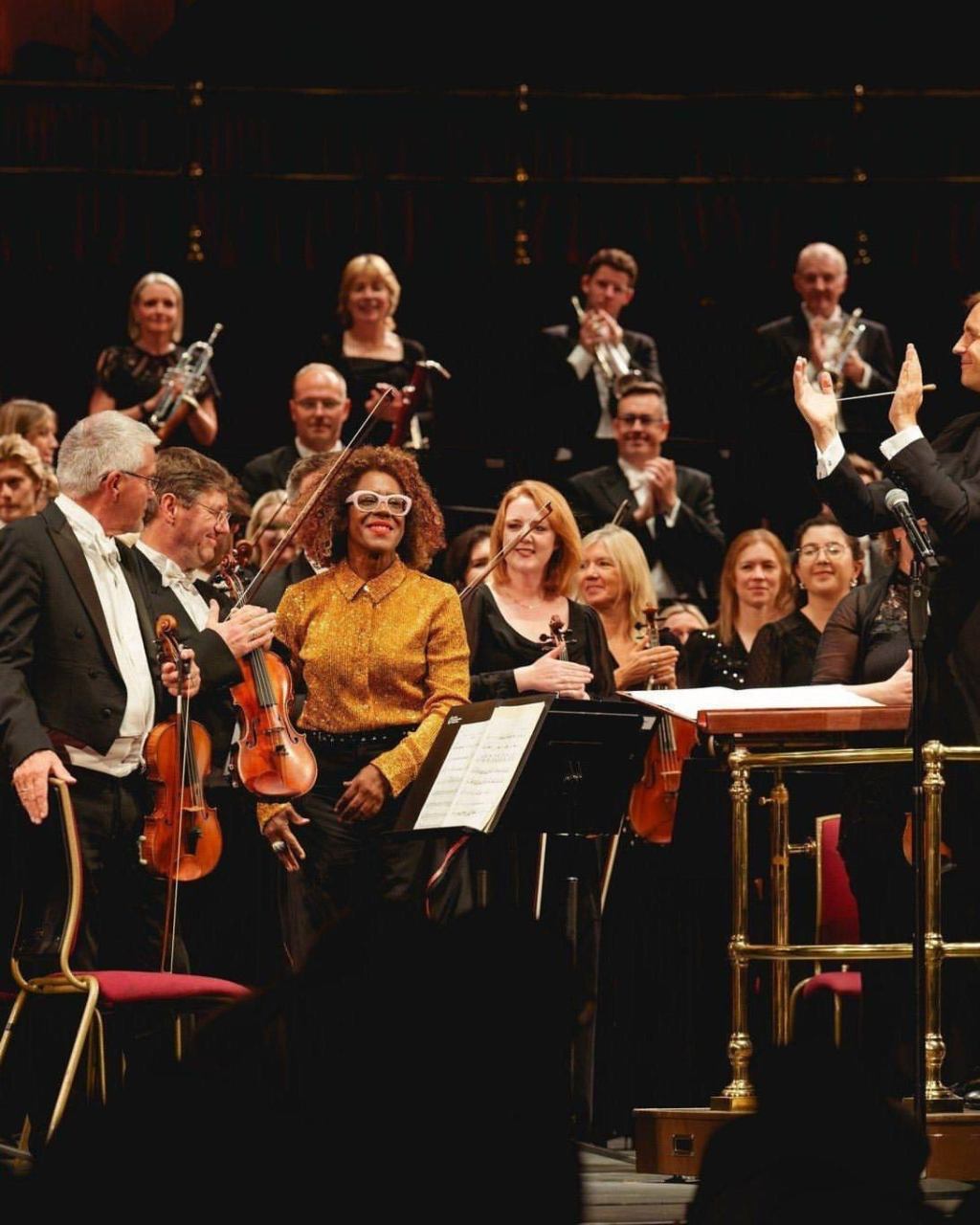
On the 15th of September 1946, the Royal Philharmonic Orchestra gave its first performance at the Davis Theatre in Croydon. Over 80 years later, the Royal Philharmonic has dazzled millions of people across the world. On the 23rd of September 2026, the Royal Philharmonic opened its 80th season at the Royal Albert Hall in London. The show began with a message of support and praise from His Majesty The King, detailing the rich history of the Royal Philharmonic Orchestra, citing a specific envy for those in the audience present for a historical evening. As far as classical concerts go, this is about as good as it gets.
The overall event was largely seamless, performed in a gorgeous venue, with attentive staff and a rich marination of lighting. The event reminded me of the true importance of diversity in music and orchestral creation, demanding immersion of arts into our everyday lives. There was a rich novelty in being presented with three soloists, new music, and renditions of Beethoven and Strauss. The entire ensemble performed through various audience distractions and maintained true professionality.
The night began with the World Premiere of Flare, created by the remarkable Errollyn Wallen CBE, an elusive and dramatic piece. The fanfare starts shakily, with three off-stage trumpets announcing the inclusion of the orchestra. The piece is quick, playful and romantic, with booming drums, flowing cymbals, and floating violins. This perfectly transports audiences past performance into spectacle. As quick as it started, it is over in a frenzy, heralding a call to action.
The next piece was Beethoven’s 1803-04 ‘Triple Concerto in C major, Op.56’, a bold Triple Concerto. The piece is a delicate reminder of what can be accomplished with creative liberty and the longevity of musical performance. Julia Fischer (violin), Pablo Ferrández (cello) and Jan Lisiecki (piano) delivered an exceptional rendition of their solos. The violin and cello flirted in a harmonious play on stage, while the piano danced delicately above it all. The visuals were romantic, swinging and intense. The pieces lacked distinction in transition, with an abrupt ending, which is not necessarily a bad thing, but left me surprised.
The second act opened triumphantly with Richard Strauss’ ‘Ein Heldenleben (A Hero’s Life), Op.40 (1898)’. This is where the sound quality of the auditorium got to shine, with a full orchestra, soaring romantic brass, strings filling the room like water seeping into the cracks. The piece is beautiful, fully immersing audiences into the epic of a hero, with their highs and lows. The percussion joined into the piece flawlessly, marching trumpets transported the audience into a world of love, heartbreak, accomplishment and peace. The evening ended with serenity and triumph, leaving us with the feeling that there is more to the world than what we may have known prior. It is only art, only music, that can do this.
Music Director of the Royal Philharmonic Orchestra and this evening’s conductor, Vasily Petrenko, delivered an exceptional program, and he came to live across the last piece. It was an utter joy to watch his conduction, delivering an expert performance that can be studied. Petrenko guided us through the evening, detailing when power reigned, when the hero flew and when they fell. It was brilliant musical storytelling.
I look forward to the rest of the season for the Royal Philharmonic Orchestra and can only hope to see more of their work in the future.
Photo: Andrew Paradise