★★★★☆
One of Tchaikovsky’s most renowned operas, Eugene Onegin, returns to the stage with Opera North after 25 years, absorbing stories and romantic compositions enamouring audiences once again.
Based on Alexander Pushkin’s witty 1825 novel and entwined with moments of Tchaikovsky’s own turbulent love life, the opera was first performed in 1879 to a mixed critical reception. Since then, it has become a quintessential Russian lyric opera.
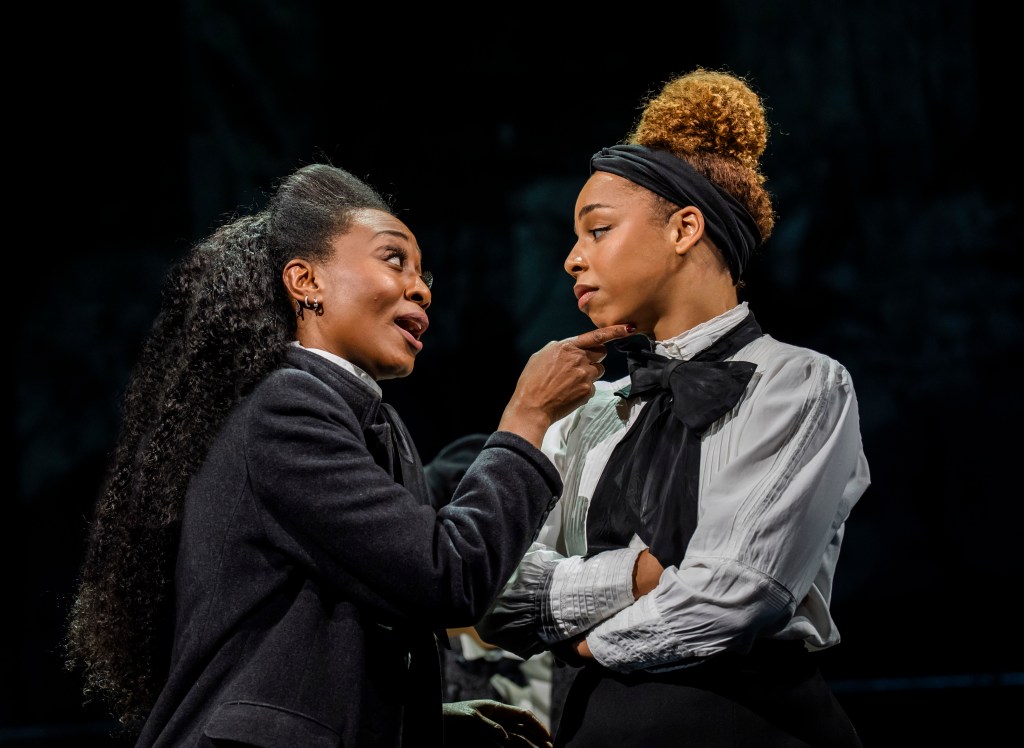
The show follows the cynical Eugene Onegin (John Brancy) who rejects the advances of Tatyana (Verity Wingate), a radiant young girl enamoured at first sight. His restlessness leads him to parties, eventually stirring trouble between his friend Lensky (Kamil Bień) and fiancee Olga (Jingwen Cai). Years later, Onegin bumps into the now married Tatyana and ironically falls head over heels for her. It’s an opera about missed chances, unrequited love, poor timing, and social pride.
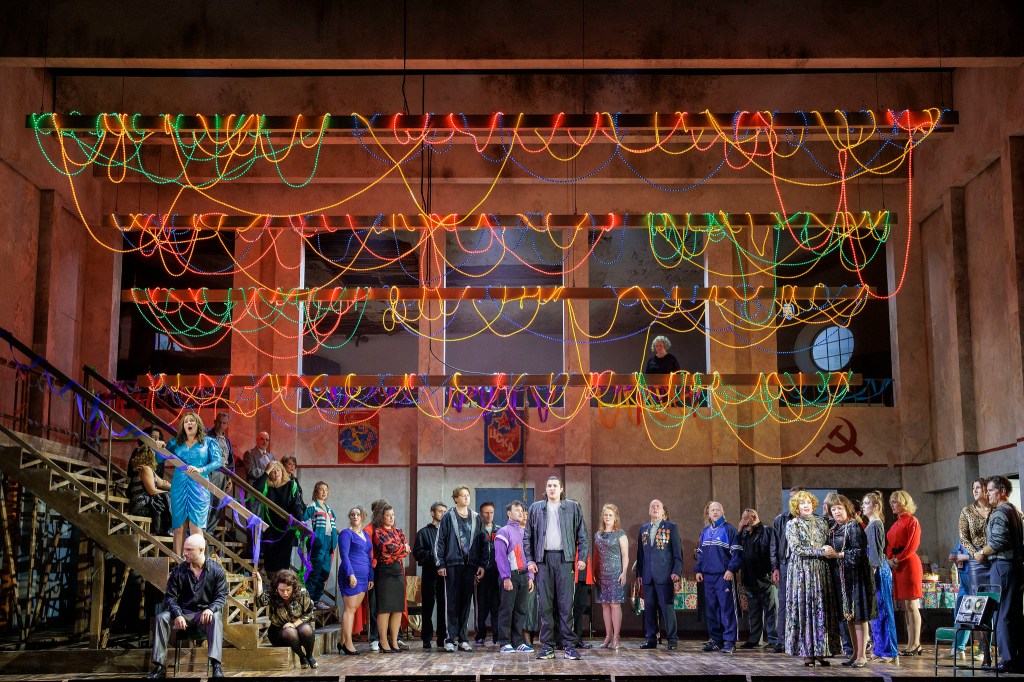
Originally set in 1820s Russia, director Patrick Nolan reimagines the story from 1980 to 1991, amidst the implementation and aftermath of Gorbachev’s Perestroika policy. Instead of grand manors and palatial ballrooms, Leslie Travers’ set design transports audiences from the austerity of the 80s to the excess wealthy elites of the 90s. While the changes may upset opera purists, there is an apt parallel between the newfound fortune of the elite and Tatyana’s own rising social stature.
The dismally crumbling gymnasium is a tad on the dull side but its scale is jaw-dropping, with balconies and bleachers tiering the space (and reminding us how big the Lowry truly is). Over the evening, a flurry of ribbons and festively glowing wires decorate the stage, eventually replaced by a decadent geometric chandelier.
Elizabeth Gadsby’s costuming also conveys this economic transition, drab floral dresses turning into an amusing plethora of shell suits, cocktail dresses, and Adidas sportswear before the economic fortune conveyed a soirée of tuxedos, bejewelled gowns, and fur shawls.
Mixed in is some fun choreography, from the waving flags and colourful cards of the Olympics rehearsal to the Russian folk and ballroom inspired routines. The routines are not most intricate but they add a sense of community or class to the larger ensemble moments.
Tchaikovsky may be better-known for his ballet masterworks but his opera scores are no less spectacular. His music combines playful refrains and romantically swelling harmonies with melancholic and occasionally frantic rhythms.
The vocal highlight of the night was undoubtably Bień’s heart-wrenching pre-duel aria, with gripping messa di voces, supple tremolos, and eye-watering poignancy. Wingate also shone with her performance in Tatyana’s ‘Letter Scene’, dreamy-eyed optimism and an enchanting vocal flutters and leaps.
Like Carmen from Bizet’s opera of the same name, Tatyana is an unconventionally strong female lead, with unshakable values, a radiant presence, and a graceful eloquence. It’s certainly refreshing to see in a genre filled with doomed heroines and femme fatales!
Opera North’s Eugene Onegin runs at Theatre Royal, Nottingham, the last stop of its UK tour, from November 18 to 21.
Photo: James Glossop